Cultivar · genus Scindapsus
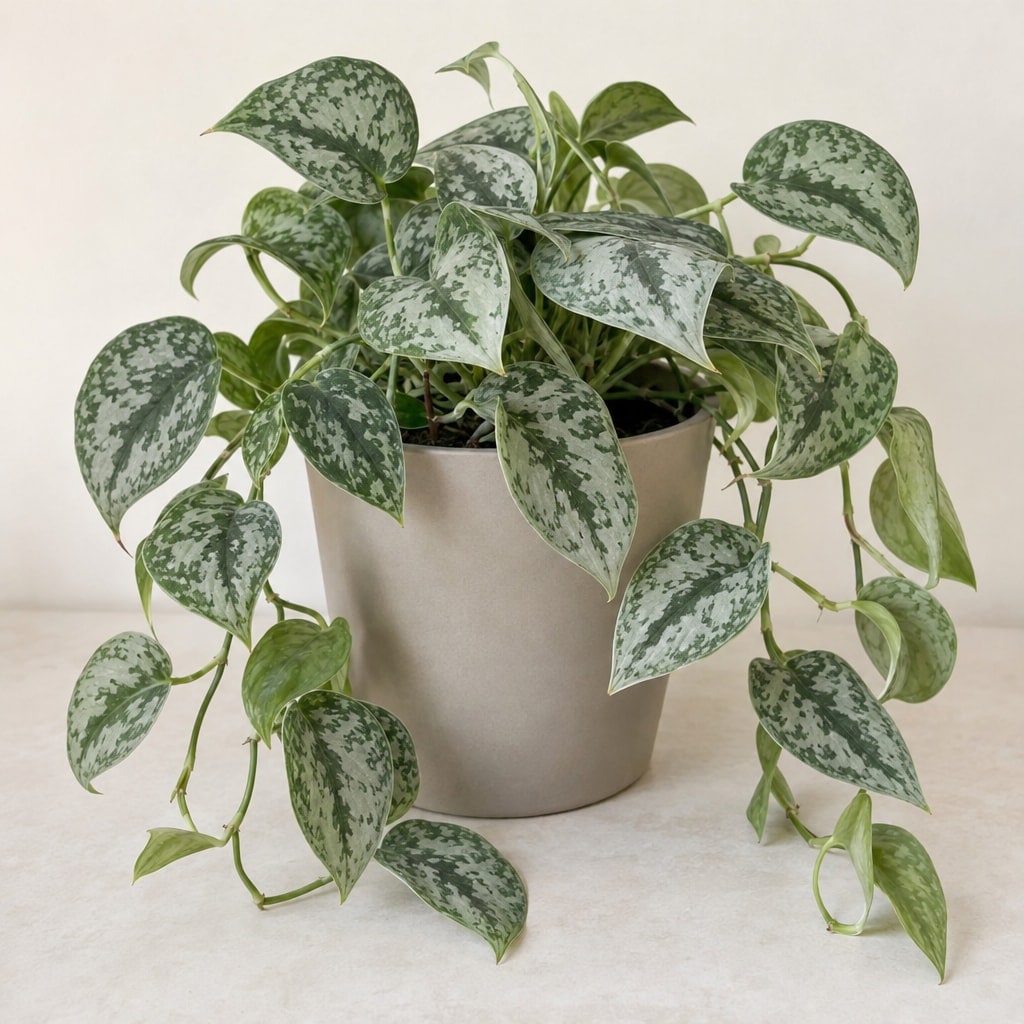
Silver Satin
Scindapsus pictus · ‘Silver Satin’
Guide
Written and kept by people who grow it. Every section carries its source.
No cultivar-specific guide yet
Until someone writes one, this cultivar follows the Scindapsus pictus care below. If you grow ‘Silver Satin’, a few honest paragraphs would give it its own voice.
Care recipe
Each fact carries its confidence tier — and says whether it belongs to this cultivar or is inherited from the species.
Care notes reviewed by Horta
- Humidity
- ai:claude-code
Bright, indirect
≈ every 12 days
Medium
21–24 °C
Chunky, well-draining aroid mix with bark and perlite
Stem cuttings at a node rooted in water or moss
Balanced liquid feed monthly in spring and summer
Slow
Rarely flowers indoors
Toxic to cats & dogs & humans
Araceae contain insoluble calcium oxalate crystals, which irritate the mouth and digestive tract if chewed. This is where toxicity lives: every cultivar inherits it and none can override it.
Reference images
Every image credited. Licenses link to their deeds.
PrimarySources: ai:claude-code · ai:claude-opus-4-8 (family inference)
Kept true by its growers
Every fact here carries its source. Grow ‘Silver Satin’ yourself? What you’ve observed — how it drinks, how it holds its color, a name that’s off — and a clear photo of your plant are exactly what keep this page honest. Contributions are reviewed before anything changes.
Sign in to add what you know →