Species · genus Scindapsus · Araceae
Satin Pothos
Scindapsus pictus Hassk.
Also known as: Silver Pothos
Cultivars of S. pictus
The named forms growers keep — each with its own page, each honest about how much we know.
No named cultivars catalogued under S. pictus yet. When growers document a stable, named form, it earns its own page here.
Guide
The species-level account. Cultivar pages build on this and say where they differ.
A Pothos Look-Alike
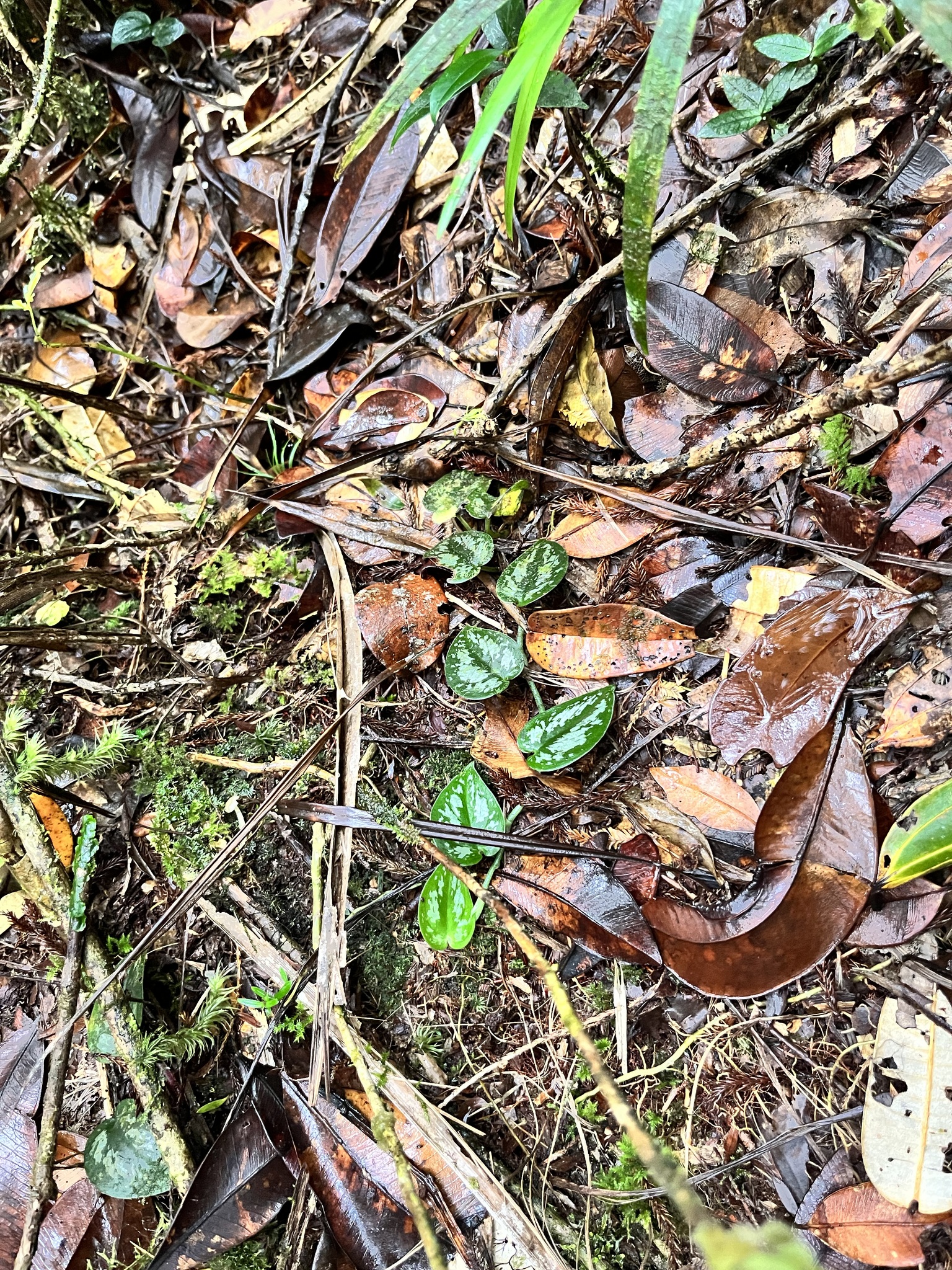
Scindapsus pictus is a trailing houseplant often called satin pothos or silver pothos, though it is only a close relative of true pothos rather than one itself. It carries heart-shaped, matte leaves splashed with silvery variegation, and it suits either a hanging basket or a pot where it can spill over the edge.
Source: Epic Gardening
From Southeast Asian Forests
This plant traces back to tropical Southeast Asia, including Bangladesh, Borneo, Java, Malaya, the Philippines, Sulawesi, Sumatra, and Thailand. In the wild it climbs up tree trunks, its silvery leaves clinging to the bark, and in warm enough climates it can be grown outdoors much as a perennial would be.
Source: Epic Gardening
Bright Light, Even Moisture
Give this plant bright indirect light, ideally near a window without standing directly in the sun's path, since harsh direct rays scorch the leaves while too little light fades the variegation. Water regularly, letting the top inch or two of soil dry between sessions, and ease off in winter as growth slows. It likes humidity in the 40-50% range, and a diluted liquid fertilizer applied monthly through the growing season keeps the foliage looking its best.
Source: Epic Gardening
Rooting Summer Cuttings
Take stem cuttings in summer, when growth is strongest, and set them in water where roots typically form within about a month. Once you see measurable root growth, move the cutting into potting soil. In its native range this same vigorous root system lets the plant send out aerial roots and climb trees.
Source: Epic Gardening
Painted, Silvered Leaves
The species name pictus means painted, a fitting nod to the silvery patches scattered across its dark green, matte foliage. It grows as a bushy vine that can put out aerial roots and climb given the chance, and though it is an evergreen flowering plant, blooms rarely appear indoors. Note that it is toxic to dogs, cats, and humans, so it is worth keeping out of easy reach.
Source: Epic Gardening
Scale and Spider Mites
Scale insects often hitch a ride indoors after a plant has spent time outside, showing up as small, rounded brown lumps on stems and leaves that can be popped off with an alcohol-dipped cotton swab. Spider mites favor warm, dry, low-humidity conditions and announce themselves with tiny leaf holes, yellowish speckling, or fine webbing; raising humidity helps prevent them, and a forceful water spray or insecticidal soap can address an active infestation.
Source: Epic Gardening
Reading the Leaves
Most trouble traces back to watering: overwatering tends to show as yellow leaves, while underwatering shows as curling leaves, and the plant dislikes both cold drafts and soggy soil. Uneven humidity can also cause yellowing, and dry air often shows up as browned leaf tips. Root rot is the main disease risk, appearing as a soft, mushy stem and rotten roots, though it can sometimes be salvaged by trimming away the rot while healthy white roots remain.
Source: Epic Gardening
Pruning and Repotting Rhythm
This bushy vine does not strictly need pruning, but trimming just below a leaf node encourages fuller new growth and hands you cuttings for propagation at the same time. Repot in spring once the plant has outgrown its container, sizing up by only one to two inches to avoid excess soil holding too much water.
Source: Epic Gardening
Care recipe
The species record — the baseline every cultivar inherits unless it says otherwise.
Care notes are early — not yet verified
- Light
- ai:claude-opus-4-8
- Water
- ai:claude-opus-4-8 (range 7-12d)
- Humidity
- ai:claude-opus-4-8
- Soil
- ai:claude-fable-5
- Care
- ai:claude-fable-5
Bright, indirect
≈ every 12 days
Medium
18–29 °C
Chunky, well-draining aroid mix with bark and perlite
Stem cuttings at a node rooted in water or moss
Balanced liquid feed monthly in spring and summer
Moderate
Rarely flowers indoors
Toxic to cats & dogs & humans
Araceae contain insoluble calcium oxalate crystals, which irritate the mouth and digestive tract if chewed. This is where toxicity lives: every cultivar of this species inherits it and none can override it.
Reference images
Every image credited. Licenses link to their deeds.
PrimarySources: ai:claude-opus-4-8 · ai:claude-opus-4-8 (range 7-12d) · ai:claude-fable-5 · ai:claude-opus-4-8 (family inference)
Kept true by its growers
Every fact here carries its source. Grow Satin Pothos yourself? What you’ve observed — how it drinks, how it holds its color, a name that’s off — and a clear photo of your plant are exactly what keep this page honest. Contributions are reviewed before anything changes.
Sign in to add what you know →