Cultivar · genus Scindapsus
Argyraeus
Scindapsus pictus · ‘Argyraeus’
Guide
Written and kept by people who grow it. Every section carries its source.
The Classic Satin Pothos
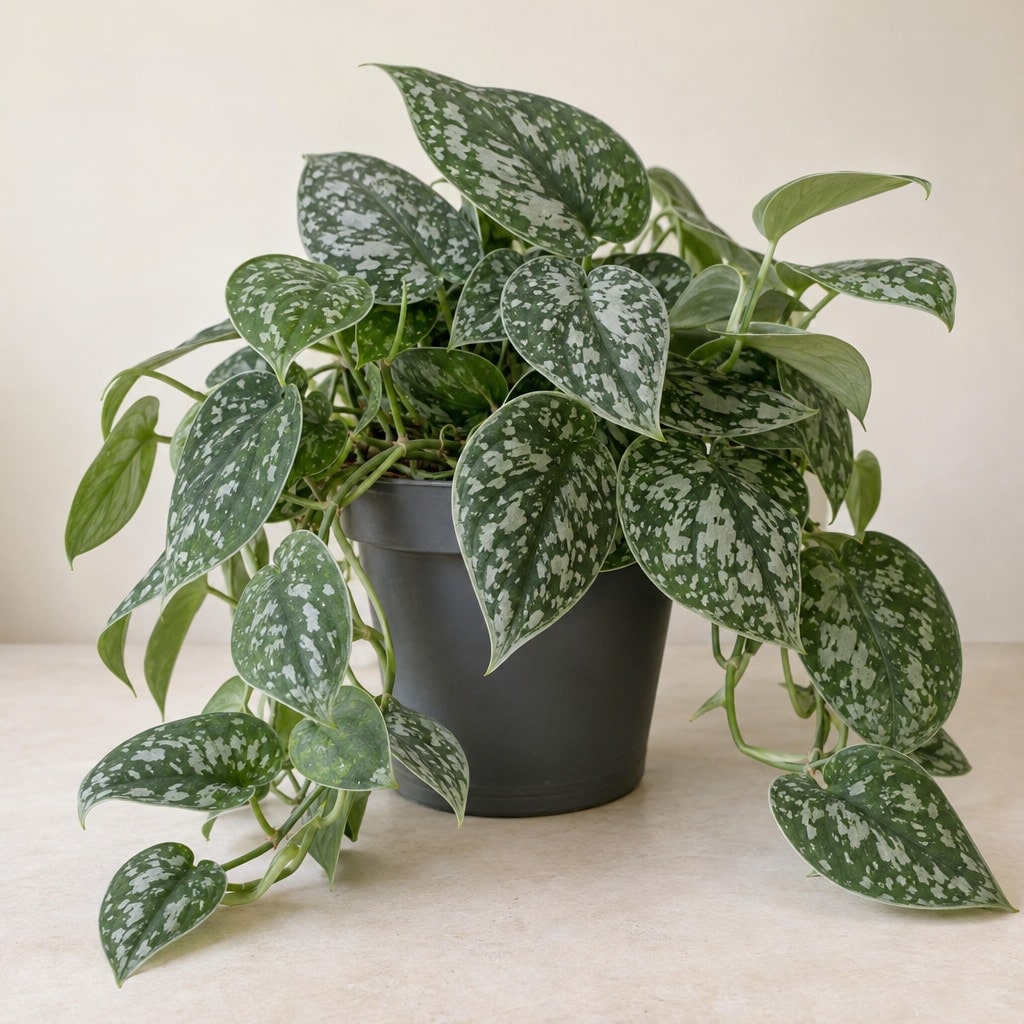
'Argyraeus' is the cultivar most people picture when they hear satin pothos: a slow-growing, evergreen climber or trailer with dark green ovate leaves flecked in silver. It carries the RHS Award of Garden Merit, a mark of its reliability as a houseplant.
Source: RHS
Lighter, Thinner Variegation
Compared to stablemates like Exotica, 'Argyraeus' wears its silver more sparingly, with lighter variegation overall and leaves that run thinner rather than thick and heavily marked. Leaves reach around 10cm long, spotted with silver on the upper surface, on a plant that can climb or trail to a metre or more. It rarely flowers indoors, so its appeal rests entirely on foliage rather than bloom.
Source: RHS
Care recipe
Each fact carries its confidence tier — and says whether it belongs to this cultivar or is inherited from the species.
Care notes reviewed by Horta
- Light
- ai:claude-sonnet-5
- Soil
- ai:claude-sonnet-5
Bright, indirect
≈ every 12 days
Medium
18–29 °C
peat-free, loam-based potting compost
stem cuttings
balanced liquid fertilizer monthly when in growth; water sparingly and reduce feeding at other times
Slow
Rarely flowers in cultivation
Toxic to cats & dogs & humans
Araceae contain insoluble calcium oxalate crystals, which irritate the mouth and digestive tract if chewed. This is where toxicity lives: every cultivar inherits it and none can override it.
Reference images
Every image credited. Licenses link to their deeds.
PrimarySources: ai:claude-sonnet-5 · ai:claude-opus-4-8 (family inference)
Kept true by its growers
Every fact here carries its source. Grow ‘Argyraeus’ yourself? What you’ve observed — how it drinks, how it holds its color, a name that’s off — and a clear photo of your plant are exactly what keep this page honest. Contributions are reviewed before anything changes.
Sign in to add what you know →