Cultivar · genus Philodendron
Pink Princess
Philodendron erubescens · ‘Pink Princess’
Guide
Written and kept by people who grow it. Every section carries its source.
A Rare Pink Hybrid
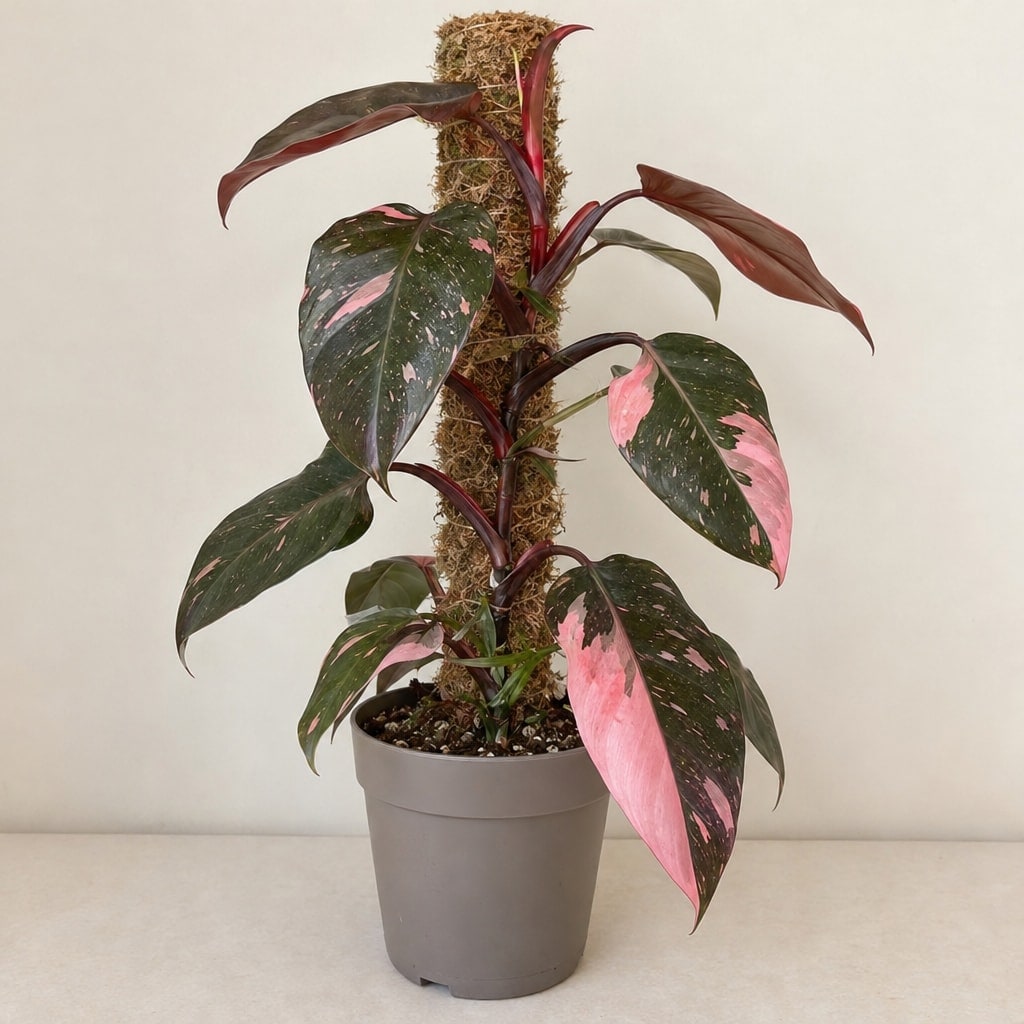
Pink Princess is a cultivar of Philodendron erubescens, prized for the bold pink splashes that break up its deep green leaves. It has become one of the most sought-after houseplants among collectors, trading on both its looks and its scarcity.
Source: Epic Gardening
A Florida Mystery
No one can say for certain where Pink Princess began, but the most likely story points to a Florida grower who crossed erubescens with other Philodendron species and, among countless cloned seedlings, found one with this variegation. Every true Pink Princess in circulation traces back to propagations of that single discovery, which is part of why it remains scarce and pricey. Buyers should be wary of imitators like the chemically-treated 'Pink Congo,' sold under the same name but destined to fade entirely to green.
Source: Epic Gardening
Chasing the Pink
More than with a plain green philodendron, light dictates this cultivar's identity: insufficient light pushes the plant to produce more chlorophyll, and the pink fades back toward solid green, while strong indirect light sustains or even deepens the variegation. It is also a thirstier, slower grower than many philodendrons, generally needing a drink every one to two weeks once the top couple of inches of soil dry, and too much sun can scorch the pink patches themselves with sunburned patches.
Source: Costa Farms
Cuttings Don't Promise Pink
Propagation follows the usual stem or leaf-bud cutting method, but this cultivar carries a particular catch: a cutting from an even heavily variegated parent can root and grow with little or no pink at all. There is no fix for this through light or care, so getting a well-patterned new plant often means taking several cuttings and accepting the gamble.
Source: Epic Gardening
Variegation You Can't Guarantee
The hallmark of this cultivar is its deep green, glossy foliage marked with irregular splashes of cream and pink, carried on stems that open bright red and darken to burgundy with age. Unlike the species, its signature pink patches carry no chlorophyll at all, which is exactly why the pattern is so changeable and why every leaf comes out looking a little different.
Source: RHS
Reversion and Sunburn
Beyond ordinary houseplant troubles, this cultivar has two quirks tied directly to its variegation: fading to green under weak light, and developing brown, sunburned patches specifically within the pink areas if light is too strong. Both point back to the same underlying tension between chlorophyll and color that defines this plant.
Source: Costa Farms
Care recipe
Each fact carries its confidence tier — and says whether it belongs to this cultivar or is inherited from the species.
Care notes reviewed by Horta
- Light
- ai:claude-sonnet-5
- Humidity
- ai:claude-sonnet-5
- Care
- ai:claude-sonnet-5
Bright, indirect
≈ every 12 days
Medium
18–29 °C
Chunky, well-draining aroid mix with bark and perlite
Stem cuttings with a node rooted in water or mix
Balanced liquid feed monthly in the growing season
Slow
Rarely flowers indoors
Toxic to cats & dogs & humans
Araceae contain insoluble calcium oxalate crystals, which irritate the mouth and digestive tract if chewed. This is where toxicity lives: every cultivar inherits it and none can override it.
Reference images
Every image credited. Licenses link to their deeds.
PrimarySources: ai:claude-sonnet-5 · ai:claude-opus-4-8 (family inference)
Kept true by its growers
Every fact here carries its source. Grow ‘Pink Princess’ yourself? What you’ve observed — how it drinks, how it holds its color, a name that’s off — and a clear photo of your plant are exactly what keep this page honest. Contributions are reviewed before anything changes.
Sign in to add what you know →