Species · genus Philodendron · Araceae
Blushing Philodendron
Philodendron erubescens K.Koch & Augustin
Also known as: Red-leaf Philodendron · Philodendron
Cultivars of P. erubescens
The named forms growers keep — each with its own page, each honest about how much we know.
No named cultivars catalogued under P. erubescens yet. When growers document a stable, named form, it earns its own page here.
Guide
The species-level account. Cultivar pages build on this and say where they differ.
The Blushing Philodendron
Philodendron erubescens, known as the blushing philodendron, is a stout evergreen climber grown for its glossy dark green leaves and the reddish-purple blush on their undersides. It carries the RHS Award of Garden Merit and is valued as an easy, tropical-looking houseplant or conservatory climber.
Source: RHS
A Colombian Climber
This species hails from Colombia, part of the Araceae family that also gives us monsteras, peace lilies and anthuriums. Like many of its relatives, it is a stout climbing member of a genus that ranges from shrubs to trees to climbers across tropical Central and South America.
Source: RHS
Bright, Moist, Fed
Under glass or indoors, this philodendron wants bright but filtered light with shelter from hot direct sun, and a loose, free-draining, slightly acidic compost kept moist but never sodden. Water moderately through the growing season and sparingly the rest of the year, feed monthly with a balanced liquid fertiliser during growth, and let the compost surface dry between waterings. It is content with the average humidity of most homes, though occasional misting mirrors its glasshouse treatment, and typical room temperatures above 15°C suit it, kept clear of radiators and draughts.
Source: RHS
By Seed or Layer
The RHS notes this species can be propagated from seed, surface sown at 19 to 24°C in spring, or by layering in spring. More broadly for climbing philodendrons, stem cuttings taken in spring to late summer will root readily in a glass of water before potting on.
Source: RHS
Triangular Leaves, Red Beneath
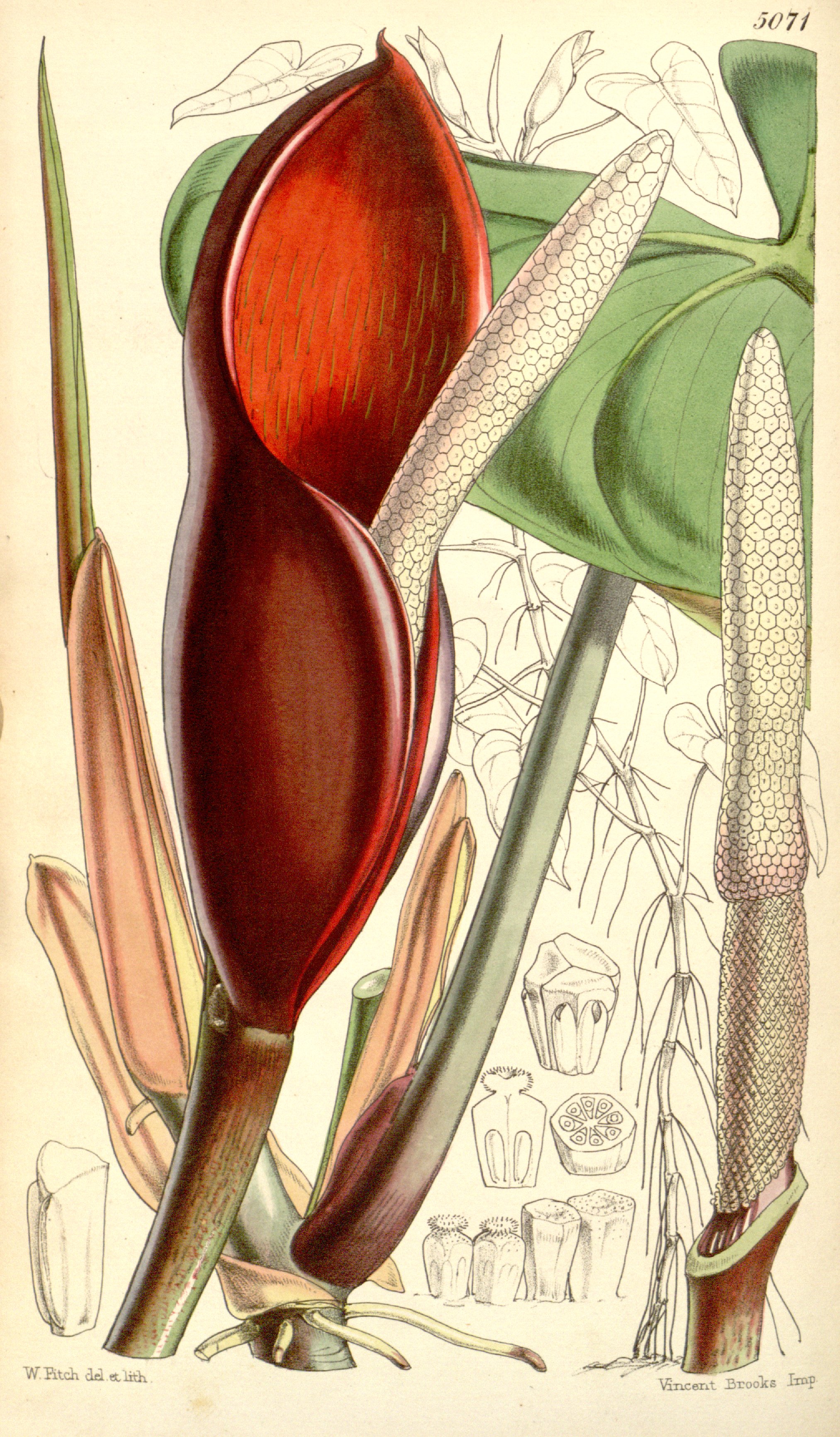
The defining feature here is the leaf: glossy, dark green, triangular-ovate, reaching up to 40cm, with a red-purple flush on the reverse that gives the plant its common name. Given room, it climbs as a stout evergreen to 2.5-4 metres with a modest 0.5-1 metre spread, and it can produce red-purple flower spathes around 15cm long.
Source: RHS
Scale and Spider Mite
Watch for scale insects and glasshouse red spider mite, the two pests the RHS flags as most likely to trouble this plant. Otherwise it is generally considered disease-free.
Source: RHS
Root Rot from Overwatering
The main trouble with philodendrons as a group is overwatering or poorly draining compost, which leads to root rot, yellowing leaves and, eventually, collapse of the plant. The remedy is simple: let the compost surface dry between waterings and never let pots stand in water.
Source: RHS
Spring Pruning, Steady Support
This philodendron falls into pruning group 11, best tackled in spring. As a stout climber it benefits from support to train it upward, and, in line with houseplant philodendrons generally, repotting is best done in spring once roots fill the pot, using a peat-free, loam-based compost only slightly larger than the rootball.
Source: RHS
Care recipe
The species record — the baseline every cultivar inherits unless it says otherwise.
Care notes are early — not yet verified
- Light
- ai:claude-opus-4-8
- Water
- ai:claude-opus-4-8 (range 7-12d)
- Humidity
- ai:claude-opus-4-8
- Soil
- ai:claude-fable-5
- Care
- ai:claude-fable-5
Bright, indirect
≈ every 12 days
Medium
16–29 °C
Chunky, well-draining aroid mix with bark and perlite
Stem cuttings with a node rooted in water or mix
Balanced liquid feed monthly in the growing season
Fast
Rarely flowers indoors
Toxic to cats & dogs & humans
Araceae contain insoluble calcium oxalate crystals, which irritate the mouth and digestive tract if chewed. This is where toxicity lives: every cultivar of this species inherits it and none can override it.
Reference images
Every image credited. Licenses link to their deeds.
PrimarySources: ai:claude-opus-4-8 · ai:claude-opus-4-8 (range 7-12d) · ai:claude-fable-5 · ai:claude-opus-4-8 (family inference)
Kept true by its growers
Every fact here carries its source. Grow Blushing Philodendron yourself? What you’ve observed — how it drinks, how it holds its color, a name that’s off — and a clear photo of your plant are exactly what keep this page honest. Contributions are reviewed before anything changes.
Sign in to add what you know →