Species · genus Cyclamen · Primulaceae
Sowbread
Cyclamen hederifolium Aiton
Also known as: Ivy-leaved Cyclamen · Hardy Cyclamen · Ivy-leaf Cyclamen
Cultivars of C. hederifolium
The named forms growers keep — each with its own page, each honest about how much we know.
No named cultivars catalogued under C. hederifolium yet. When growers document a stable, named form, it earns its own page here.
Guide
The species-level account. Cultivar pages build on this and say where they differ.
A Tuberous Winter Charmer
Hardy cyclamen is a low, tuberous perennial that flowers when much of the garden has gone quiet, often through late winter or early spring. It suits naturalising under trees, on banks, or tucked into a shady border alongside snowdrops, winter aconites, and primroses.
Source: RHS
From Southern Europe to Turkey
Cyclamen hederifolium, also called ivy-leaved or Neapolitan cyclamen, hails from Southern Europe through to Turkey. It carries the Award of Garden Merit and has long been grown under its older name, Cyclamen neapolitanum.
Source: RHS
Shade, Shelter, Steady Drainage
Give hardy cyclamen partial shade and a moderately fertile, humus-rich, well-drained soil, keeping it away from excessive summer moisture. Plant tubers shallow, only three to five centimetres deep, since burying them too deep can stop flowering. As the leaves die back, mulch annually with leafmould or bark chips, and in pots use a peat-free potting mix loosened with extra grit and leafmould.
Source: RHS
Sowing Fresh Seed in Darkness
Collect seed once the flower stalk coils and draws the ripening capsule down toward the soil. Soak seed overnight, then sow it fresh in a mix of equal parts seed compost and sharp grit, covering it thinly since light can inhibit germination. Keep the covered container at a minimum of 16°C in light shade until seedlings are ready to transplant, and expect some variation among them, so favour the best-coloured plants.
Source: RHS
Marbled Leaves, Reflexed Petals
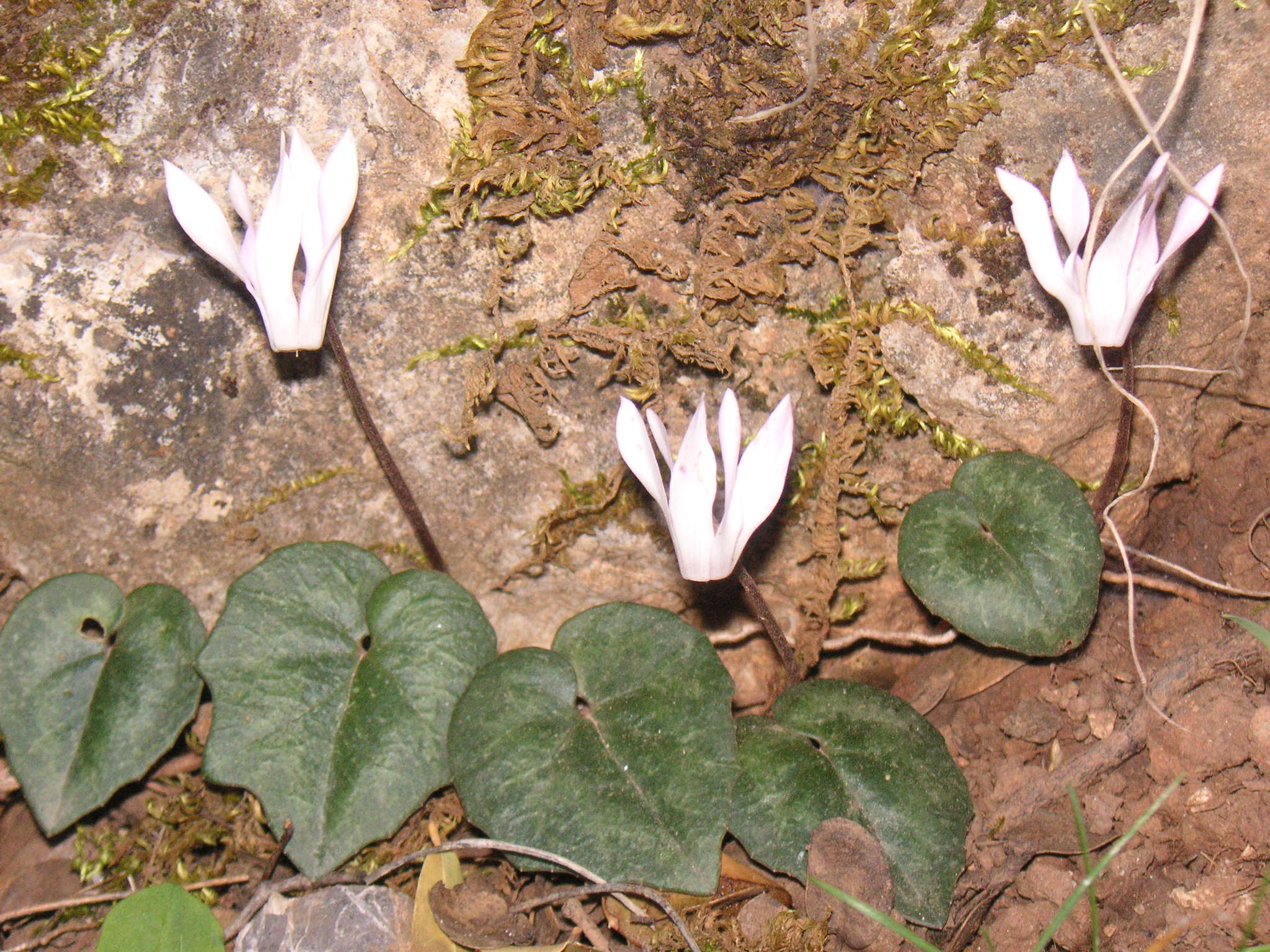
The genus is known for rounded or angular leaves, often attractively mottled, paired with nodding flowers whose five petals reflex and twist, frequently marked darker at the base. Cyclamen hederifolium itself carries ivy-shaped foliage patterned in silvery green, with fragrant pink flowers around 2.5cm wide that open before or alongside the leaves. The Silver-leaved Group takes this further, with silvery-grey leaves marked in variable dark green and small pink flowers with swept-back petals.
Source: RHS
Mice, Squirrels, Weevils
Mice and grey squirrels sometimes dig up the tubers, an outdoor hazard worth watching for. Under glass, keep an eye out for glasshouse red spider mite and vine weevil.
Source: RHS
Grey Mould and Damping Off
The main disease concerns are cyclamen grey mould and, in seedlings, damping off, with grey mould turning up more often on plants grown under glass. Beyond disease, tuber disturbance from digging mice or squirrels is the other common setback.
Source: RHS
Care recipe
The species record — the baseline every cultivar inherits unless it says otherwise.
Care notes are early — not yet verified
- Light
- ai:claude-opus-4-8
- Water
- ai:claude-opus-4-8 (range 7-14d)
- Humidity
- ai:claude-opus-4-8
- Soil
- ai:claude-fable-5
- Care
- ai:claude-fable-5
Bright, indirect
≈ every 14 days
Medium
5–18 °C
Well-draining mix, gritty with organic matter
Seed; tubers rest dormant through summer dormancy
Dilute balanced feed monthly while in active leaf and bloom
Slow
Pink autumn blooms that appear before the ivy-shaped leaves
Toxic to cats & dogs & humans
Primulaceae; Cyclamen tubers contain saponins (triterpenoid glycosides) that are toxic if ingested. This is where toxicity lives: every cultivar of this species inherits it and none can override it.
Reference images
Every image credited. Licenses link to their deeds.
Sources: ai:claude-opus-4-8 · ai:claude-opus-4-8 (range 7-14d) · ai:claude-fable-5 · ai:claude-opus-4-8 (family inference)
Kept true by its growers
Every fact here carries its source. Grow Sowbread yourself? What you’ve observed — how it drinks, how it holds its color, a name that’s off — and a clear photo of your plant are exactly what keep this page honest. Contributions are reviewed before anything changes.
Sign in to add what you know →