Cultivar · genus Codiaeum
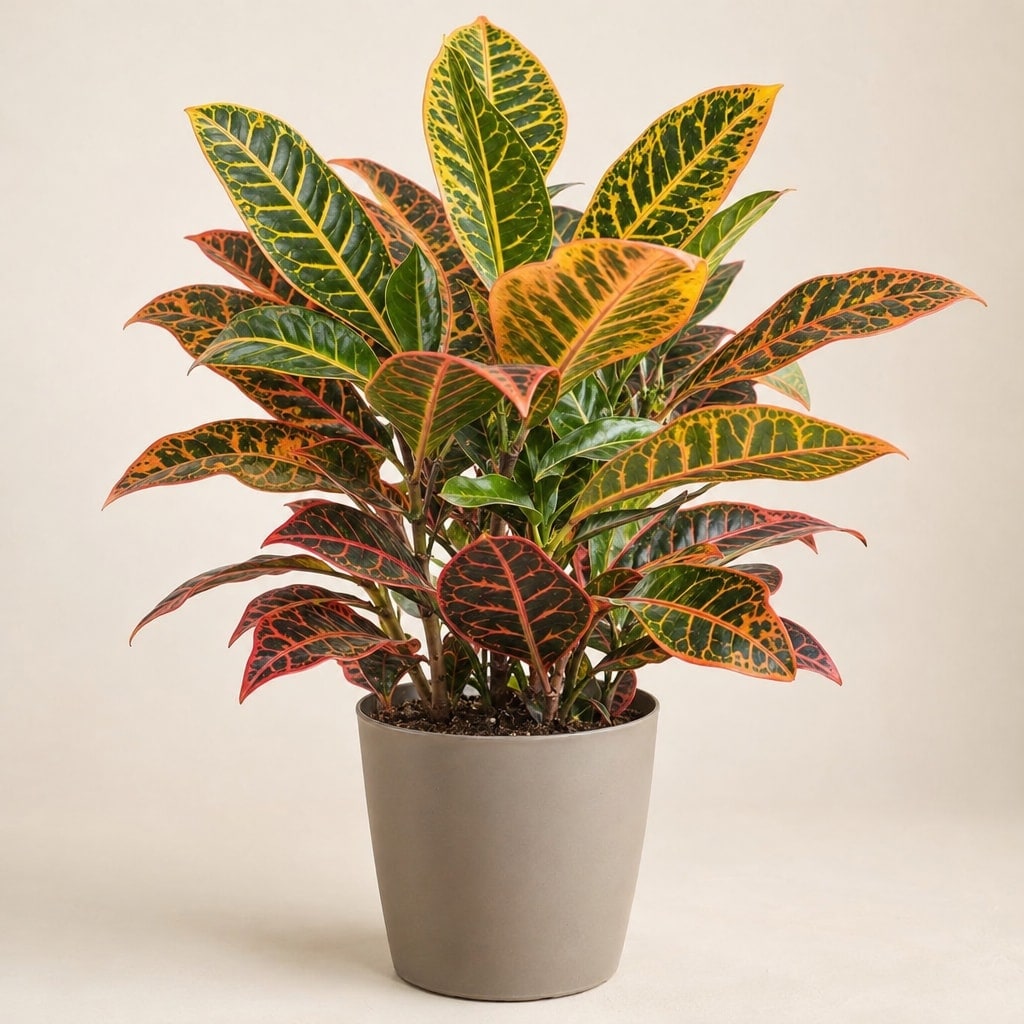
Petra
Codiaeum variegatum · ‘Petra’
Guide
Written and kept by people who grow it. Every section carries its source.
Thrips and Petra
Petra crotons are particularly susceptible to leaf-burrowing thrips. To control them, hose the plant down thoroughly in the morning with cold water while the thrips are still resting.
Source: Epic Gardening
Care recipe
Each fact carries its confidence tier — and says whether it belongs to this cultivar or is inherited from the species.
Care notes reviewed by Horta
- Light
- ai:claude-code
- Humidity
- ai:claude-code
- Soil
- ai:claude-code
Bright, indirect
≈ every 10 days
High
16–27 °C
peat-free, loam-based potting compost
air layering in spring, or softwood cuttings with bottom heat in summer
Balanced liquid feed monthly in the growing season
Moderate
sprays of tiny white or yellow star-shaped flowers may appear in summer
Toxic to cats & dogs & humans
Euphorbiaceae produce an irritant milky latex that can cause skin and mucous-membrane irritation and digestive upset if ingested. This is where toxicity lives: every cultivar inherits it and none can override it.
Reference images
Every image credited. Licenses link to their deeds.
PrimarySources: ai:claude-code · ai:claude-opus-4-8 (family inference)
Kept true by its growers
Every fact here carries its source. Grow ‘Petra’ yourself? What you’ve observed — how it drinks, how it holds its color, a name that’s off — and a clear photo of your plant are exactly what keep this page honest. Contributions are reviewed before anything changes.
Sign in to add what you know →