Cultivar · genus Chlorophytum
Variegatum
Chlorophytum comosum · ‘Variegatum’
Guide
Written and kept by people who grow it. Every section carries its source.
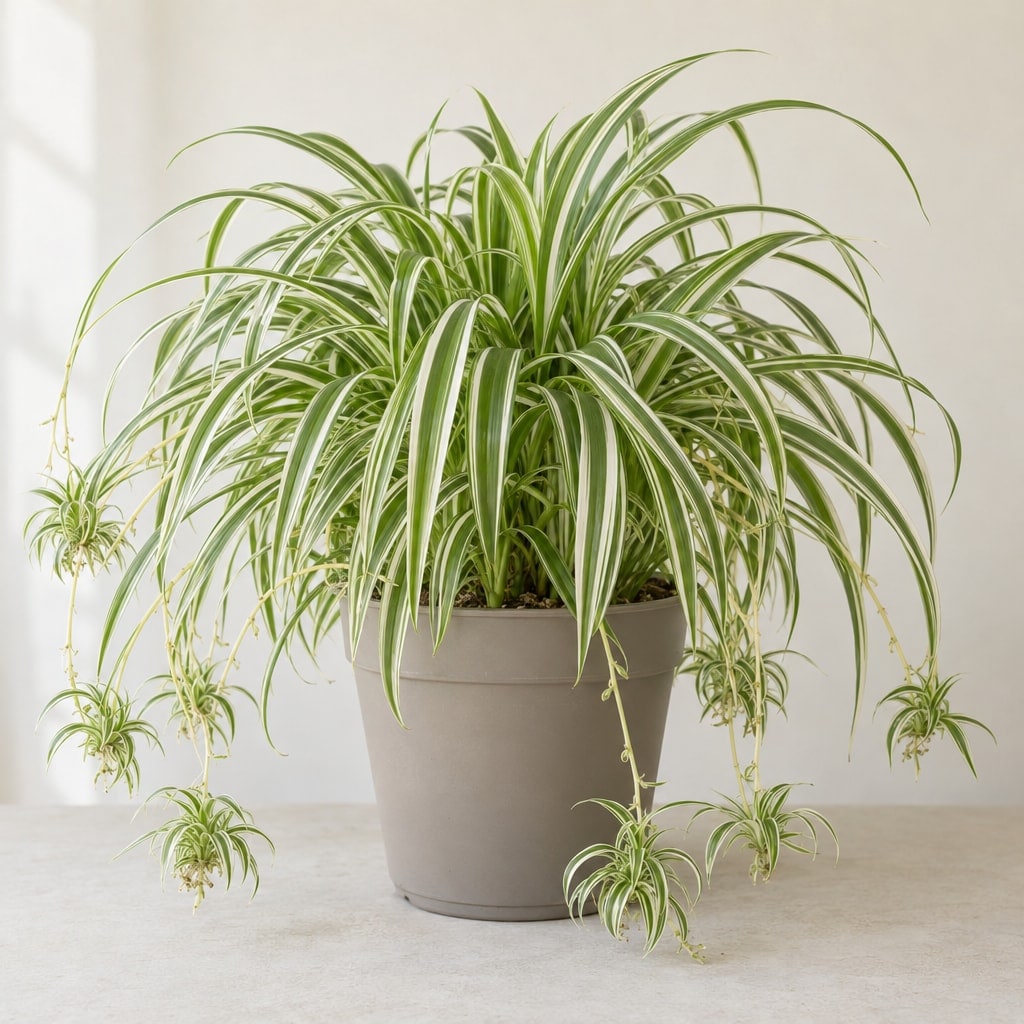
Propagating from plantlets
The plantlets on the long, thin stems are easy to propagate. Once they have their own roots, pin them into moist peat-free compost, or place them in water until the roots lengthen, then pot them up. Mature plants can also be divided.
Source: RHS
Care recipe
Each fact carries its confidence tier — and says whether it belongs to this cultivar or is inherited from the species.
Care notes reviewed by Horta
- Light
- ai:claude-code
- Humidity
- ai:claude-code
Bright, indirect
≈ every 12 days
Medium
13–27 °C
Loose, well-draining all-purpose potting mix
pin rooted plantlets into moist compost or root in water; divide mature plants
usually unnecessary if repotted in fresh compost; otherwise balanced liquid feed every other month, April to September
Fast
Small white flowers on arching runners
Non-toxic to cats & dogs
Spider plant (Chlorophytum comosum) — ASPCA non-toxic; the genus carries no toxic principle. This is where toxicity lives: every cultivar inherits it and none can override it.
Reference images
Every image credited. Licenses link to their deeds.
PrimarySources: ai:claude-code · ASPCA
Kept true by its growers
Every fact here carries its source. Grow ‘Variegatum’ yourself? What you’ve observed — how it drinks, how it holds its color, a name that’s off — and a clear photo of your plant are exactly what keep this page honest. Contributions are reviewed before anything changes.
Sign in to add what you know →