Species · genus Chlorophytum · Asparagaceae
Spider Plant
Chlorophytum comosum (Thunb.) Jacques
Also known as: Spider Ivy · Hen And Chickens · Ribbonplant · Spiderplant · Bracket Plant
Cultivars of C. comosum
The named forms growers keep — each with its own page, each honest about how much we know.
No named cultivars catalogued under C. comosum yet. When growers document a stable, named form, it earns its own page here.
Guide
The species-level account. Cultivar pages build on this and say where they differ.
An Easy-Care Classic
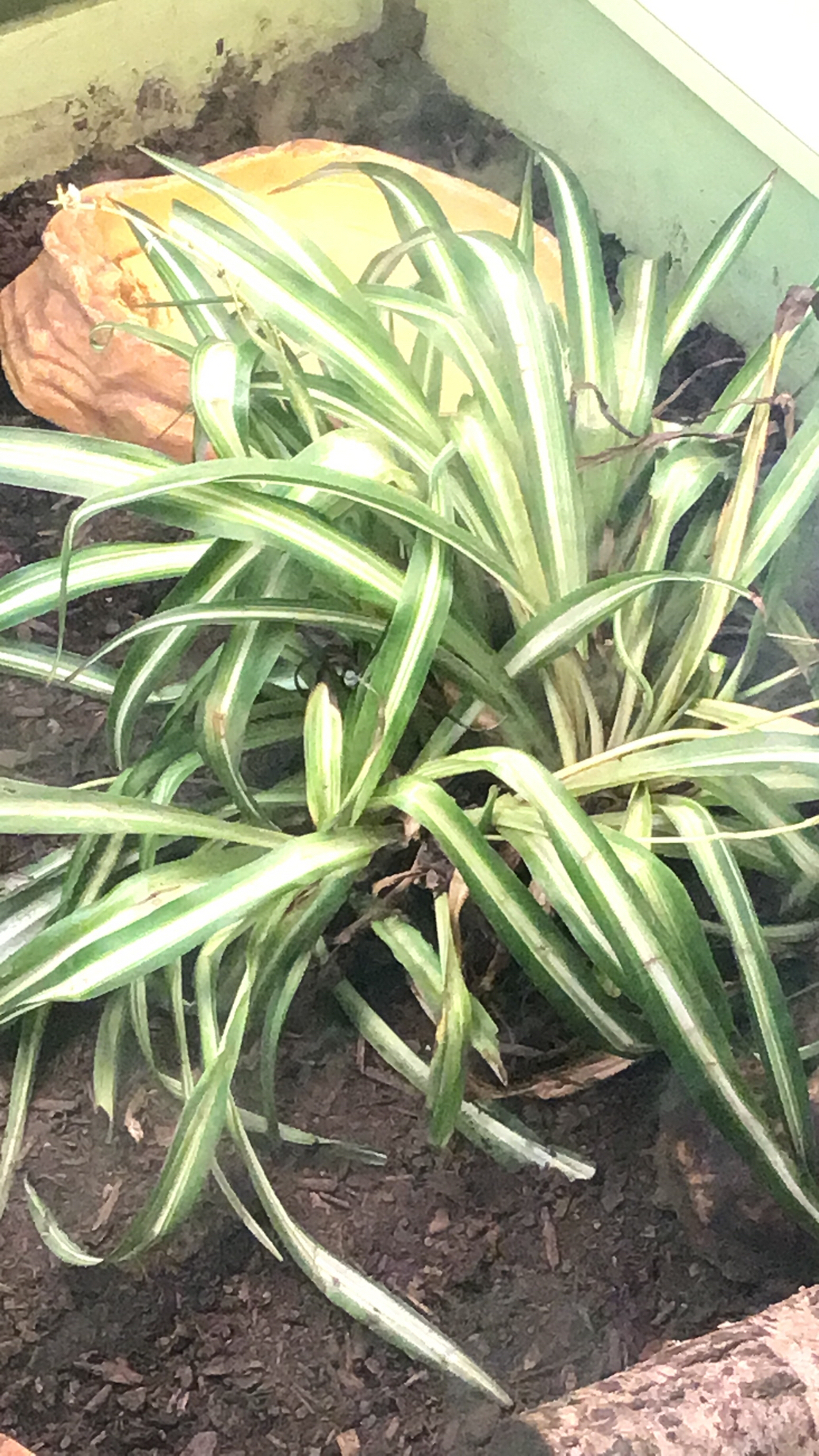
The spider plant, Chlorophytum comosum, is one of the most forgiving houseplants around, grown for its arching, strappy leaves and the small plantlets that dangle from long stems like tiny spiders. It belongs to the Asparagaceae family and adapts to a wide range of indoor conditions, which is much of why it has remained a favorite for so long.
Source: Epic Gardening
From Southern Africa
This plant traces back to Southern Africa, where it grows in tropical climates. It was first documented in the eighteenth century by Carl Peter Thunberg, a student of Linnaeus, and published under an earlier name before eventually settling into the genus Chlorophytum in 1862. It has since naturalized in other warm regions of the world beyond its native range.
Source: Epic Gardening
A Forgiving Rhythm
Give this plant bright but indirect light indoors, since it tolerates low light but grows slower and can lose variegation there, and too much direct sun will scorch the leaves. Water regularly enough to keep the compost just lightly moist, easing off in winter, and avoid letting it sit in standing water. It doesn't generally need much feeding if repotted with fresh compost regularly, but a balanced liquid fertiliser every other month through the growing season helps if light alone doesn't fix pale leaves. High humidity isn't a requirement, though very dry air can bring on browned leaf tips.
Source: RHS
Offsets, Division, or Seed
The easiest route is by offsets: once a plantlet has its own roots, detach it and pin it into moist compost, or simply set it in a glass of water until roots lengthen before potting up. Mature plants can also be divided by slicing through the thick, fleshy roots with a knife, keeping at least one growing point per piece, which suits cultivars that skip producing offsets altogether.
Source: RHS
Cascading Leaves, Spider Babies
Chlorophytum comosum forms a graceful, cascading habit once mature, with linear leaves that come in green or white-striped forms. Loose panicles of small white flowers appear at the flowering nodes, and it's at these nodes that plantlets form. The genus name itself comes from the Greek for green plant, and the species name refers to its tufted growth.
Source: Missouri Botanical Garden
Aphids and Mites
Spider plants face relatively few pest problems, but aphids and spider mites are the ones to watch for, along with whiteflies and scale on occasion. Early signs often show up as spots or discoloration on the leaves. Washing off aphids as soon as they're spotted helps keep populations from building.
Source: RHS
Reading the Leaves
Brown leaf tips are the most common complaint, usually the result of too much or too little water, fluoride in tap water, dry air, or strong sunlight, so rainwater or filtered water is worth using where possible. Pale, dull leaves usually signal a plant that needs a drink rather than a lack of nutrients, and it tends to bounce back quickly once watered. A lack of new plantlets often comes down to insufficient light, cool temperatures, or a pot that's too roomy, and some cultivars simply don't produce offsets at all.
Source: RHS
Light Pruning, Occasional Repotting
Pull or snip off browned and dead leaves as they occur, and trim away heavy, gnarly-rooted plantlets if you don't intend to pot them up, since fresh flower stems will follow. A neglected plant with lots of damaged foliage can be renovated by cutting all growth back to two or three inches, letting a new flush emerge from the centre. Repot every year or two into a slightly larger pot with peat-free compost, since the fleshy roots fill containers quickly.
Source: RHS
Care recipe
The species record — the baseline every cultivar inherits unless it says otherwise.
Care notes are early — not yet verified
- Light
- ai:claude-opus-4-8
- Water
- ai:claude-opus-4-8 (range 7-12d)
- Humidity
- ai:claude-opus-4-8
- Soil
- ai:claude-fable-5
- Care
- ai:claude-fable-5
Bright, indirect
≈ every 12 days
Medium
13–27 °C
Loose, well-draining all-purpose potting mix
Plantlets from runners rooted in water or soil
Diluted liquid feed monthly in the growing season
Fast
Small white flowers on arching runners
Non-toxic to cats & dogs
Spider plant (Chlorophytum comosum) — ASPCA non-toxic; the genus carries no toxic principle. This is where toxicity lives: every cultivar of this species inherits it and none can override it.
Reference images
Every image credited. Licenses link to their deeds.
PrimarySources: ai:claude-opus-4-8 · ai:claude-opus-4-8 (range 7-12d) · ai:claude-fable-5 · ASPCA
Kept true by its growers
Every fact here carries its source. Grow Spider Plant yourself? What you’ve observed — how it drinks, how it holds its color, a name that’s off — and a clear photo of your plant are exactly what keep this page honest. Contributions are reviewed before anything changes.
Sign in to add what you know →