Species · genus Borzicactus · Cactaceae
Golden Rat Tail
Cleistocactus winteri D.R.Hunt
Also known as: Golden Rat Tail Cactus · Monkey Tail Cactus · Monkey's Tail Cactus
Cultivars of C. winteri
The named forms growers keep — each with its own page, each honest about how much we know.
No named cultivars catalogued under C. winteri yet. When growers document a stable, named form, it earns its own page here.
Guide
The species-level account. Cultivar pages build on this and say where they differ.
The Golden Rat Tail
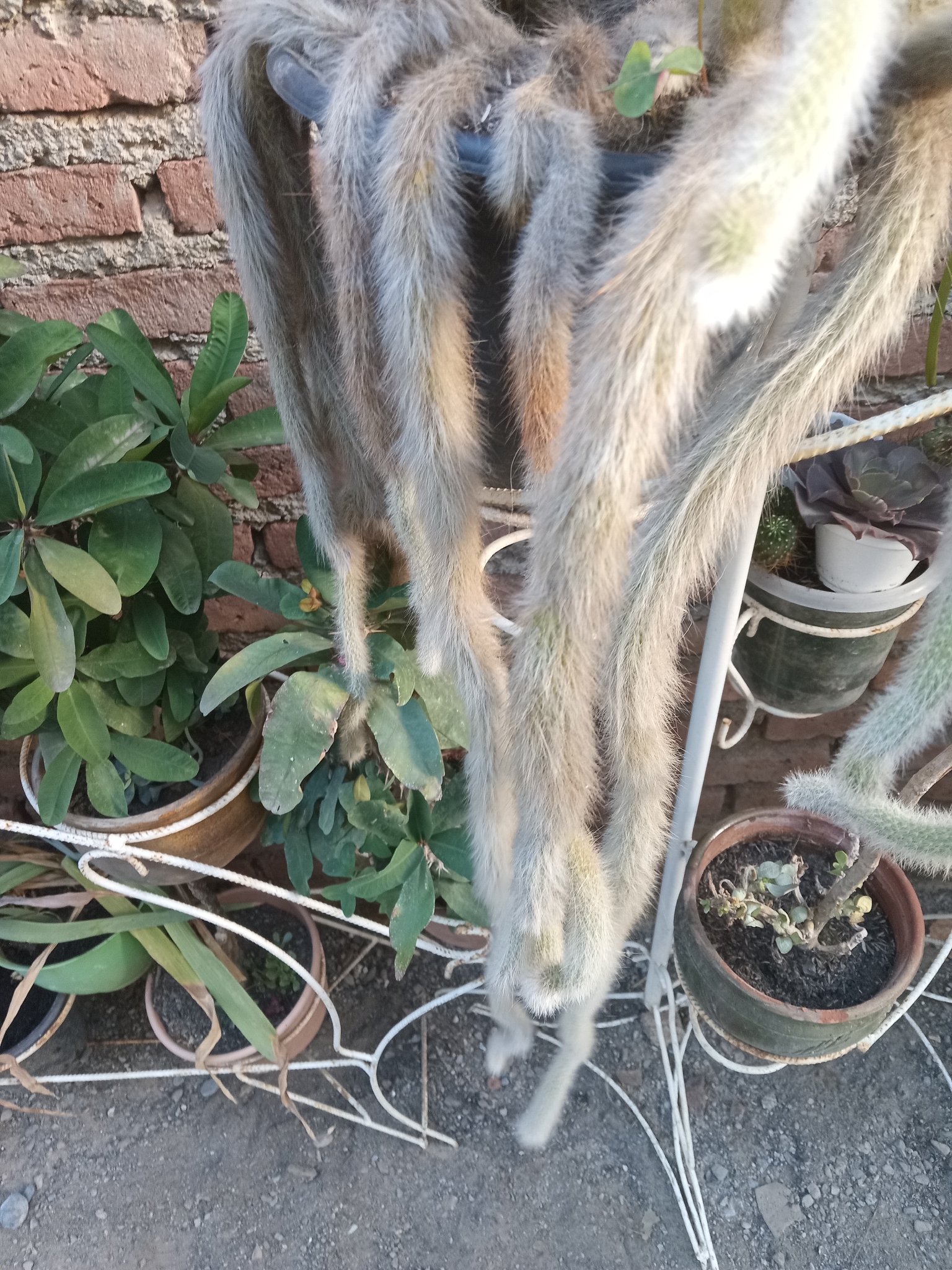
Cleistocactus winteri, known familiarly as the golden rat tail, is a trailing cactus prized for its dense covering of golden yellow, bristle-like spines. It belongs to the Cactaceae family and carries the RHS Award of Garden Merit. Best suited to a hanging basket in a conservatory or temperate greenhouse, it shows off its cylindrical stems as they cascade downward.
Source: RHS
A Bolivian Native
This species comes from Bolivia, part of the Cleistocactus genus of erect columnar cacti with ribbed, eventually branching stems and dense spines. A close relative sharing that homeland, Cleistocactus colademononis, was once treated as a subspecies of winteri and carries the telling common name of monkey's tail.
Source: RHS
Sun, Sand, and Restraint
Grow this cactus under glass in standard cactus compost, in full sun and low humidity, with well-drained sandy soil that tolerates acid, alkaline, or neutral pH. During the growing season, water moderately and feed monthly with a dilute low-nitrogen fertiliser. Come mid-autumn, withhold water entirely and keep the plant dry until spring returns.
Source: RHS
Cuttings or Seed
Propagate by taking stem cuttings in summer, or by sowing seed in spring.
Source: RHS
Trailing Golden Spines
The stems are cylindrical and fleshy, reaching up to 1.5 metres in length, and are densely clothed in golden yellow, bristle-like spines that give the plant its common name. In summer it bears tubular orange-red flowers up to 5 centimetres long. Its habit is evergreen and trailing, making it a striking subject when allowed to hang freely.
Source: RHS
Watch for Mealybugs
This cactus may be susceptible to mealybugs, so it is worth checking the stems periodically for their telltale presence.
Source: RHS
Guard Against Root Rot
Root rots are the main disease risk for this species, a consequence of soil staying too wet for too long. The dry winter rest and well-drained sandy compost the plant calls for are the best safeguards against it.
Source: RHS
Little Pruning Needed
No pruning is required for this cactus, and it takes roughly two to five years to reach maturity, eventually spreading and rising to between one and one and a half metres. Its hardiness rating of H2 means it tolerates low temperatures but will not survive being frozen, so it needs a sheltered, frost-free position.
Source: RHS
Care recipe
The species record — the baseline every cultivar inherits unless it says otherwise.
Care notes are early — not yet verified
- Light
- ai:claude-opus-4-8
- Water
- ai:claude-opus-4-8 (range 14-28d)
- Humidity
- ai:claude-opus-4-8
- Soil
- ai:claude-fable-5
- Care
- ai:claude-fable-5
Direct sun
≈ every 28 days
Low — average room
10–30 °C
Gritty, fast-draining cactus mix
Stem cuttings or offsets, callused before potting
Dilute cactus feed once or twice in summer
Slow
Large salmon-orange blooms; graceful trailing golden-spined stems
Not yet documented
This is where toxicity lives — every cultivar of this species inherits it and none can override it.
Reference images
Every image credited. Licenses link to their deeds.
PrimarySources: ai:claude-opus-4-8 · ai:claude-opus-4-8 (range 14-28d) · ai:claude-fable-5
Kept true by its growers
Every fact here carries its source. Grow Golden Rat Tail yourself? What you’ve observed — how it drinks, how it holds its color, a name that’s off — and a clear photo of your plant are exactly what keep this page honest. Contributions are reviewed before anything changes.
Sign in to add what you know →