Species · genus Zantedeschia · Araceae
Spotted Arum
Zantedeschia albomaculata (Hook.) Baill.
Also known as: Spotted Calla Lily · Black-throat Calla · Spotted Calla · Arrow-Leaved Arum · Spotted Arum Lily
Cultivars of Z. albomaculata
The named forms growers keep — each with its own page, each honest about how much we know.
No named cultivars catalogued under Z. albomaculata yet. When growers document a stable, named form, it earns its own page here.
Guide
The species-level account. Cultivar pages build on this and say where they differ.
The spotted arum lily
Zantedeschia albomaculata, known as the spotted arum lily or spotted calla, is a tender rhizomatous perennial in the arum family. It forms a clump of arrow-shaped leaves and carries exotic, hooded summer flowers around a central spadix.
Source: RHS
A southern African native
This species comes from South Africa and tropical East Africa, part of a genus, Zantedeschia, whose members are tuberous or rhizomatous perennials from that region. In UK conditions it is rated H1C, meaning it can only sit outdoors through the milder summer months.
Source: RHS
Light, water, and a rest
Grow this calla in peat-free, loam-based compost in full light, ideally a south- or west-facing spot with some shelter. While it is actively growing, water freely and feed with a balanced liquid fertiliser every two to three weeks. It needs a winter dormancy with little or no water, so once the leaves die back after flowering, move it to a dry, frost-free, and preferably dark place until spring growth resumes.
Source: RHS
By seed or division
New plants can be raised from seed or increased by division of the rhizome.
Source: RHS
Spotted leaves, hooded blooms
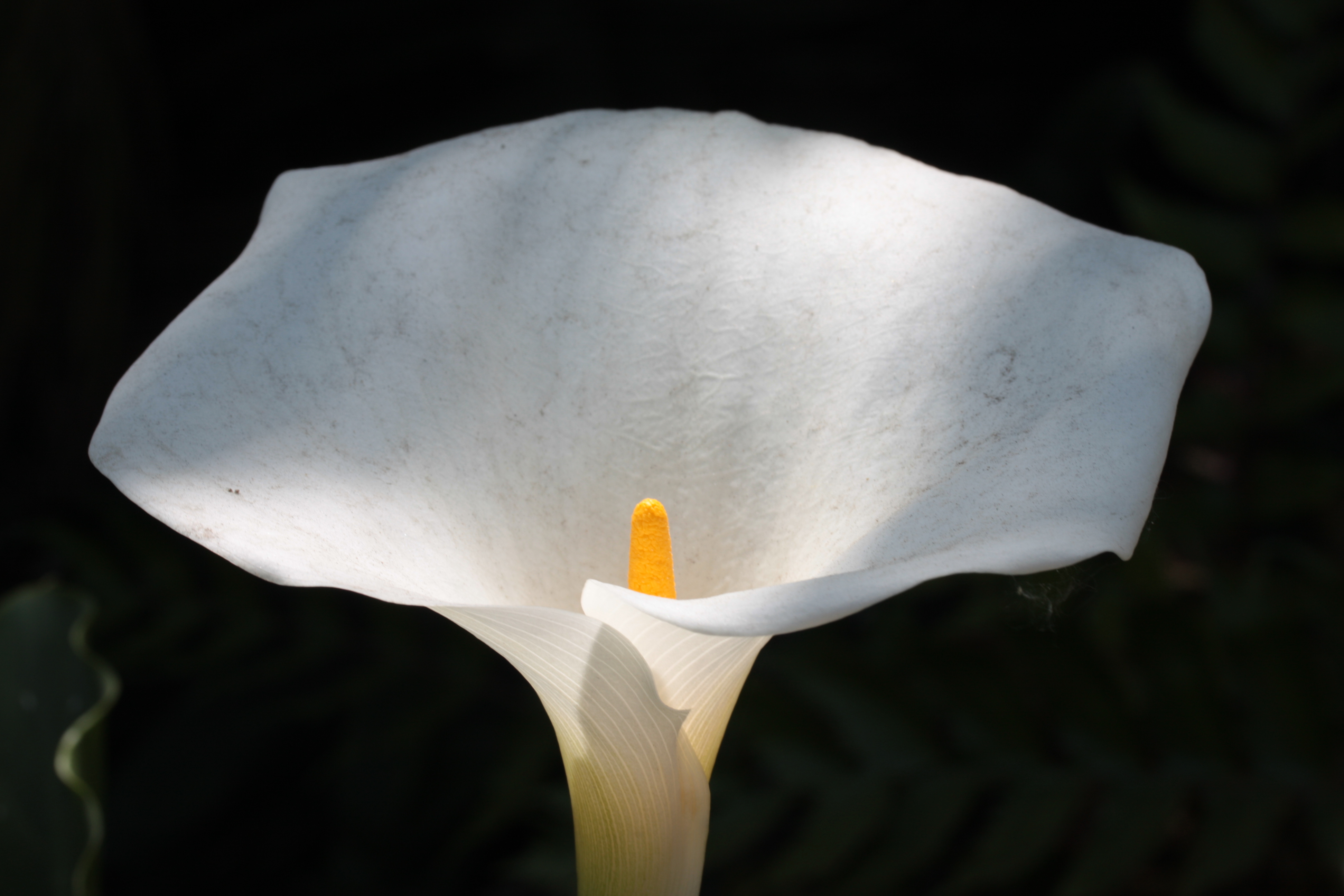
The leaves are semi-erect and arrow-shaped, marked with white spots, and can reach up to 45cm long. In summer the plant sends up spathes to 12cm long in white, cream, pale yellow or pale pink, each bearing a purple mark at the base around a yellow spadix. It grows as a clump-forming, deciduous perennial, generally staying under half a metre in height and spread.
Source: RHS
Watch for red spider mite
This calla may be troubled by glasshouse red spider mite, though it is otherwise generally free of disease.
Source: RHS
Deadheading and dormancy
As flowers fade, pull the whole stem out from the base rather than snipping just the bloom. Beyond that, the main seasonal task is honouring the winter rest period, moving the plant to a dry, dark, frost-free spot once its leaves die down.
Source: RHS
Care recipe
The species record — the baseline every cultivar inherits unless it says otherwise.
Care notes are early — not yet verified
- Light
- ai:claude-opus-4-8
- Water
- ai:claude-opus-4-8 (range 7-14d)
- Humidity
- ai:claude-opus-4-8
- Soil
- ai:claude-fable-5
- Care
- ai:claude-fable-5
Bright, indirect
≈ every 14 days
Medium
13–26 °C
Well-draining, humus-rich potting mix
Division of tubers during dormancy
Balanced liquid feed monthly during the growing season
Moderate
White to cream spathes in summer; needs a dry winter rest to rebloom
Toxic to cats & dogs & humans
Araceae contain insoluble calcium oxalate crystals, an irritant if chewed. This is where toxicity lives: every cultivar of this species inherits it and none can override it.
Reference images
Every image credited. Licenses link to their deeds.
PrimarySources: ai:claude-opus-4-8 · ai:claude-opus-4-8 (range 7-14d) · ai:claude-fable-5 · ai:claude-opus-4-8 (family inference)
Kept true by its growers
Every fact here carries its source. Grow Spotted Arum yourself? What you’ve observed — how it drinks, how it holds its color, a name that’s off — and a clear photo of your plant are exactly what keep this page honest. Contributions are reviewed before anything changes.
Sign in to add what you know →