Species · genus Yucca · Asparagaceae
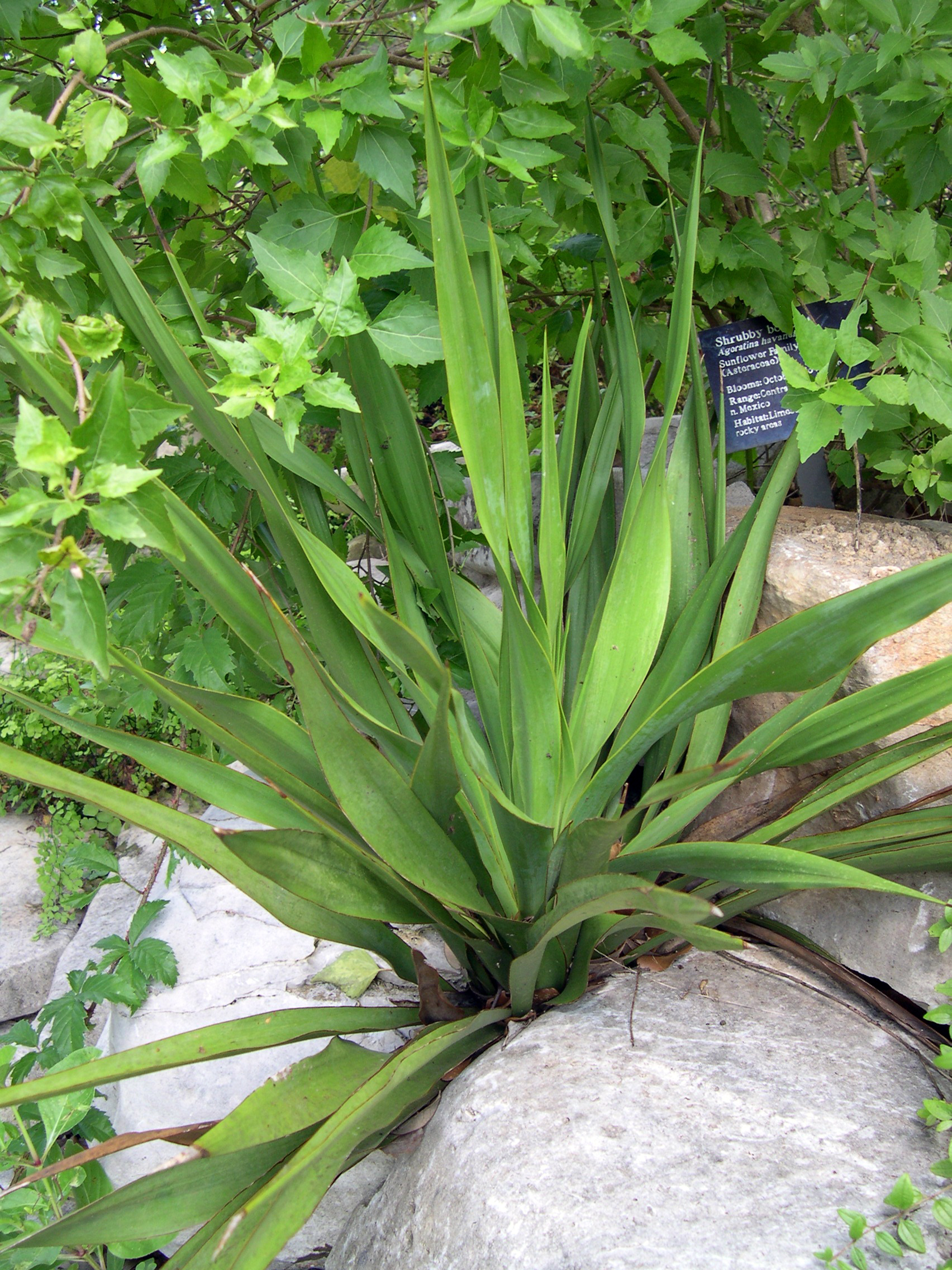
Twisted-leaf Spanish-dagger
Yucca rupicola Scheele
Also known as: Twist-leaf Yucca · Twisted-leaf Yucca · Texas Yucca
Cultivars of Y. rupicola
The named forms growers keep — each with its own page, each honest about how much we know.
No named cultivars catalogued under Y. rupicola yet. When growers document a stable, named form, it earns its own page here.
Guide
The species-level account. Cultivar pages build on this and say where they differ.
The Beaked Yucca
Yucca rostrata, commonly called beaked yucca or Big Bend yucca, is a slow-growing, tree-forming evergreen prized for its sculptural rosette of narrow, blue-gray leaves atop a bare trunk. It is one of the toughest trunk-forming yuccas and a staple of drought-tolerant, xeriscape gardens.
Source: Epic Gardening
From the Chihuahuan Desert
This species is native to the high desert of northern Mexico and western Texas, growing at elevations between roughly 3,000 and 5,000 feet in the Chihuahuan Desert. There it has adapted to rocky hillsides, limestone outcrops, and well-draining sandy soils under intense sun and minimal rainfall. It has since naturalized further afield, into places like New Mexico, Utah, and Colorado, where it can reach up to fifteen feet and draws hummingbirds and yucca moths when in bloom.
Source: Epic Gardening
Sun, Drought, and Patience
Beaked yucca wants full sun, at least six hours of direct light daily, since too little encourages weak, leggy growth. Water it about once a week through spring and summer whenever the soil has dried, then cut back to roughly once a month in fall and winter. It prefers dry, well-draining, neutral to alkaline soil, sandy rather than rich, and needs no fertilizer, though a balanced, time-released feed in spring can give it a boost.
Source: Epic Gardening
By Seed or Cutting
Beaked yucca can be grown from the seed produced by its fragrant white flower clusters, though germination is slow to match the plant's unhurried growth; sow into well-drained soil in a bright spot and keep evenly moist until seedlings emerge. Stem cuttings are the quicker route: take a three- to four-inch cutting, strip the top leaves to cut moisture loss, let it dry for four to five days, then pot it in well-draining soil under indirect light, where roots typically form in three to four weeks.
Source: Epic Gardening
A Silvery, Spiked Rosette
The plant's sharp-tipped, bluish-green leaves radiate from the trunk in a symmetrical, pom-pom-like rosette, often veiled in the pale gray fiber of old leaves for a silvery haze. In late spring it sends up yellow-orange flower stalks bearing clusters of white blooms. A named cultivar, 'Sapphire Skies,' grows to about five feet with a palm-like habit and creamy-white flowers in mid to late summer.
Source: Epic Gardening
Sap-Suckers to Watch
Beaked yucca can attract red spiders, spider mites, mealybugs, scale, and aphids. Regularly spraying and wiping dust from the leaves during dry seasons helps deter them, and a damp cloth or alcohol-soaked cotton swab will handle spider mites and scale or mealybug infestations by hand.
Source: Epic Gardening
Overwatering Is the Main Risk
This is otherwise a tough, disease-free plant, but excess water is its chief vulnerability, leading to root rot, yellowing leaves, and a soft, spongy trunk. Let the soil dry out fully before watering again if you spot early rot, and for more serious cases rinse the roots and replant into fresh, well-draining media.
Source: Epic Gardening
Careful, Infrequent Repotting
Because it is such a slow grower, this yucca rarely needs repotting, and when it does, thick gloves, long sleeves, and eye protection are essential given the spiked leaves. Move up to a pot two to four inches larger, trimming an inch or two off the root mass, and set the plant so the base of the stalk sits level with the pot's rim. Dead, brown, or old leaves can be pulled away by gloved hand each spring to tidy the rosette.
Source: Epic Gardening
Care recipe
The species record — the baseline every cultivar inherits unless it says otherwise.
Care notes are early — not yet verified
- Light
- ai:claude-opus-4-8
- Water
- ai:claude-opus-4-8 (range 14-28d)
- Humidity
- ai:claude-opus-4-8
- Soil
- ai:claude-fable-5
- Care
- ai:claude-fable-5
Direct sun
≈ every 28 days
Low — average room
6–32 °C
Sandy, sharply draining rocky mix
Offsets or seed
Minimal — a light spring feed at most
Slow
Rarely flowers indoors
Toxic to cats & dogs
Saponins — vomiting, drooling. This is where toxicity lives: every cultivar of this species inherits it and none can override it.
Reference images
Every image credited. Licenses link to their deeds.
PrimarySources: ai:claude-opus-4-8 · ai:claude-opus-4-8 (range 14-28d) · ai:claude-fable-5 · ASPCA
Kept true by its growers
Every fact here carries its source. Grow Twisted-leaf Spanish-dagger yourself? What you’ve observed — how it drinks, how it holds its color, a name that’s off — and a clear photo of your plant are exactly what keep this page honest. Contributions are reviewed before anything changes.
Sign in to add what you know →