Species · genus Yucca · Asparagaceae
St. Peter's Palm
Yucca filifera Chabaud
Also known as: Palma China
Cultivars of Y. filifera
The named forms growers keep — each with its own page, each honest about how much we know.
No named cultivars catalogued under Y. filifera yet. When growers document a stable, named form, it earns its own page here.
Guide
The species-level account. Cultivar pages build on this and say where they differ.
St. Peter's Palm
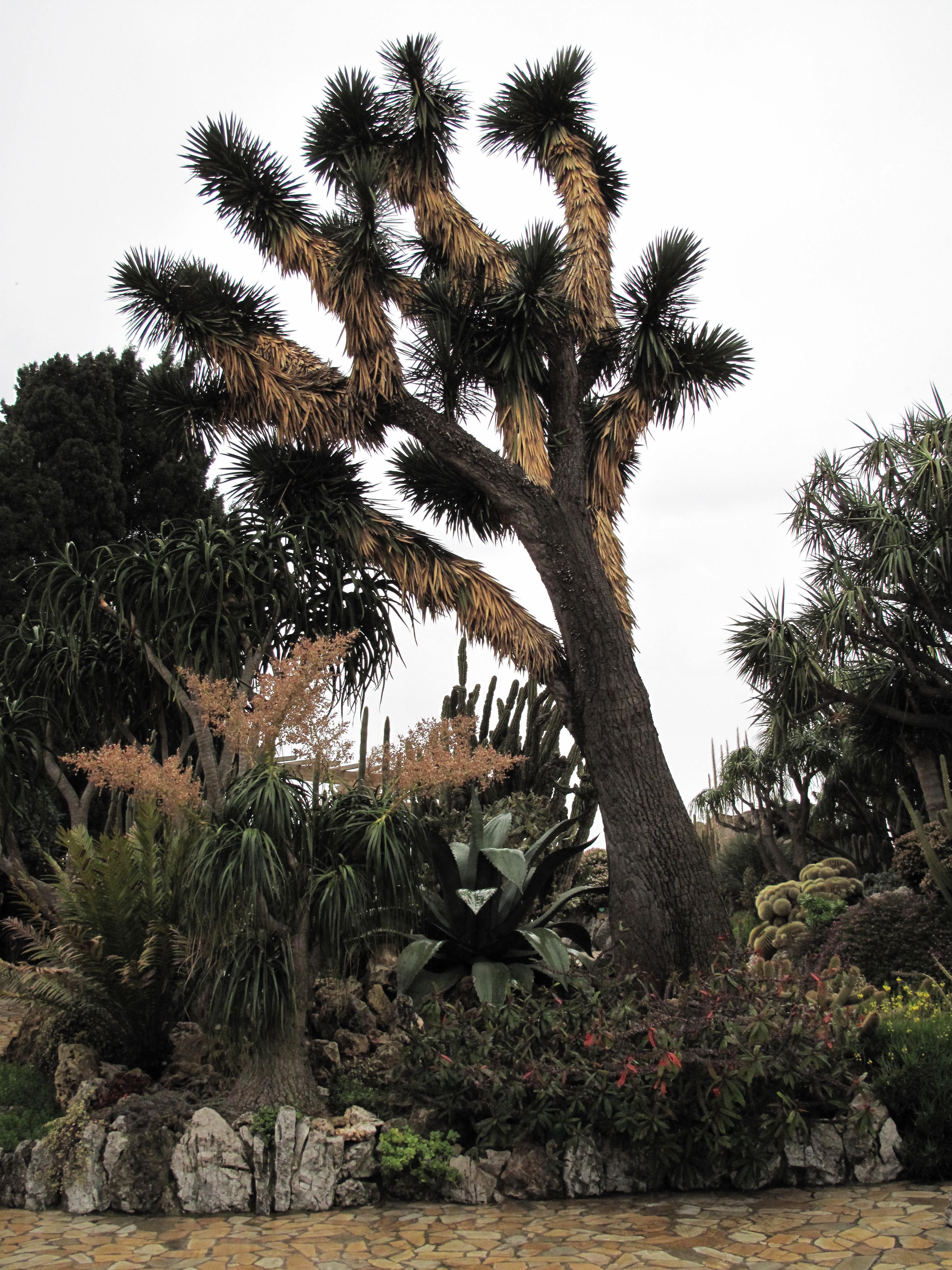
Yucca filifera, known as St. Peter's palm or tree yucca, is an evergreen tree species that in cultivation is usually seen as a single short-trunked plant rather than its eventual tall, sparsely-branched form. It belongs to the asparagus family, Asparagaceae, and is grown chiefly for its architectural rosettes of stiff, spine-tipped leaves.
Source: RHS
Native to Mexico
This yucca's natural range is Mexico, and it eventually forms a tall tree in the wild, though gardeners more commonly keep it as a shorter, single-trunked specimen.
Source: RHS
Sun, Drainage, Dry Winters
Give this yucca full sun and a sheltered, west- or south-facing spot, in very well-drained soil, or grow it under glass in gritty compost. It tolerates chalk, loam, or sandy soils across acid, alkaline, or neutral pH, so long as moisture is well-drained, and it needs to be kept almost dry over winter.
Source: RHS
Seed or Suckers
Propagate by seed, or remove rooted suckers from the base of the plant.
Source: RHS
Thread-Edged Rosettes
The leaves reach up to 50cm long, stiff and spine-tipped, with peeling, thread-like edges, and they gather into a dense rosette. Mature plants send up large, hanging clusters of creamy, bell-shaped flowers, and the species can eventually grow into a tall tree 8-12 metres high with a spread of 2.5-4 metres, though maturity takes 20-50 years.
Source: RHS
Aphids and Snails
Watch for aphids settling on the flower spikes, and keep an eye out for snails. Leaf spot disease can also affect this yucca.
Source: RHS
Little Pruning Needed
This yucca asks for no routine pruning, though removing dead leaves keeps its appearance tidy. If a plant grows too large, it can be cut back hard in late spring, and it will reshoot from the trunk.
Source: RHS
Care recipe
The species record — the baseline every cultivar inherits unless it says otherwise.
Care notes are early — not yet verified
- Light
- ai:claude-opus-4-8
- Water
- ai:claude-opus-4-8 (range 14-28d)
- Humidity
- ai:claude-opus-4-8
- Soil
- ai:claude-fable-5
- Care
- ai:claude-fable-5
Direct sun
≈ every 28 days
Low — average room
7–34 °C
Sandy, sharply draining cactus mix
Seed or offsets
Light cactus feed once or twice in summer
Slow
Rarely flowers indoors
Toxic to cats & dogs
Saponins — vomiting, drooling. This is where toxicity lives: every cultivar of this species inherits it and none can override it.
Reference images
Every image credited. Licenses link to their deeds.
PrimarySources: ai:claude-opus-4-8 · ai:claude-opus-4-8 (range 14-28d) · ai:claude-fable-5 · ASPCA
Kept true by its growers
Every fact here carries its source. Grow St. Peter's Palm yourself? What you’ve observed — how it drinks, how it holds its color, a name that’s off — and a clear photo of your plant are exactly what keep this page honest. Contributions are reviewed before anything changes.
Sign in to add what you know →