Species · genus Yucca · Asparagaceae
Giant Spanish Dagger
Yucca carnerosana (Trel.) McKelvey
Cultivars of Y. carnerosana
The named forms growers keep — each with its own page, each honest about how much we know.
No named cultivars catalogued under Y. carnerosana yet. When growers document a stable, named form, it earns its own page here.
Guide
The species-level account. Cultivar pages build on this and say where they differ.
A Desert Dagger
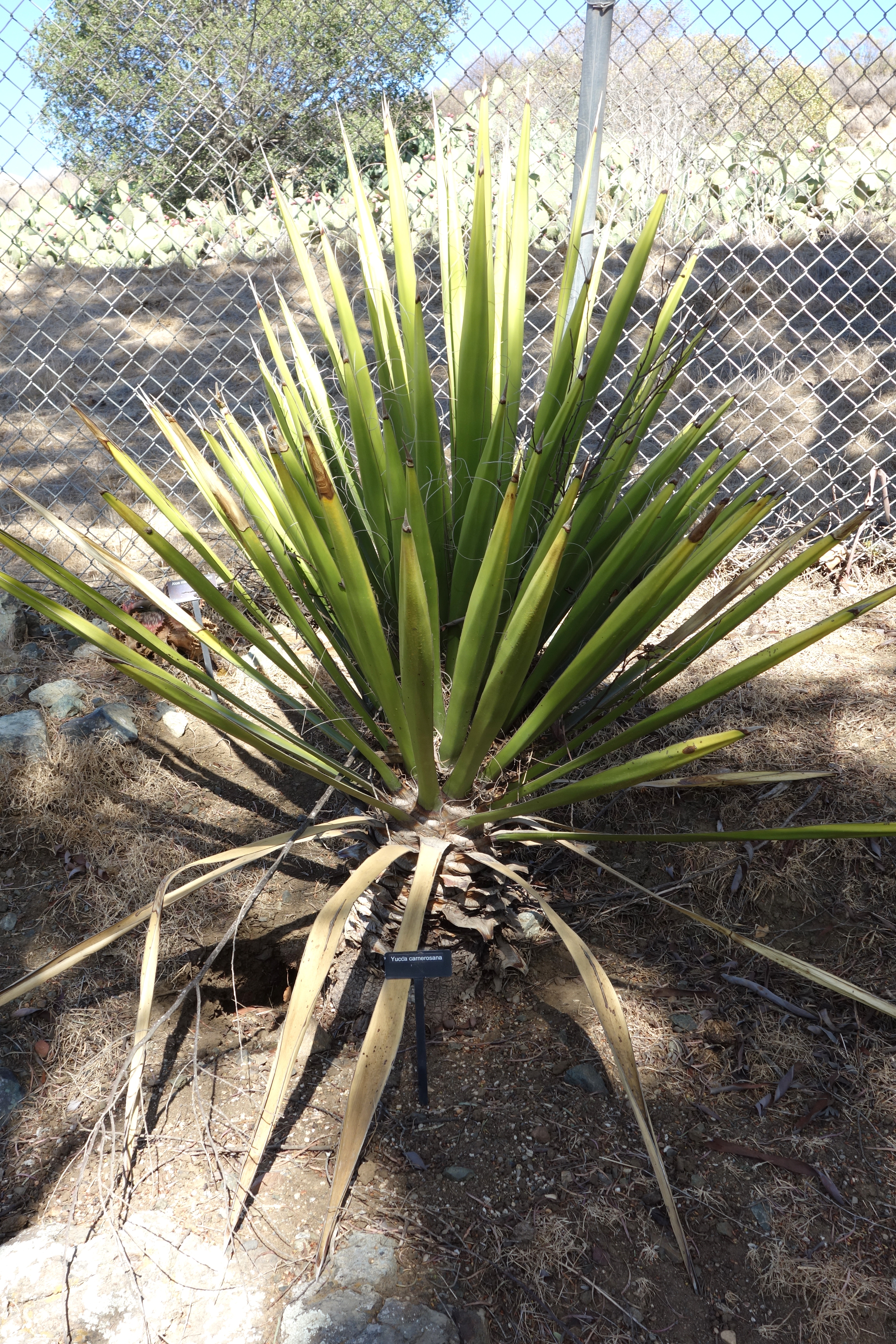
Yucca carnerosana, known in gardens as the giant Spanish dagger, is a shrub or tree in the asparagus family, grown for its rosettes of stiff, sword-shaped leaves. It carries tall panicles of bell-shaped flowers typical of its genus.
Source: RHS
Roots In Mexico
This species is native to northeastern Mexico, where it grows as a shrub or tree in desert and dry shrubland country. It was first described by Trelease under the name Samuela carnerosana in 1902, and later reclassified into Yucca by McKelvey in 1938.
Source: Kew
Rosette And Spire
As a genus, Yucca is built from evergreen perennials, shrubs, or trees carrying dense or loose rosettes of stiff, sword-like leaves. Above these rosettes rise tall flower panicles, each set with bell-shaped blooms.
Source: RHS
Care recipe
The species record — the baseline every cultivar inherits unless it says otherwise.
Care notes are early — not yet verified
- Light
- ai:claude-opus-4-8
- Water
- ai:claude-opus-4-8 (range 14-28d)
- Humidity
- ai:claude-opus-4-8
- Soil
- ai:claude-fable-5
- Care
- ai:claude-fable-5
Direct sun
≈ every 28 days
Low — average room
7–33 °C
Gritty, fast-draining cactus mix
Seed; occasional offsets
Sparse cactus feed in the growing season
Slow
Rarely flowers indoors
Toxic to cats & dogs
Saponins — vomiting, drooling. This is where toxicity lives: every cultivar of this species inherits it and none can override it.
Reference images
Every image credited. Licenses link to their deeds.
PrimarySources: ai:claude-opus-4-8 · ai:claude-opus-4-8 (range 14-28d) · ai:claude-fable-5 · ASPCA
Kept true by its growers
Every fact here carries its source. Grow Giant Spanish Dagger yourself? What you’ve observed — how it drinks, how it holds its color, a name that’s off — and a clear photo of your plant are exactly what keep this page honest. Contributions are reviewed before anything changes.
Sign in to add what you know →