Species · genus Yucca · Asparagaceae
Banana Yucca
Yucca baccata Torr.
Also known as: Datil Yucca
Cultivars of Y. baccata
The named forms growers keep — each with its own page, each honest about how much we know.
No named cultivars catalogued under Y. baccata yet. When growers document a stable, named form, it earns its own page here.
Guide
The species-level account. Cultivar pages build on this and say where they differ.
Banana Yucca, Briefly
Yucca baccata, also known as banana yucca, blue yucca, datil, or Spanish bayonet, is a slow-growing evergreen shrub reaching about 1.6m tall in cultivation, usually holding a single crown of leaves, with a small trunk sometimes forming with age. It belongs to the Asparagaceae family and is grown for its architectural rosette of stiff, blue-green foliage.
Source: RHS
A Southwestern Native
This species hails from the southwestern United States and New Mexico. In the wild it is a rugged, drought-tolerant plant of arid country, a heritage still visible in its need for very well-drained soil and full sun.
Source: RHS
Sun, Drainage, Shelter
This yucca wants full sun and very well-drained soil, whether chalk, loam, or sand, and benefits from a sheltered, south- or west-facing spot. It tolerates acid, alkaline, or neutral pH, but excessive winter rainfall should be avoided, and container-grown plants do best in a mix generously amended with grit, watered freely through the growing season and only sparingly in winter.
Source: RHS
Seed or Suckers
Banana yucca is propagated either by sowing seed or by removing rooted suckers from the base of the plant.
Source: RHS
Sword Leaves, Banana Fruit
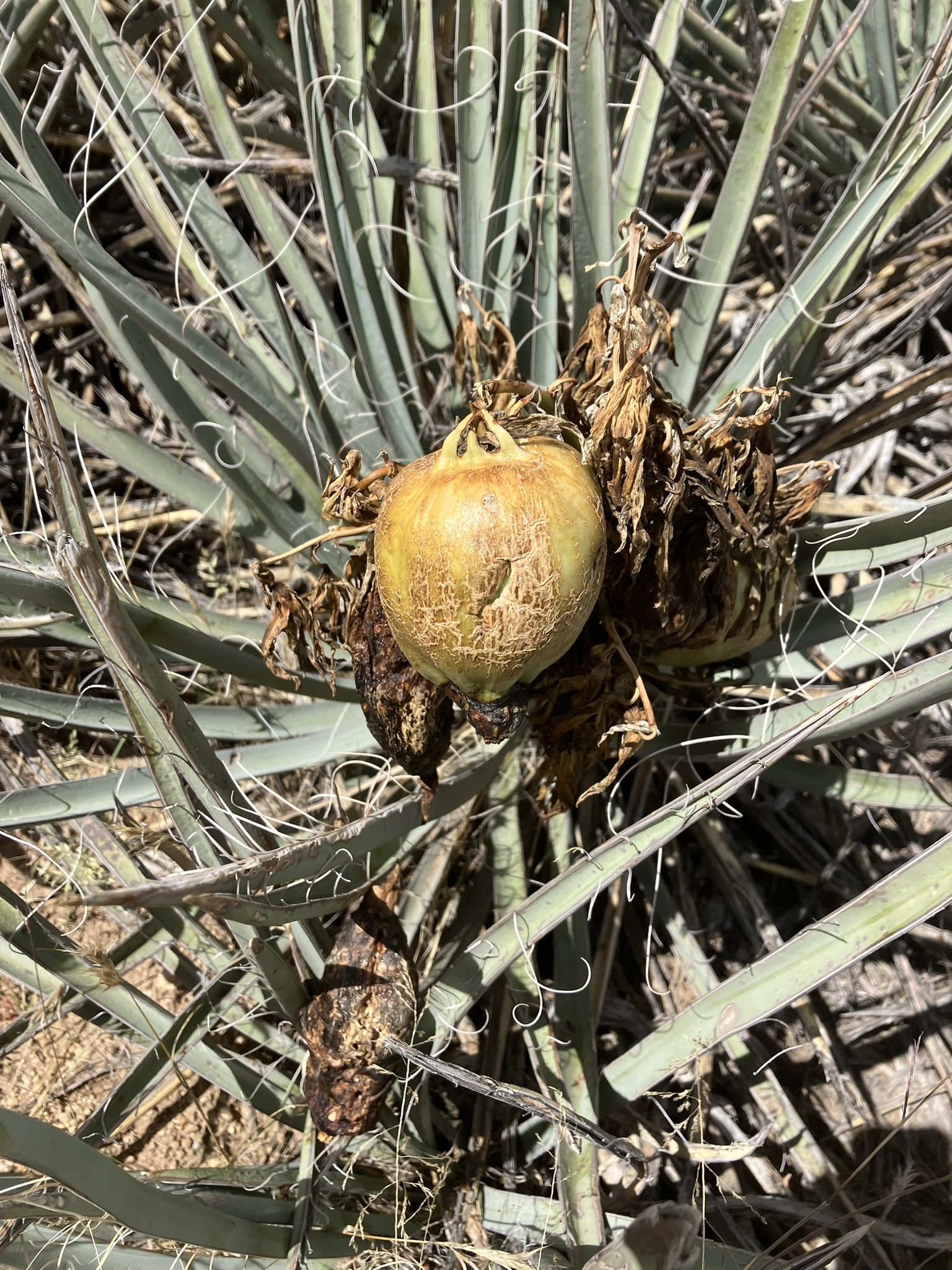
The blue-green leaves are sword-shaped, 30 to 100cm long, tipped with a sharp point, curving inward and edged with fine threads. In summer, spikes of creamy-white bell-shaped flowers rise above the foliage, sometimes shaded purple-red, and may be followed by edible, banana-shaped fruit, the trait behind its common name.
Source: RHS
Aphids and Snails
Aphids may gather on the flower spikes, and snails can trouble the leaves. Leaf spot is a disease worth watching for as well.
Source: RHS
Minimal Upkeep
This plant asks for no routine pruning, though dead leaves and spent flower spikes can be cut away to keep its appearance tidy. Left alone, it simply carries on at its own slow pace.
Source: RHS
Care recipe
The species record — the baseline every cultivar inherits unless it says otherwise.
Care notes are early — not yet verified
- Light
- ai:claude-opus-4-8
- Water
- ai:claude-opus-4-8 (range 14-28d)
- Humidity
- ai:claude-opus-4-8
- Soil
- ai:claude-fable-5
- Care
- ai:claude-fable-5
Direct sun
≈ every 28 days
Low — average room
7–32 °C
Sharp, sandy cactus mix over deep drainage
Offsets or seed; rhizome cuttings
Light cactus feed once or twice in spring and summer
Slow
Rarely flowers indoors
Toxic to cats & dogs
Saponins — vomiting, drooling. This is where toxicity lives: every cultivar of this species inherits it and none can override it.
Reference images
Every image credited. Licenses link to their deeds.
Sources: ai:claude-opus-4-8 · ai:claude-opus-4-8 (range 14-28d) · ai:claude-fable-5 · ASPCA
Kept true by its growers
Every fact here carries its source. Grow Banana Yucca yourself? What you’ve observed — how it drinks, how it holds its color, a name that’s off — and a clear photo of your plant are exactly what keep this page honest. Contributions are reviewed before anything changes.
Sign in to add what you know →