Species · genus Tradescantia · Commelinaceae
Inchplant
Tradescantia zebrina Bosse
Also known as: Wandering Jew · Inch-plant · Cockroach Grass · Purple Wandering Jew · Silver Inch Plant
Cultivars of T. zebrina
The named forms growers keep — each with its own page, each honest about how much we know.
No named cultivars catalogued under T. zebrina yet. When growers document a stable, named form, it earns its own page here.
Guide
The species-level account. Cultivar pages build on this and say where they differ.
A Trailing Tropical Favorite
Tradescantia zebrina, known as wandering dude or inch plant, is a trailing houseplant grown for its metallic silver, purple, and green striped foliage. It spills easily from containers and hanging baskets, working equally well as a solo specimen or as underplanting beneath larger showstoppers. Its easy-care nature and dynamic color have made it a long-standing favorite among houseplant growers.
Source: Epic Gardening
Roots in Subtropical America
This plant is native to subtropical southern Mexico and Central America, including Belize, Guatemala, and Honduras, where it grows in partially shaded tropical forest conditions, often thickly as a low-altitude ground cover. It survives outdoors year-round only in frost-free zones 9 through 11; elsewhere it is brought indoors to overwinter or kept as a houseplant full time. Its trailing, node-rooting stems have also made it invasive in many warm regions where it has escaped cultivation. The plant has earned a Royal Horticultural Society Award of Garden Merit for its performance and foliage.
Source: Epic Gardening
Light, Water, and Warmth
Leaf color is richest in bright light, filtered sun, or partial shade — too much direct sun washes and can scorch the foliage, while too little light fades color and produces straggly, pale stems. Keep the soil evenly moist through the growing season, watering once the top inch or so dries out, and ease off in winter since soggy, poorly-drained soil is the main cause of decline. Average household humidity suits it well, though a pebble tray or grouping with other plants helps during dry winter months, and temperatures between 65 and 75°F keep growth steady. A balanced, diluted fertilizer every four to six weeks during the growing season supports vigor, tapering off in fall and winter.
Source: Epic Gardening
Rooting Easily from Cuttings
Wandering dude is among the easiest houseplants to propagate, rooting readily from stem cuttings in either moist potting mix or water. New growth typically appears within about a month. Because pruned stems make ready cuttings, trimming and propagating go hand in hand, and stems can even be layered by resting a node on soil in a nearby pot until it roots before separating it from the parent.
Source: Epic Gardening
Zebra-Striped, Segmented Stems
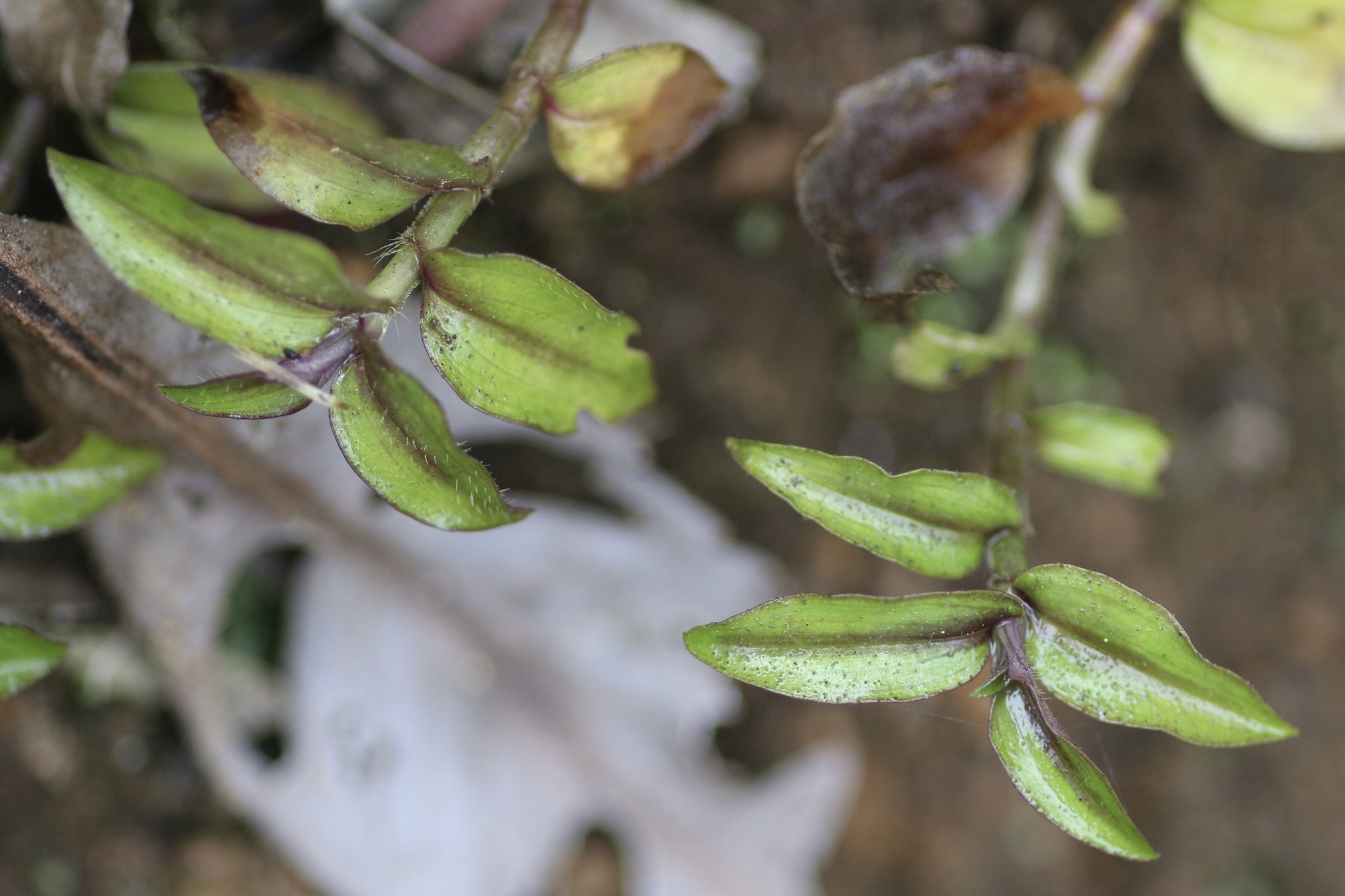
The common name inch plant comes from the way leaves emerge roughly one inch apart along the stem, each node capable of rooting or branching as the plant creeps. Leaves are pointed ovals with silvery-green stripes and hints of purple or pink on top, with violet undersides, giving the zebra-like look that defines the species. Plants stay low, typically six to fourteen inches tall, but spread one to three feet as they trail or creep. Small three-petaled flowers in violet or white appear on outdoor plants, though it rarely blooms indoors.
Source: Epic Gardening
Common Sap-Suckers
Wandering dude is not often plagued by pests but can pick up aphids, mealybugs, spider mites, scale, or whiteflies, especially from neighboring plants or during periods of drought stress. Spider mites favor warm, dry, dusty conditions and leave fine webbing near leaf veins, while aphids and mealybugs cluster on new growth and stems, causing curling, yellowing, or stunted leaves. Small infestations can often be dislodged with a stream of water or dabbed with alcohol-soaked cotton swabs, while horticultural soap or neem oil handles heavier outbreaks.
Source: Epic Gardening
Reading the Foliage
Overwatering is a leading cause of trouble, showing up as yellowing leaves, weak stems, and eventually root or stem rot if soil stays saturated; trimming away mushy roots and repotting into fresh mix can save an affected plant. Underwatering or dry air instead brings withered, limp, browning leaves, often eased with a consistent watering rhythm and a touch more humidity. Leggy, spindly stems are simply the plant's habit under low light or without regular pinching, and leaf spot, a fungal issue marked by spreading brown spots, tends to develop where airflow is poor and foliage stays damp.
Source: Epic Gardening
Pinching and Seasonal Cutbacks
Regular pinching of stem tips through the growing season keeps this naturally leggy plant bushy, prompting new branching wherever a cut is made. A heavier cutback in late winter or early spring, trimming stems back within a few inches of the soil, rejuvenates the plant as roots redirect energy into fresh leafy growth. Repot every couple of years when soil breaks down and drainage suffers, choosing a pot only one to two inches wider than the last, and trim long stems in early fall before bringing plants indoors ahead of frost.
Source: Epic Gardening
Care recipe
The species record — the baseline every cultivar inherits unless it says otherwise.
Care notes are early — not yet verified
- Light
- ai:claude-opus-4-8
- Water
- ai:claude-opus-4-8 (range 5-10d)
- Humidity
- ai:claude-opus-4-8
- Soil
- ai:claude-fable-5
- Care
- ai:claude-fable-5
Bright, indirect
≈ every 10 days
Medium
13–27 °C
Well-draining potting mix with perlite
Stem cuttings root readily in water or soil
Balanced liquid feed monthly while growing
Fast
Small lavender flowers occasionally; grown for striped leaves
Toxic to cats & dogs
Inch plant / wandering dude — irritant sap; dermatitis, mild GI upset. This is where toxicity lives: every cultivar of this species inherits it and none can override it.
Reference images
Every image credited. Licenses link to their deeds.
PrimarySources: ai:claude-opus-4-8 · ai:claude-opus-4-8 (range 5-10d) · ai:claude-fable-5 · ASPCA
Kept true by its growers
Every fact here carries its source. Grow Inchplant yourself? What you’ve observed — how it drinks, how it holds its color, a name that’s off — and a clear photo of your plant are exactly what keep this page honest. Contributions are reviewed before anything changes.
Sign in to add what you know →