Species · genus Tradescantia · Commelinaceae
Spiderwort
Tradescantia virginiana L.
Also known as: Virginia Spiderwort · White Spiderwort · Widow's-tears · Spider Lily
Cultivars of T. virginiana
The named forms growers keep — each with its own page, each honest about how much we know.
No named cultivars catalogued under T. virginiana yet. When growers document a stable, named form, it earns its own page here.
Guide
The species-level account. Cultivar pages build on this and say where they differ.
A Native Spiderwort
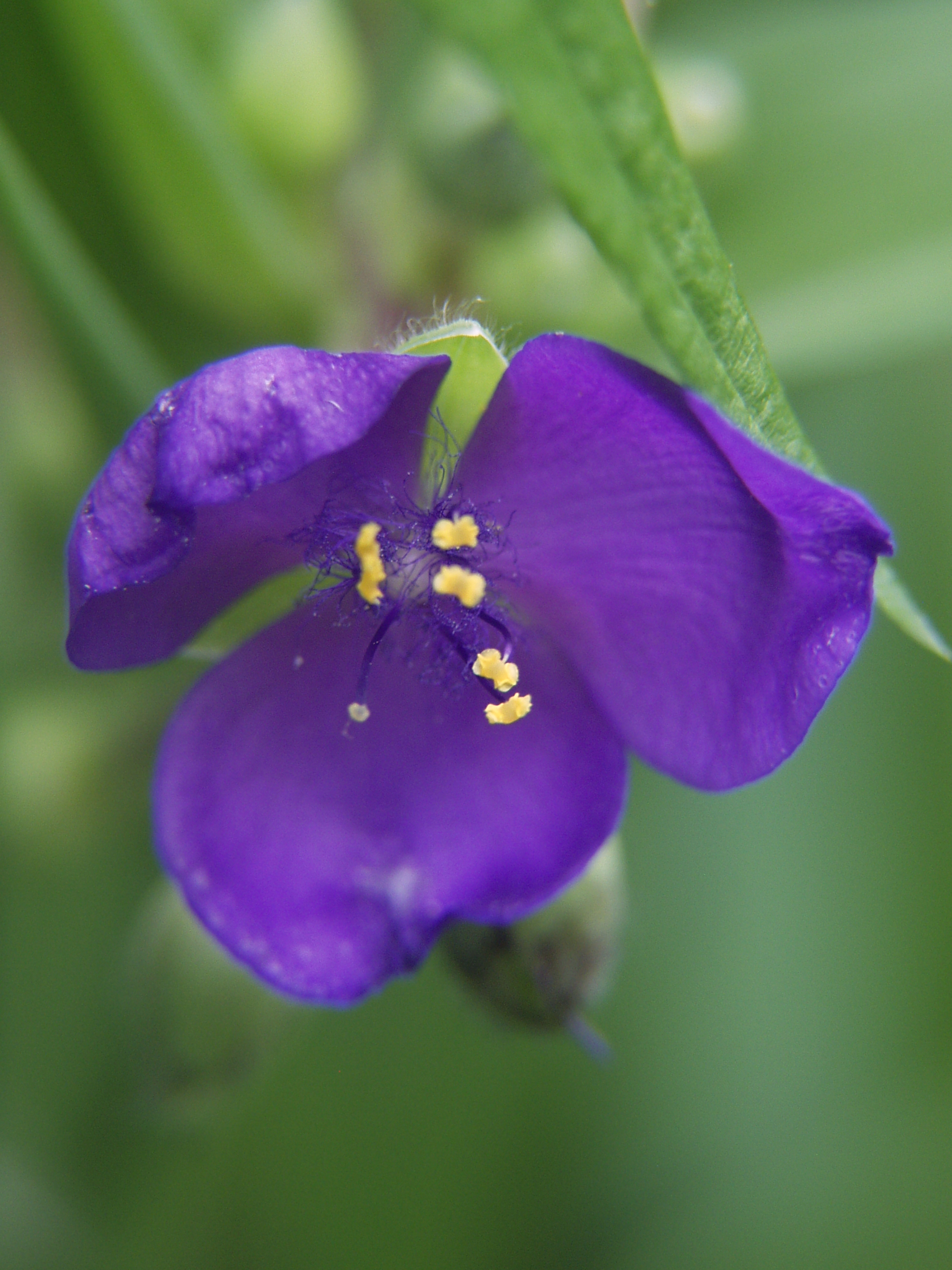
Tradescantia virginiana, known as spider lily or common spiderwort, is a clump-forming herbaceous perennial in the Commelinaceae family. It carries three-petaled violet-blue to purple flowers with contrasting yellow stamens, each bloom lasting only a day, opening in succession from late spring into summer.
Source: Missouri Botanical Garden
Roots In Eastern Woodlands
This species is native to the eastern United States, where it turns up on open wooded slopes and moist, shaded bluff ledges. The genus honors John Tradescant and his son, gardeners to Charles I of England, while the species name simply points to Virginia. Its common name traces back to the sticky stem sap that hardens into fine silky threads when cut, recalling a spider's web.
Source: Missouri Botanical Garden
Sun, Soil, And Support
Give this plant part shade to full shade and keep the soil evenly moist, though it tolerates clay and wet ground as well as black walnut proximity. The RHS notes it also grows readily in full sun to partial shade across sand, loam, clay, or chalk soils, provided moisture is moderate and drainage reasonable. In hot summer regions light afternoon shade helps, and because the arching habit can become untidy, staking is sometimes worthwhile.
Source: RHS
Dividing The Clump
Propagation is by division, carried out in autumn after flowering or again in spring.
Source: RHS
Iris-Like Foliage, Fleeting Blooms
The plant forms clumps to about three feet tall, with arching, iris-like dark green leaves up to a foot long folded lengthwise into a groove. Flowers arrive in terminal clusters holding many buds, each blossom three-quarters to one and a half inches across, opening only a few at a time and lasting a single day before closing.
Source: Missouri Botanical Garden
Slugs, Snails, And Aphids
Young shoots are vulnerable to snail damage, and the RHS adds aphids, vine weevil, and slugs to the list of usual visitors. Fungal leaf spot and a rust disease can also appear.
Source: RHS
Midsummer Sprawl
This spiderwort has no serious insect or disease troubles, but its foliage tends to sprawl in an unattractive way by midsummer. That decline is worth factoring in before placing it in a tidy border setting.
Source: Missouri Botanical Garden
Cutting Back For Tidiness
At season's end, cut all foliage back to ground level. For selections like 'Isis', trimming spent flowering stems after bloom also discourages self-seeding and can coax out further flowers.
Source: RHS
Care recipe
The species record — the baseline every cultivar inherits unless it says otherwise.
Care notes are early — not yet verified
- Light
- ai:claude-opus-4-8
- Water
- ai:claude-opus-4-8 (range 5-10d)
- Humidity
- ai:claude-opus-4-8
- Soil
- ai:claude-fable-5
- Care
- ai:claude-fable-5
Bright, indirect
≈ every 10 days
Medium
4–26 °C
Humus-rich, well-draining garden or potting mix
Division in spring or stem cuttings
Light feed monthly through the growing season
Moderate
Blue-violet flowers, each bloom lasting a single day
Toxic to cats & dogs
Inch plant / wandering dude — irritant sap; dermatitis, mild GI upset. This is where toxicity lives: every cultivar of this species inherits it and none can override it.
Reference images
Every image credited. Licenses link to their deeds.
PrimarySources: ai:claude-opus-4-8 · ai:claude-opus-4-8 (range 5-10d) · ai:claude-fable-5 · ASPCA
Kept true by its growers
Every fact here carries its source. Grow Spiderwort yourself? What you’ve observed — how it drinks, how it holds its color, a name that’s off — and a clear photo of your plant are exactly what keep this page honest. Contributions are reviewed before anything changes.
Sign in to add what you know →