Species · genus Tradescantia · Commelinaceae
White Velvet
Tradescantia sillamontana Matuda
Also known as: White Velvet Tradescantia · Cobweb Spiderwort · White Gossamer Plant · Cobweb Plant · Wandering Willie · White Fuzzy Spiderwort
Cultivars of T. sillamontana
The named forms growers keep — each with its own page, each honest about how much we know.
No named cultivars catalogued under T. sillamontana yet. When growers document a stable, named form, it earns its own page here.
Guide
The species-level account. Cultivar pages build on this and say where they differ.
White Velvet, Introduced
Tradescantia sillamontana, known as white velvet or white gossamer, is an evergreen perennial in the Commelinaceae family. It grows to about 30cm, with stems that can be erect or trailing, and it carries an RHS Award of Garden Merit.
Source: RHS
A Mexican Native
This species comes from Nuevo León in northeastern Mexico, where it grows as a tuberous subshrub in a subtropical setting. It was first described by Matuda in 1955, and has since become naturalised in places such as the Canary Islands, Italy, and Spain.
Source: Kew
Light, Water, Feed
Under glass, grow it in peat-free, loam-based compost in bright filtered light, watering moderately while it is in active growth and sparingly through winter, with a balanced liquid fertiliser applied monthly. Grown outdoors, it does well in moist, fertile soil in sun or shade, watered freely during dry spells.
Source: RHS
Rooting Stem Tips
Propagate from softwood cuttings taken from stem tips in spring or summer. Root these in peat-free cutting compost or simply in water, then move rooted cuttings on into peat-free, loam-based potting compost.
Source: RHS
Felted Leaves, Pink Blooms
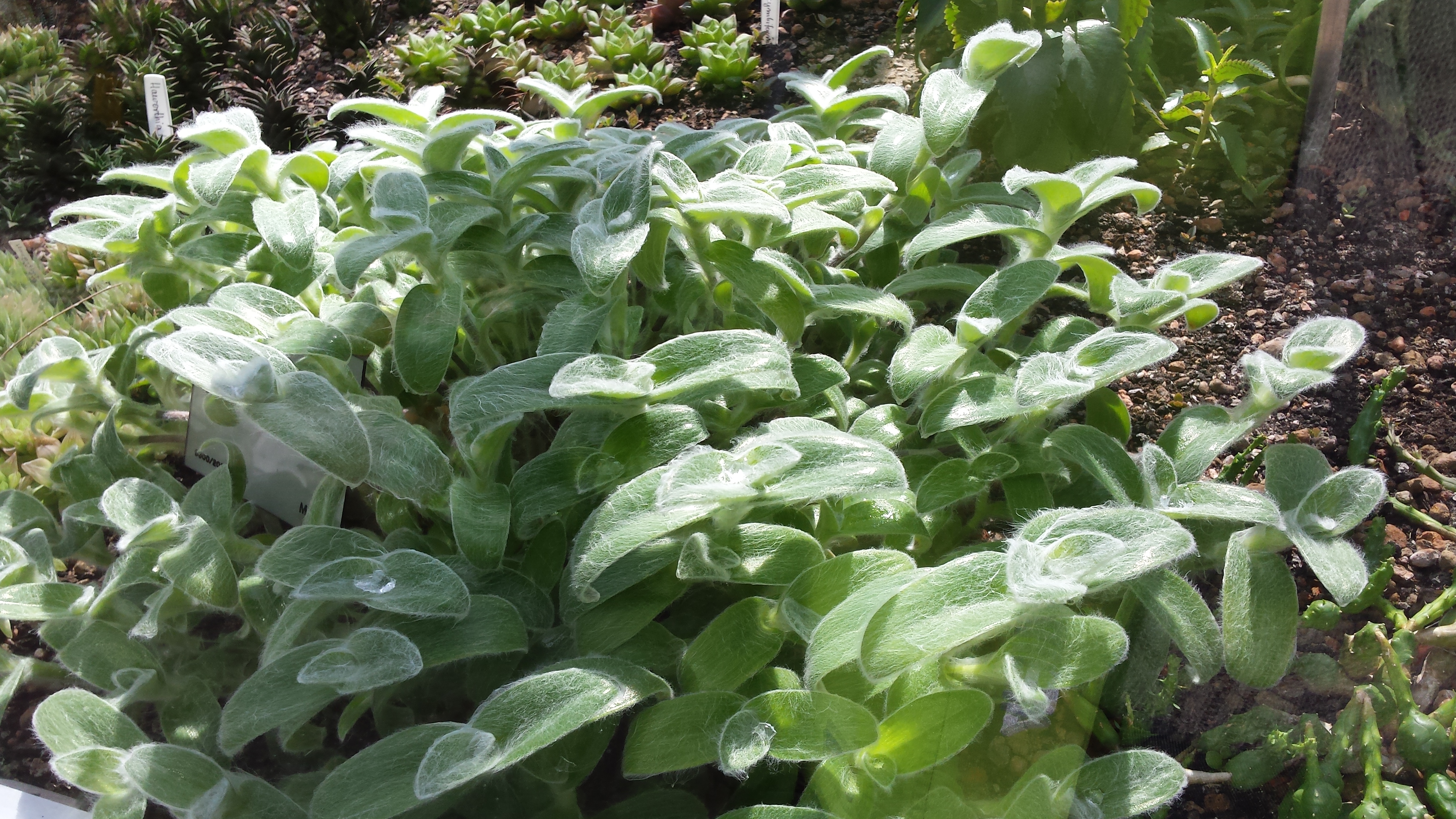
The plant's ovate, folded leaves are covered in silky white hairs, giving it its velvety common name. In summer it produces deep rosy-pink, three-petalled flowers about 2cm across, held in clusters at the stem tips.
Source: RHS
Watch For These Pests
This plant may attract red spider mite, mealybugs, aphids, vine weevil, and thrips. It is otherwise generally free of disease.
Source: RHS
Pinch For Bushiness
Pinch out the growing tips to keep the plant bushy, and remove any foliage that has reverted to plain green. It reaches full maturity in roughly two to five years.
Source: RHS
Care recipe
The species record — the baseline every cultivar inherits unless it says otherwise.
Care notes are early — not yet verified
- Light
- ai:claude-opus-4-8
- Water
- ai:claude-opus-4-8 (range 10-18d)
- Humidity
- ai:claude-opus-4-8
- Soil
- ai:claude-fable-5
- Care
- ai:claude-fable-5
Bright, indirect
≈ every 18 days
Low — average room
13–29 °C
Very gritty, fast-draining mix; dislikes wet feet
Stem cuttings, allowed to callus briefly first
Light feed monthly in spring and summer
Moderate
Small magenta flowers amid the woolly white leaves
Toxic to cats & dogs
Inch plant / wandering dude — irritant sap; dermatitis, mild GI upset. This is where toxicity lives: every cultivar of this species inherits it and none can override it.
Reference images
Every image credited. Licenses link to their deeds.
PrimarySources: ai:claude-opus-4-8 · ai:claude-opus-4-8 (range 10-18d) · ai:claude-fable-5 · ASPCA
Kept true by its growers
Every fact here carries its source. Grow White Velvet yourself? What you’ve observed — how it drinks, how it holds its color, a name that’s off — and a clear photo of your plant are exactly what keep this page honest. Contributions are reviewed before anything changes.
Sign in to add what you know →