Species · genus Tradescantia · Commelinaceae
Ohio Spiderwort
Tradescantia ohiensis Raf.
Also known as: Smooth Spiderwort · Blue-jacket · Bluejacket · Reflexed Spiderwort · Confederate Spiderwort
Cultivars of T. ohiensis
The named forms growers keep — each with its own page, each honest about how much we know.
No named cultivars catalogued under T. ohiensis yet. When growers document a stable, named form, it earns its own page here.
Guide
The species-level account. Cultivar pages build on this and say where they differ.
Ohio Spiderwort, A Native Perennial
Tradescantia ohiensis, commonly called Ohio spiderwort, is a clump-forming herbaceous perennial in the Commelinaceae family. It is a Missouri native plant found in prairies, wood margins, meadows, roadsides, and waste areas.
Source: Missouri Botanical Garden
A Wide North American Range
This species is native to a broad swath of eastern and central North America, from Ontario down through the central and eastern United States. It has also become introduced into Korea. The genus name honors the two John Tradescants, gardeners to Charles I of England, while the epithet simply marks its Ohio connection.
Source: Kew
Sun, Soil, And Cutting Back
This spiderwort grows easily in average, dry to medium, well-drained soil, and takes full sun to part shade, though flowering is less profuse in more shade. It prefers moist, acidic, sandy soil when it can get it, and tolerates drought, dry soil, and shallow rocky ground. Cutting the plant back to six to twelve inches in mid-summer encourages fresh growth and can coax out a second bloom in fall.
Source: Missouri Botanical Garden
Grass-Like Leaves, Fleeting Blooms
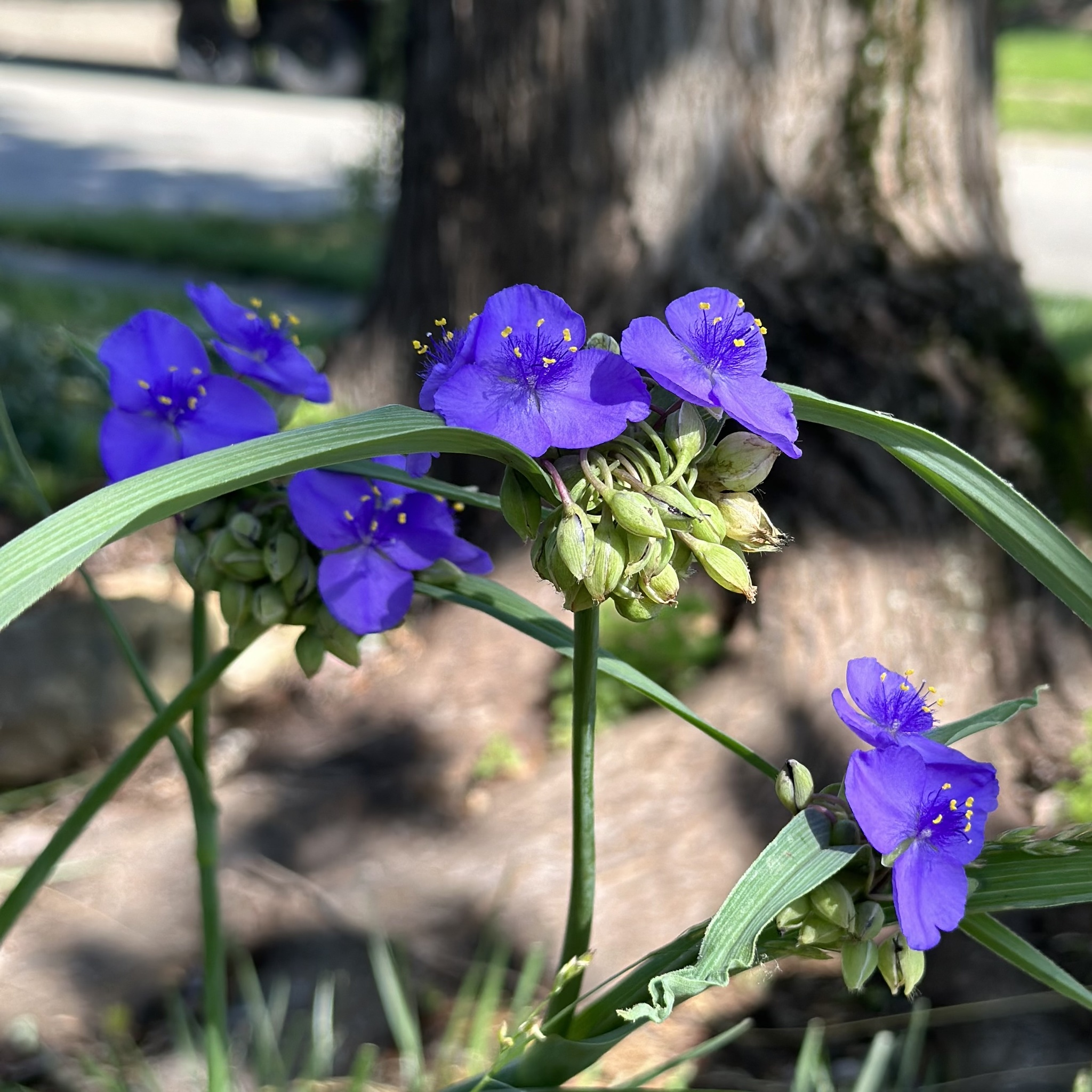
The plant grows up to three feet tall, with dark bluish-green, arching, grass-like leaves reaching a foot and a half long, folded lengthwise into a distinct channel. Clusters of three-petaled flowers, blue and occasionally rose, open from late May into early July, each bloom lasting only a single day.
Source: Missouri Botanical Garden
Sprawl And Self-Seeding
Ohio spiderwort has no serious insect or disease problems to speak of, though young shoots can draw snail damage. By midsummer the foliage tends to sprawl in a way many gardeners find untidy. Under good growing conditions it can also self-seed and turn somewhat aggressive.
Source: Missouri Botanical Garden
Dividing Overcrowded Clumps
Maintenance is rated medium for this plant. Divide clumps once they become overcrowded, and cut the foliage back mid-season to keep growth tidy and possibly extend the bloom into fall.
Source: Missouri Botanical Garden
Care recipe
The species record — the baseline every cultivar inherits unless it says otherwise.
Care notes are early — not yet verified
- Light
- ai:claude-opus-4-8
- Water
- ai:claude-opus-4-8 (range 5-10d)
- Humidity
- ai:claude-opus-4-8
- Soil
- ai:claude-fable-5
- Care
- ai:claude-fable-5
Bright, indirect
≈ every 10 days
Medium
10–26 °C
Average well-draining potting mix, tolerant of most soils
Division or stem cuttings
Light monthly feed during the growing season
Fast
Blue to violet three-petaled flowers in warmer months
Toxic to cats & dogs
Inch plant / wandering dude — irritant sap; dermatitis, mild GI upset. This is where toxicity lives: every cultivar of this species inherits it and none can override it.
Reference images
Every image credited. Licenses link to their deeds.
PrimarySources: ai:claude-opus-4-8 · ai:claude-opus-4-8 (range 5-10d) · ai:claude-fable-5 · ASPCA
Kept true by its growers
Every fact here carries its source. Grow Ohio Spiderwort yourself? What you’ve observed — how it drinks, how it holds its color, a name that’s off — and a clear photo of your plant are exactly what keep this page honest. Contributions are reviewed before anything changes.
Sign in to add what you know →