Species · genus Tradescantia · Commelinaceae
Small-leaf Spiderwort
Tradescantia fluminensis Vell.
Also known as: Spiderwort · Wandering-sailor · Small-leaved Spiderwort · Smallleaf Spiderwort · Wandering Jew
Cultivars of T. fluminensis
The named forms growers keep — each with its own page, each honest about how much we know.
No named cultivars catalogued under T. fluminensis yet. When growers document a stable, named form, it earns its own page here.
Guide
The species-level account. Cultivar pages build on this and say where they differ.
A Wandering Ground Cover
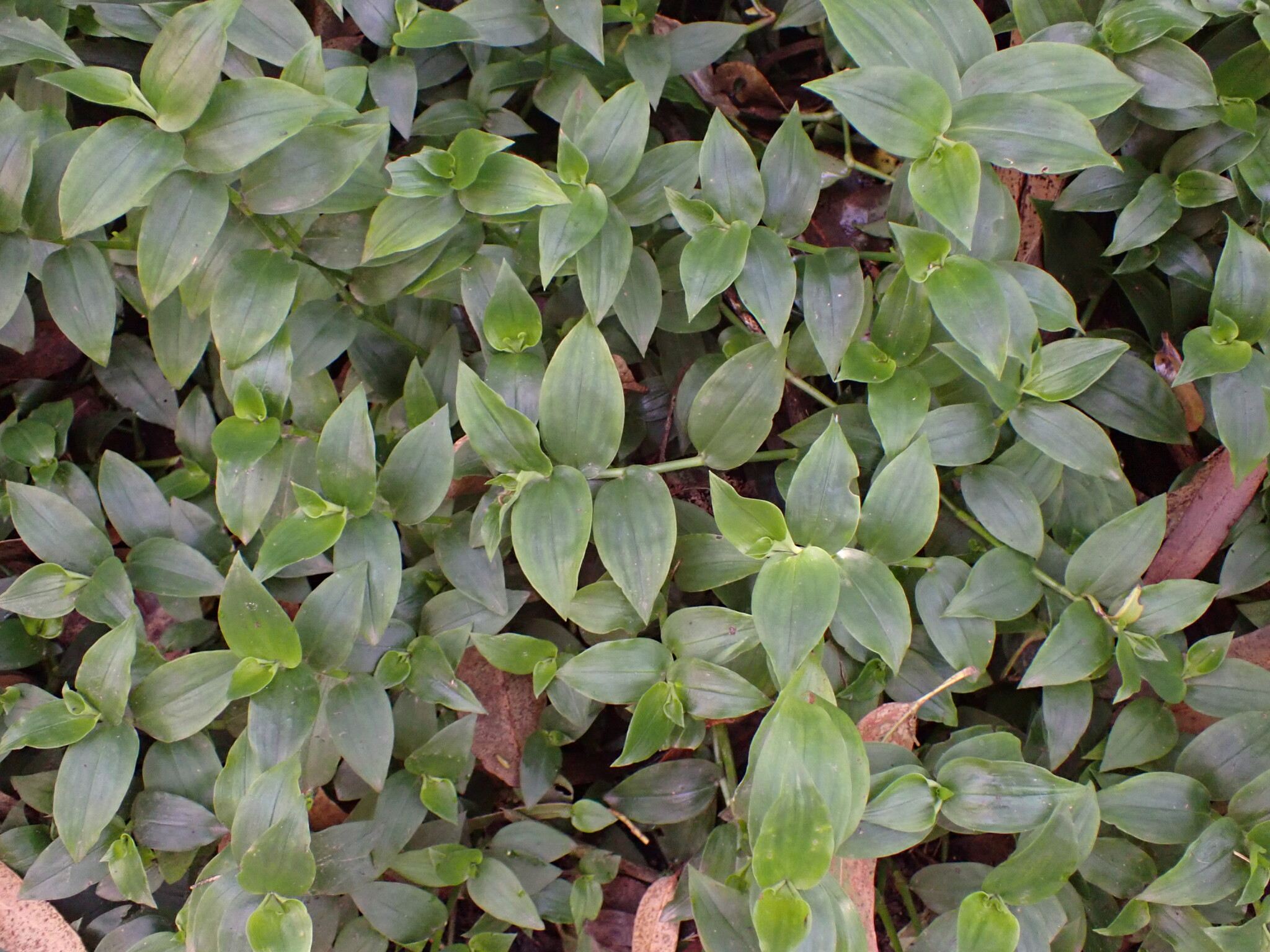
Tradescantia fluminensis is an evergreen perennial in the Commelinaceae family, grown both as a trailing houseplant and, in warmer regions, as a dense ground cover. It carries a long list of common names, including small-leaf spiderwort, river spiderwort, and inch plant. Its glossy foliage and small three-petaled white flowers have made it a familiar presence in cultivation, though it comes with a reputation to manage.
Source: Epic Gardening
South American Roots
This species originates in South America, native to Argentina, Brazil, Paraguay, and Uruguay. From there it has been carried into cultivation worldwide, popularized as an easy houseplant and ground cover in warmer climates. A variegated form, Tradescantia fluminensis var. variegata, with cream or yellow leaf streaking, has become a popular cultivar alongside the plain green species.
Source: Epic Gardening
Light, Water, and Feeding
Give it bright, indirect light; it tolerates full sun but foliage color, and any variegation, tends to wash out under strong direct exposure. Keep the soil evenly and consistently moist during the growing season, easing off in winter, and always favor well-drained, loamy soil to avoid waterlogging. It responds well to a half-strength liquid feed roughly every two weeks in spring and summer, with no need to fertilize once it goes dormant in the cooler months. Warm, moderate temperatures between about 65 and 75°F suit it best, and it has little tolerance for frost.
Source: Epic Gardening
Rooting From Stem Tips
Propagation is done from softwood stem-tip cuttings taken in spring and summer. The species roots readily from any stem segment carrying a node, which is part of why it spreads so effectively once established, even taking root uninvited in the soil of a neighboring pot. Because of this, it is often best kept isolated, such as in its own hanging basket.
Source: RHS
Leaves, Flowers, and Habit
The plant has fleshy, trailing stems bearing dark green leaves, which in some forms show light pink and cream striping with a purple, densely hairy underside. Small white flowers, built from three petals, appear intermittently through the year rather than in a single flush. Left to its own devices it stays low, spreading rather than climbing, reaching only up to about 10cm in height while its spread extends outward.
Source: RHS
Watch for Sap Suckers
Spider mites are the most likely visitor, recognizable by fine webbing across leaf and stem surfaces on heavily infested plants; regular spritzing with neem oil helps keep them in check. The RHS also notes red spider mite, mealybugs, aphids, vine weevil, and thrips as possible pests, though the plant is otherwise generally free of disease.
Source: RHS
Pinching for Bushiness
Regular pinching of growing tips encourages a bushier habit and keeps the plant from becoming leggy. On variegated cultivars, watch for shoots that revert to plain green and remove them promptly, since reverted growth is more vigorous and will crowd out the variegation if left. Pruning is otherwise simple: cuts made beyond a node prompt fresh growth from that point, and this species' stem joints are notably brittle, sometimes snapping free with just a bend of the fingers.
Source: RHS
Care recipe
The species record — the baseline every cultivar inherits unless it says otherwise.
Care notes are early — not yet verified
- Light
- ai:claude-opus-4-8
- Water
- ai:claude-opus-4-8 (range 5-10d)
- Humidity
- ai:claude-opus-4-8
- Soil
- ai:claude-fable-5
- Care
- ai:claude-fable-5
Bright, indirect
≈ every 10 days
Medium
13–26 °C
Rich, moisture-retentive yet well-draining mix
Stem cuttings root almost effortlessly in water
Diluted balanced feed every 3-4 weeks while growing
Fast
Small white three-petaled flowers on occasion
Toxic to cats & dogs
Inch plant / wandering dude — irritant sap; dermatitis, mild GI upset. This is where toxicity lives: every cultivar of this species inherits it and none can override it.
Reference images
Every image credited. Licenses link to their deeds.
PrimarySources: ai:claude-opus-4-8 · ai:claude-opus-4-8 (range 5-10d) · ai:claude-fable-5 · ASPCA
Kept true by its growers
Every fact here carries its source. Grow Small-leaf Spiderwort yourself? What you’ve observed — how it drinks, how it holds its color, a name that’s off — and a clear photo of your plant are exactly what keep this page honest. Contributions are reviewed before anything changes.
Sign in to add what you know →