Species · genus Tradescantia · Commelinaceae
Flowering Inch Plant
Tradescantia cerinthoides Kunth
Cultivars of T. cerinthoides
The named forms growers keep — each with its own page, each honest about how much we know.
No named cultivars catalogued under T. cerinthoides yet. When growers document a stable, named form, it earns its own page here.
Guide
The species-level account. Cultivar pages build on this and say where they differ.
A Trailing Commelinaceae Relative
Tradescantia cerinthoides is an evergreen perennial in the Commelinaceae family, grown chiefly as a houseplant for its fleshy foliage and its habit of trailing or clumping as it matures. It produces small three-petalled flowers, often in white or pink tones, intermittently through the year rather than in one set season.
Source: RHS
Light, Water, and Feed
Grow this plant in bright filtered light rather than direct sun, which can scorch the leaves, and pot it in peat-free, free-draining compost. While in active growth, water moderately and give a monthly liquid feed, then ease off watering over winter. Given a sheltered spot with an east, south, or west aspect, it is generally an undemanding houseplant, and can also spend summer outdoors in fertile, free-draining soil.
Source: RHS
Cuttings or Division
This plant is propagated most often from softwood stem-tip cuttings taken in spring and summer, though some cultivars can also be increased by division or by simple stem tip cuttings.
Source: RHS
Foliage, Habit, and Flowers
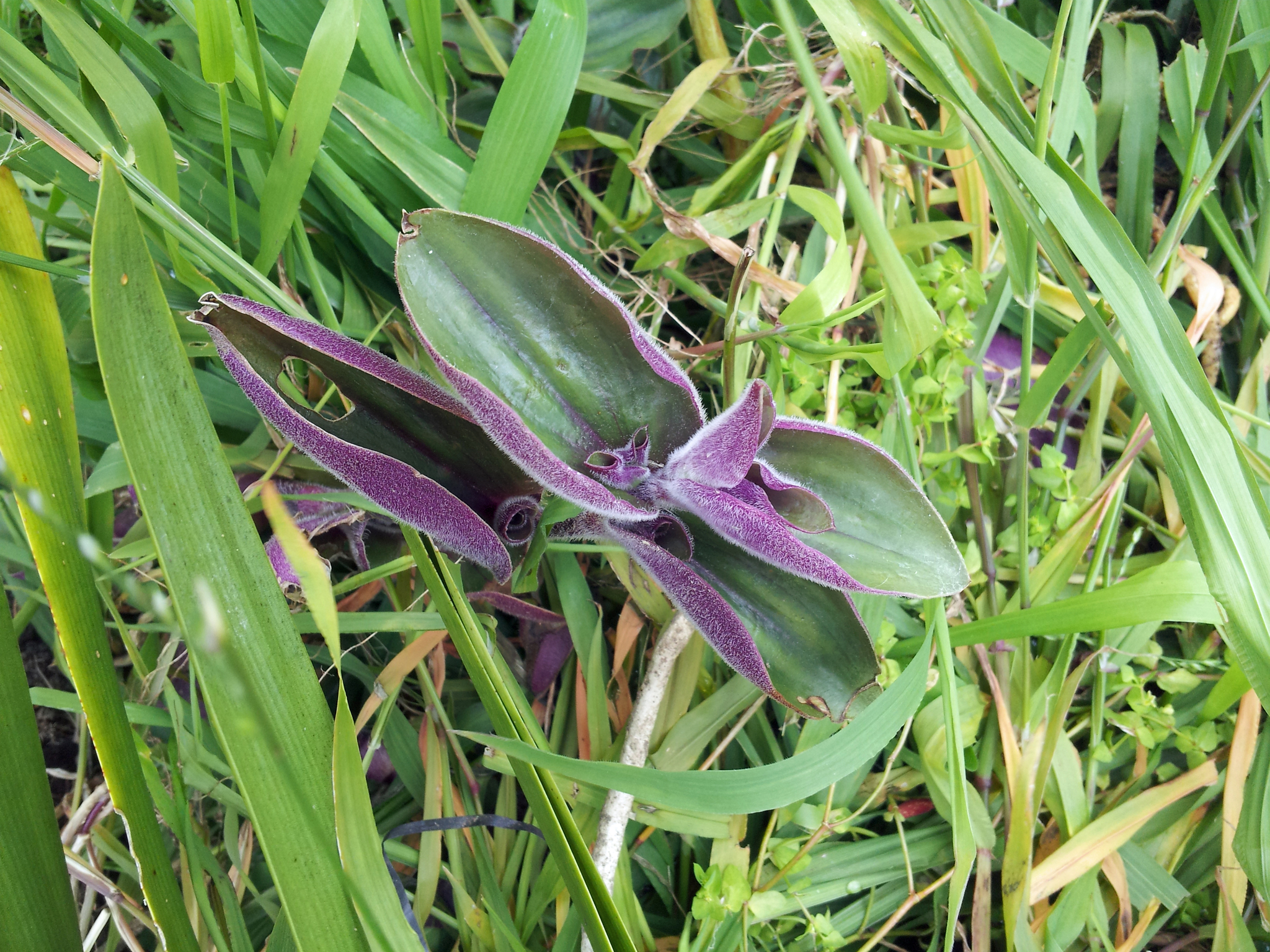
The species and its cultivars vary from clump-forming with an initially upright habit that soon turns to trailing, to fully trailing growth from the start. Leaves are typically oval and fleshy, with hairy purple-grey to dark purple undersides, and cultivars show striking variation on top: cream and pink stripes in 'Variegata', a bright red stripe that develops in strong light in 'Red Hill', and pale pink to purple leaves banded with green and white in 'Nanouk'. Small white or pink-and-white flowers appear on and off throughout the year across these forms.
Source: RHS
Common Pests to Watch
Across its cultivars, this plant may draw aphids, glasshouse red spider mite, and vine weevil, with some forms also noted for susceptibility to mealybugs and thrips. It is otherwise described as generally disease-free.
Source: RHS
Skin Irritation and Reversion
Handling the foliage can irritate skin, so gloves and other protective equipment are worth using when working with this plant. The other recurring issue is reversion in variegated forms, where plain green shoots appear and, if not removed, gradually take over from the patterned growth.
Source: RHS
Pinching and Deadheading
Regular pinching of the growing tips keeps growth bushy rather than straggly. On variegated cultivars, watch for and remove any shoots that revert to plain green, since left alone these stronger reverted shoots will outcompete the variegated growth. Spent flowered stems can simply be cut away as they fade.
Source: RHS
Care recipe
The species record — the baseline every cultivar inherits unless it says otherwise.
Care notes are early — not yet verified
- Light
- ai:claude-opus-4-8
- Water
- ai:claude-opus-4-8 (range 7-12d)
- Humidity
- ai:claude-opus-4-8
- Soil
- ai:claude-fable-5
- Care
- ai:claude-fable-5
Bright, indirect
≈ every 12 days
Medium
13–27 °C
Loose, well-draining potting mix with added perlite
Stem cuttings root readily in water or moist soil
Balanced liquid feed monthly in spring and summer
Fast
Small pink-lilac blooms appear intermittently indoors
Toxic to cats & dogs
Inch plant / wandering dude — irritant sap; dermatitis, mild GI upset. This is where toxicity lives: every cultivar of this species inherits it and none can override it.
Reference images
Every image credited. Licenses link to their deeds.
PrimarySources: ai:claude-opus-4-8 · ai:claude-opus-4-8 (range 7-12d) · ai:claude-fable-5 · ASPCA
Kept true by its growers
Every fact here carries its source. Grow Flowering Inch Plant yourself? What you’ve observed — how it drinks, how it holds its color, a name that’s off — and a clear photo of your plant are exactly what keep this page honest. Contributions are reviewed before anything changes.
Sign in to add what you know →