Species · genus Tillandsia · Bromeliaceae
Spanish Moss
Tillandsia usneoides (L.) L.
Also known as: Old Man's Beard
Cultivars of T. usneoides
The named forms growers keep — each with its own page, each honest about how much we know.
No named cultivars catalogued under T. usneoides yet. When growers document a stable, named form, it earns its own page here.
Guide
The species-level account. Cultivar pages build on this and say where they differ.
An Air Plant, Not a Moss
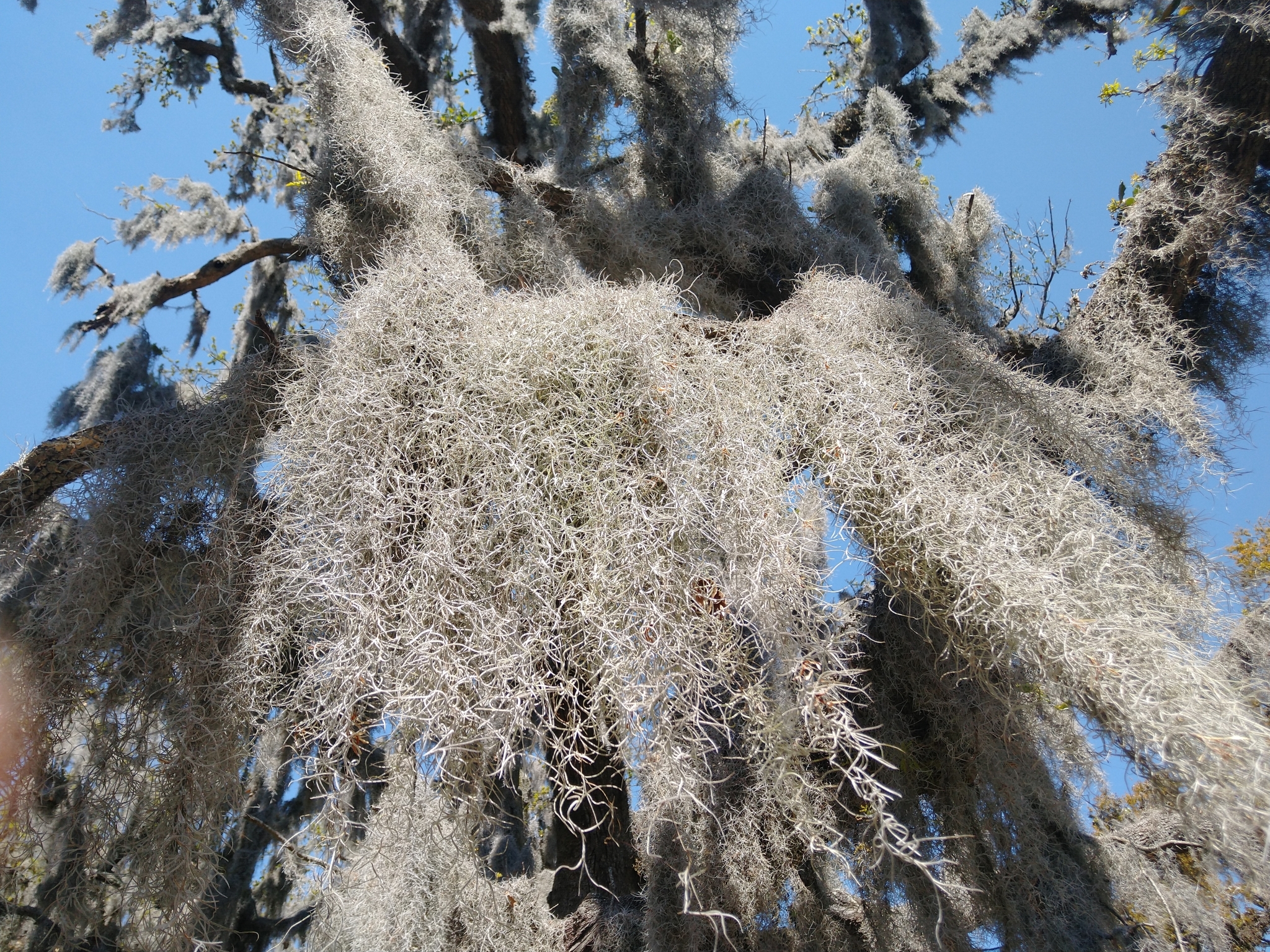
Spanish moss is not a moss at all, but a flowering epiphytic bromeliad, kin to the pineapple, that lives draped over the branches of trees rather than rooted in soil. It takes in what it needs through its foliage rather than through roots, doing no harm to the trees that host it.
Source: Epic Gardening
A Name Borrowed from Beards
Spanish moss is native to the tropical Americas, found from the southeastern United States down through Mexico, Central America, and into Chile and Argentina, most often in wet habitats such as swamps and riverbanks. Its common name traces back to French settlers who called it Barbe Espagnol, or Spanish beard, likening its hanging strands to the beards of Spanish explorers, while Native American tribes called it tree hair. Once harvested by the millions of pounds for stuffing mattresses and car seats, it has since been largely replaced by synthetic fibers.
Source: Missouri Botanical Garden
Light, Water, and Air
Give Spanish moss bright but indirect light, mimicking the dappled shade it finds under a tree canopy, since too much direct sun can scorch it black. It wants good humidity and airflow around its hanging strands, watered by soaking or misting with distilled water or rainwater and then left to dry out fully before the next round, since chlorine and standing moisture are both problems for it. It generally asks little in the way of feeding, and cold below about 22°F can damage the plant, so it is best moved indoors outside its comfortable zones.
Source: Epic Gardening
Offshoots Over Seed
Spanish moss is most reliably propagated by cutting off a side shoot and letting it establish as its own plant, draped over a branch, wire frame, or similar support and watered in. Seed propagation is possible in principle, but the tiny seeds are fluffy and blow away on the wind almost as soon as they're released, making offshoots the far easier route.
Source: Epic Gardening
Wiry Stems, Silver Leaves
The plant forms branching, rootless, wiry stems clothed in slender, cylindrical silver-grey leaves, capable of stretching several metres long in the right conditions. Occasionally it produces small, scented, tubular flowers in yellow-green or pale blue, appearing in late spring or autumn, though flowering in cultivation is uncommon. Its habit is pendulous and weeping, built for hanging and swaying rather than standing upright.
Source: RHS
Mostly Left Alone
Spanish moss is largely pest- and disease-free, with no serious insects or diseases reported against it. It can nonetheless play host to various small creatures, including a harmless spider species, chiggers, spider mites, and boll weevils, without those pests actually feeding on the plant itself.
Source: Epic Gardening
Reading Brown and Mushy
Dry, browning tips point to underwatering or too little humidity, calling for more moisture. Brown, mushy foliage signals the opposite problem, overwatering, and means cutting back and shaking off excess water after each soak to avoid rot.
Source: Epic Gardening
Little Pruning Needed
Spanish moss asks for essentially no pruning, and under glass cultivation it needs no soil, being grown epiphytically with regular misting and a diluted low-nitrogen feed through the growing season instead.
Source: RHS
Care recipe
The species record — the baseline every cultivar inherits unless it says otherwise.
Care notes are early — not yet verified
- Light
- ai:claude-opus-4-8
- Water
- ai:claude-opus-4-8 (range 3-7d)
- Humidity
- ai:claude-opus-4-8
- Soil
- ai:claude-fable-5
- Care
- ai:claude-fable-5
Bright, indirect
≈ every 7 days
High
10–32 °C
None — draped and displayed bare as an air plant
Division of strands; each fragment grows on
Dilute air-plant feed misted monthly
Slow
Tiny inconspicuous green-yellow flowers
Not yet documented
This is where toxicity lives — every cultivar of this species inherits it and none can override it.
Reference images
Every image credited. Licenses link to their deeds.
PrimarySources: ai:claude-opus-4-8 · ai:claude-opus-4-8 (range 3-7d) · ai:claude-fable-5
Kept true by its growers
Every fact here carries its source. Grow Spanish Moss yourself? What you’ve observed — how it drinks, how it holds its color, a name that’s off — and a clear photo of your plant are exactly what keep this page honest. Contributions are reviewed before anything changes.
Sign in to add what you know →