Species · genus Tillandsia · Bromeliaceae
Blushing Bride
Tillandsia ionantha Planch.
Also known as: Sky Plant · Blushing Bride Airplant · Enhanced Lilac · Ionantha Lilac
Cultivars of T. ionantha
The named forms growers keep — each with its own page, each honest about how much we know.
No named cultivars catalogued under T. ionantha yet. When growers document a stable, named form, it earns its own page here.
Guide
The species-level account. Cultivar pages build on this and say where they differ.
The Blushing Sky Plant
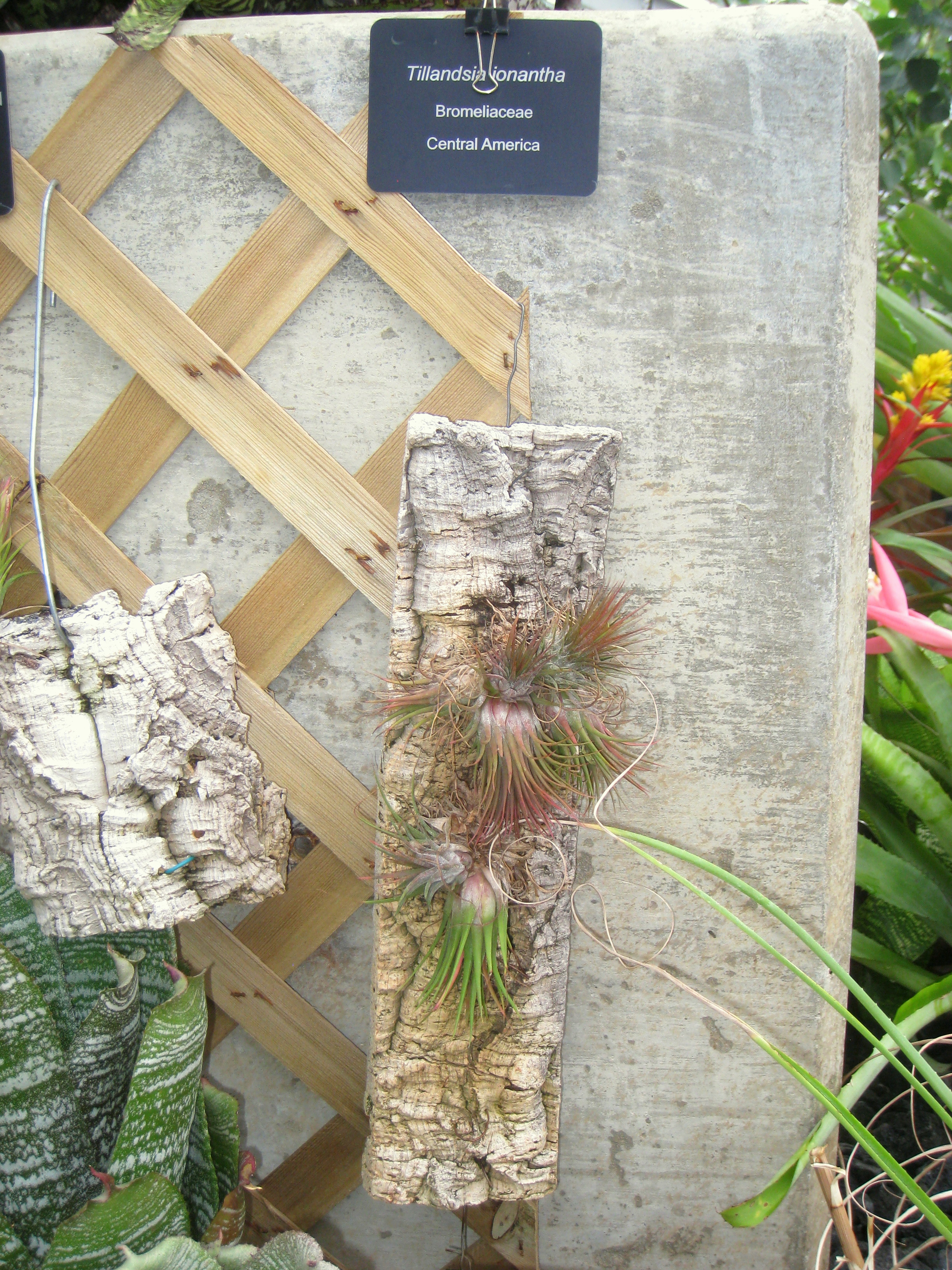
Tillandsia ionantha is a small bromeliad known as the blushing bride or sky plant, prized for its curved, spiky leaves and its habit of blushing pink and red before bloom. It is an epiphyte, meaning it grows without soil, clinging instead to wood or tree bark. As houseplants go, it asks for very little beyond bright light and a regular drink.
Source: Epic Gardening
A Central American Native
This species comes from Central America, including Nicaragua, Costa Rica, and Mexico, along with parts of South America, where it clings to trees in mountains, deserts, and forests. Some related Tillandsia species are native to North America too. Because it grows shaded by other plants in the wild, it has adapted to filtered rather than harsh light.
Source: Epic Gardening
Light, Water, and a Little Air
Give it bright but indirect light, out of direct south-facing sun which will scorch the leaves; a spot with visible shadows but readable brightness suits it well. Soak the plant in water for twenty to thirty minutes every one to two weeks, misting with warm water once or twice between soaks to keep humidity up, and always let it dry with good air circulation afterward. It tolerates temperatures from about 50 to 90°F but prefers a range of 60 to 80°F, and needs almost no feeding beyond an occasional air-plant-specific fertilizer added to its soak or misted on as a foliar spray.
Source: Epic Gardening
Growing New Plants from Pups
New plants come from the pups that form around the base of the mother plant, typically appearing near bloom time after several years of growth. Once a pup reaches about a third to half the size of its parent, it can be carefully pulled away with its roots intact and mounted or displayed on its own. The mother plant will die after flowering, so removing pups is really the only way forward, and each new pup will eventually flower and produce pups of its own.
Source: Epic Gardening
Spiky Leaves, Fleeting Blooms
The foliage has a slender, pineapple-like spikiness, green at the base and colorful at the tips, eventually sending up tubular purple flowers. It reaches up to a foot tall under ideal conditions, though indoors it usually stays smaller. Each plant flowers only once in its life and dies shortly after, but not before producing pups around its base to carry the line forward. Popular cultivars include the fiery 'Fuego,' the burgundy 'Rubra' in hard or soft forms, and the larger, thicker-leaved 'Maxima.'
Source: Epic Gardening
Aphids, Mealybugs, and a Weevil
Aphids occasionally trouble outdoor plants, sucking sap and leaving leaves wilted or deflated; a rinse of water usually clears them. Mealybugs show up as a cottony coating, often at the base of leaves, and respond to a cotton swab dipped in rubbing alcohol followed by a rinse. In the southernmost parts of Florida, California, and Mexico, the invasive Mexican bromeliad weevil can also feed on the leaves, roots, and flowers.
Source: Epic Gardening
Reading the Leaves
Dry, brown, crunchy leaf tips signal too little water or humidity, while squishy or yellowing leaves point to too much water or too much light. Root rot is the main disease risk, brought on by excess moisture, and since it cannot be cured, an infected plant needs to be discarded. Otherwise this species is largely disease-resistant, and its one guaranteed 'problem' is that flowering means the plant is nearing the end of its life.
Source: Epic Gardening
Light Pruning, Mostly Hands-Off
This plant sheds its own old leaves, so pruning is rarely necessary, though spent leaves or faded flowers can be pinched off at the base to tidy growth and improve airflow. The main maintenance task is removing pups once they are ready to become their own plants. Beyond that, its needs stay low as long as light, water, and airflow are in balance.
Source: Epic Gardening
Care recipe
The species record — the baseline every cultivar inherits unless it says otherwise.
Care notes are early — not yet verified
- Light
- ai:claude-opus-4-8
- Water
- ai:claude-opus-4-8 (range 5-10d)
- Humidity
- ai:claude-opus-4-8
- Soil
- ai:claude-fable-5
- Care
- ai:claude-fable-5
Bright, indirect
≈ every 10 days
Medium
10–32 °C
None — mounted or displayed bare as an air plant
Separation of offset pups from the mother plant
Dilute air-plant feed misted monthly
Slow
Blushes red and blooms purple at maturity
Not yet documented
This is where toxicity lives — every cultivar of this species inherits it and none can override it.
Reference images
Every image credited. Licenses link to their deeds.
PrimarySources: ai:claude-opus-4-8 · ai:claude-opus-4-8 (range 5-10d) · ai:claude-fable-5
Kept true by its growers
Every fact here carries its source. Grow Blushing Bride yourself? What you’ve observed — how it drinks, how it holds its color, a name that’s off — and a clear photo of your plant are exactly what keep this page honest. Contributions are reviewed before anything changes.
Sign in to add what you know →