Species · genus Thaumatophyllum · Araceae
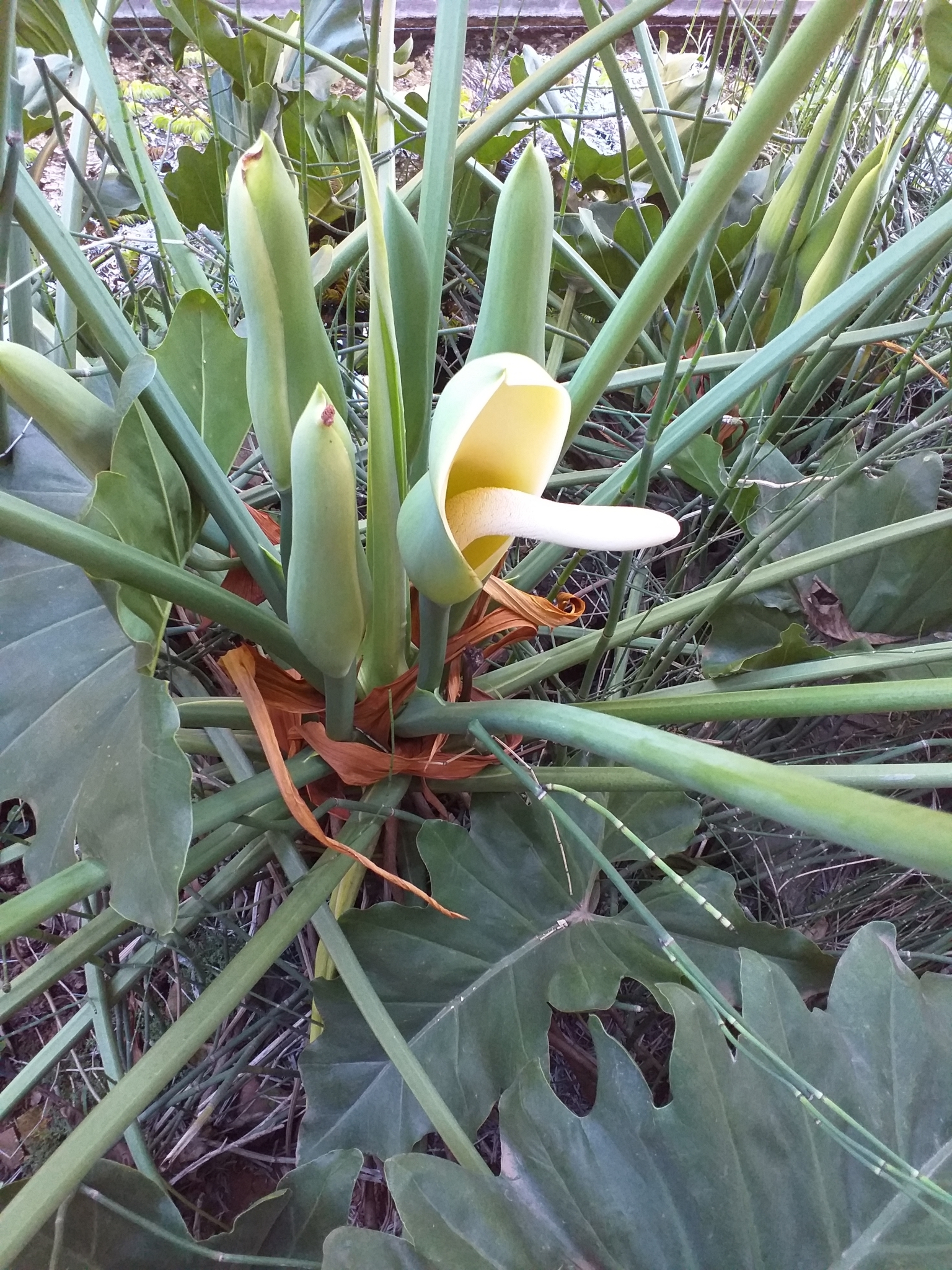
Thaumatophyllum undulatum
Thaumatophyllum undulatum (Engl.) Sakur., Calazans & Mayo
Cultivars of T. undulatum
The named forms growers keep — each with its own page, each honest about how much we know.
No named cultivars catalogued under T. undulatum yet. When growers document a stable, named form, it earns its own page here.
Guide
The species-level account. Cultivar pages build on this and say where they differ.
A Philodendron of Many Names
This plant is Philodendron undulatum, a subshrub or shrub in the arum family, though houseplant growers more commonly encounter its close relative under the tangled names split leaf philodendron, Philodendron bipinnatifidum, Philodendron selloum, or Thaumatophyllum bipinnatifidum. The naming confusion is real, and even the taxonomy has shifted back and forth between genera in recent years.
Source: Kew
Roots in South America
This species is native to a swath of South America running from Bolivia through Brazil into Argentina's Entre Ríos province, with populations recorded across Northeast Argentina, Bolivia, Paraguay, and several Brazilian regions. It grows primarily in seasonally dry tropical habitat as a subshrub or shrub, rather than the towering rainforest form some growers expect. The related, commonly grown split leaf philodendron comes from the tropical rainforests of central South America, especially Brazil, Argentina, Paraguay, and Bolivia, and has spread as far north as Belize, where in the wild it can exceed ten feet in height and width.
Source: Kew
Bright Light, Even Moisture
Indoors, this plant does best with bright indirect light and can take a little gentle morning sun, though most nursery-raised specimens need a gradual introduction before any direct exposure. Water when the top inch or two of soil has dried, checking with a finger or skewer rather than a fixed schedule, since soggy conditions quickly invite root and stem rot. It wants warmth between about 65 and 80°F and humidity ideally in the 60 to 70 percent range, with growth slowing below 60°F and leaf tips browning if the air turns much drier than 40 percent. Regular feeding is rarely necessary, since frequent repotting already refreshes the soil's nutrients, but a balanced fertilizer during spring and summer can help a plant that has stalled or stayed too long in the same pot.
Source: Epic Gardening
Stem Cuttings Work Best
Stem cuttings taken just below a leaf node are the easiest and most reliable way to propagate this plant, though air layering and, rarely, seed are also possible. A cutting can root in water, but planting it in a light mix of coconut coir, perlite, and vermiculite tends to produce sturdier roots. Kept warm and humid, cuttings generally root within a few weeks and are ready to move into potting mix once new roots reach an inch or two long.
Source: Epic Gardening
Splits, Not Holes
The deep green, triangular leaves develop splits along their sides as the plant matures, giving them a ruffled look, and they can grow past three feet long under good conditions. A thick central stem and sturdy leaf stalks hold the foliage upright without help, which is the clearest way to tell this plant apart from a monstera. Monstera leaves have true holes, or fenestrations, in the leaf surface, while this plant only ever develops slits along the edges.
Source: Epic Gardening
Watch for Sap Suckers
Spider mites, mealybug, and scale are the pests most associated with this plant, worth checking for on new arrivals before bringing them near the rest of a collection.
Source: Epic Gardening
Reading Yellow and Brown
Yellowing leaves most often point to overwatering, since waterlogged roots rot and lose their ability to move water and nutrients up through the plant, sometimes leaving the base mushy as well. Underwatering shows up differently, as wilting and browning at the leaf tips, since these thin leaves hold little reserve moisture. Very low light will cause the stems to stretch toward the nearest light source, and that leggy growth cannot be undone once it happens, so steady bright indirect light is the better prevention. Leaves can also scorch brown from intense direct sun, which a sheer curtain during the hottest hours will usually prevent.
Source: Epic Gardening
Repotting Keeps Pace
This is a fast grower that appreciates room, and smaller plants typically need repotting every year while more established ones can go one to two years between moves; once a plant reaches its full size, refreshing the soil every three to four years keeps it going. Signs it is time sooner include roots emerging from the drainage holes or growth stalling during spring and summer. Routine upkeep otherwise is light: wiping dust from the broad leaves every couple of months keeps photosynthesis unhindered, and pruning away dying or damaged leaves with a clean cut just above a node redirects energy to healthy growth.
Source: Epic Gardening
Care recipe
The species record — the baseline every cultivar inherits unless it says otherwise.
Care notes are early — not yet verified
- Light
- ai:claude-opus-4-8
- Water
- ai:claude-opus-4-8 (range 7-12d)
- Humidity
- ai:claude-opus-4-8
- Soil
- ai:claude-fable-5
- Care
- ai:claude-fable-5
Bright, indirect
≈ every 12 days
Medium
16–29 °C
Chunky, well-draining aroid mix with bark and perlite
Division of offsets or stem cuttings
Balanced liquid feed monthly in the growing season
Moderate
Rarely flowers indoors
Toxic to cats & dogs & humans
Araceae typically contain insoluble calcium oxalate crystals, which irritate mouth and digestive tissues if chewed. This is where toxicity lives: every cultivar of this species inherits it and none can override it.
Reference images
Every image credited. Licenses link to their deeds.
Sources: ai:claude-opus-4-8 · ai:claude-opus-4-8 (range 7-12d) · ai:claude-fable-5 · ai:claude-opus-4-8 (family inference)
Kept true by its growers
Every fact here carries its source. Grow Thaumatophyllum undulatum yourself? What you’ve observed — how it drinks, how it holds its color, a name that’s off — and a clear photo of your plant are exactly what keep this page honest. Contributions are reviewed before anything changes.
Sign in to add what you know →