Species · genus Thaumatophyllum · Araceae
Tree Philodendron
Thaumatophyllum bipinnatifidum (Schott ex Endl.) Sakur., Calazans & Mayo
Also known as: Split-Leaf Philodendron · Lacy Tree Philodendron · Selloum · Philodendron Selloum · Horsehead Philodendron · Hope Selloum · Philodendron Hope
Cultivars of T. bipinnatifidum
The named forms growers keep — each with its own page, each honest about how much we know.
No named cultivars catalogued under T. bipinnatifidum yet. When growers document a stable, named form, it earns its own page here.
Guide
The species-level account. Cultivar pages build on this and say where they differ.
A Bold, Named-Confused Aroid
The split leaf philodendron is a large, self-supporting foliage plant from the Araceae family, often mistaken for a monstera and sold under several confusing labels. Its accepted botanical name is Philodendron bipinnatifidum, though you will still see it tagged as Thaumatophyllum bipinnatifidum or Philodendron selloum. Whatever the tag says, nurseries will know the plant you mean.
Source: Epic Gardening
A Name With History
This plant comes from the tropical rainforests of central South America, especially Brazil, Argentina, Paraguay, and Bolivia, with a range that reaches north into Belize. In the wild it can top ten feet in height and spread, anchored by sturdy stems that sometimes lean on nearby trees for support. Its scientific identity has shifted over time: Schott separated it from a related species in the 19th century, later genetic study folded them back together under the name bipinnatifidum, and in 2018 taxonomists proposed moving it into a new genus, Thaumatophyllum, before the name reverted to Philodendron in 2024.
Source: Epic Gardening
Bright Light, Even Moisture
This plant does best in bright indirect light, tolerating some gentle morning sun once acclimated, though it will also limp along in lower light with slower growth. Water when the top inch or two of soil has dried, checking with a finger or skewer rather than a fixed schedule, since the goal is soil that stays evenly moist without turning soggy. It wants warmth between 65 and 80°F and humidity ideally in the 60 to 70 percent range, and though regular feeding is not usually necessary thanks to frequent repotting, a balanced or nitrogen-leaning fertilizer in spring and summer can help a plant that has stalled.
Source: Epic Gardening
Stem Cuttings Work Best
Air layering and seed are both possible but slow or unreliable, especially indoors where seed rarely forms, so stem cuttings taken just below a node are the preferred route. Cuttings can root in water, but a light mix of coconut coir, perlite, and vermiculite tends to produce stronger roots, especially in a warm, humid spot. Once roots reach an inch or two, the cutting is ready for its own pot, and spring gives the fastest results.
Source: Epic Gardening
Slits, Not Holes
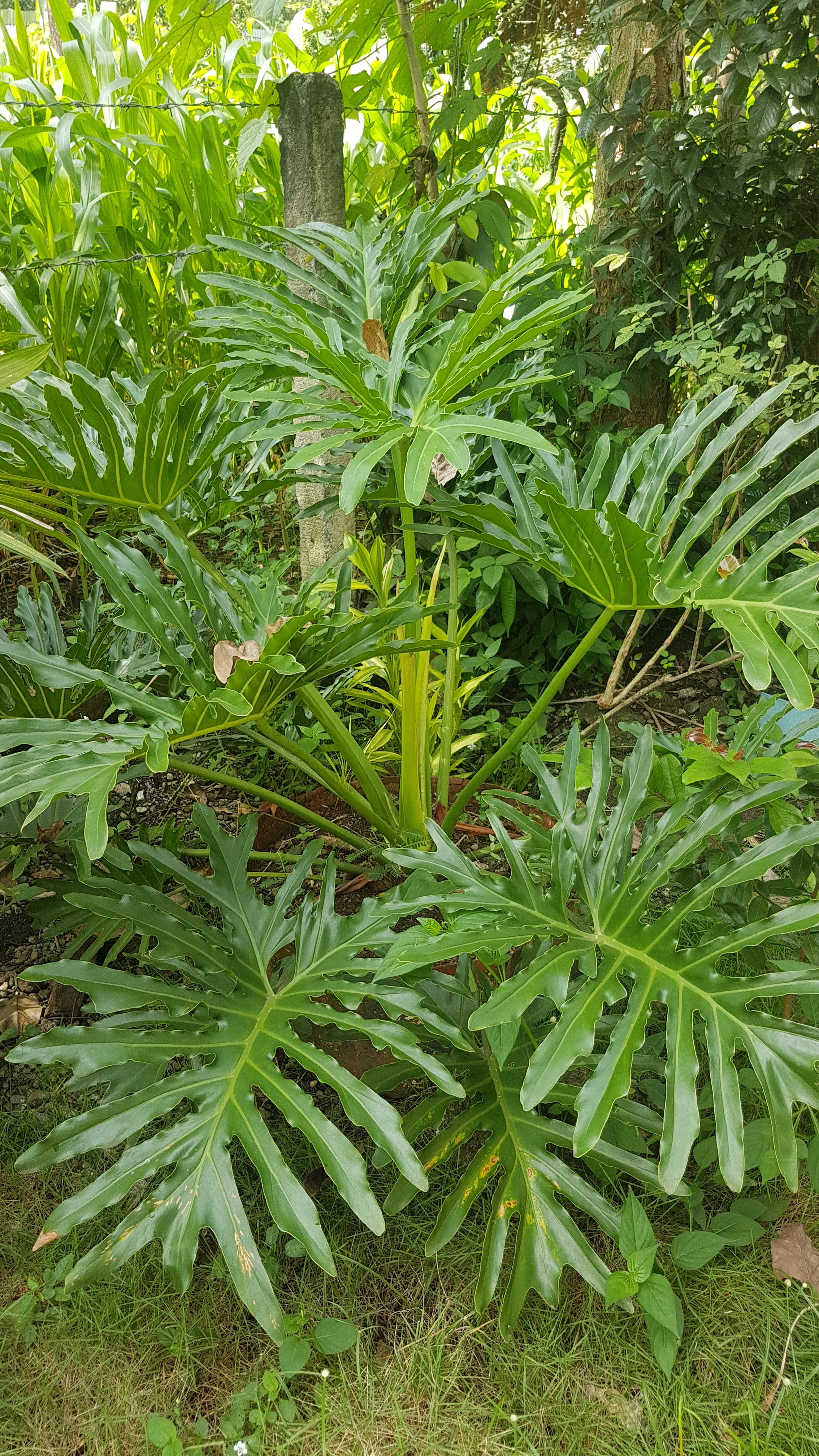
The deep green, triangular leaves develop side slits as they mature, giving them the ruffled look the common name describes, and they can grow beyond three feet long outdoors. Indoors, pot size and ceiling height keep it closer to six feet. A thick central stem holds the weight of the foliage without help, which is the clearest way to tell it apart from a monstera, whose leaves show true fenestrations rather than edge slits.
Source: Epic Gardening
Watch For Sap Feeders
Spider mites, mealybugs, and scale are the pests most associated with this plant, so it is worth inspecting a new specimen closely before bringing it home.
Source: Epic Gardening
Reading The Leaves
Yellowing leaves and soft, mushy stems usually point to overwatering and root rot, which calls for trimming damaged roots and repotting into fresh, well-draining soil. Underwatering shows up as wilting and brown leaf tips, while brown patches from harsh direct sun resemble sunburn and call for a sheer curtain during the hottest hours. Very low light produces permanent stretching toward the nearest window, so prevention matters more than correction, and rotating the pot weekly keeps growth from leaning lopsidedly toward one light source.
Source: Epic Gardening
Light Upkeep, Steady Repotting
This is a low-maintenance plant that mainly asks for an occasional wipe of dust from its large leaves, done every couple of months, plus pruning of dying leaves cut just above a node to redirect energy to new growth. Young plants tend to outgrow their pots yearly, while mature specimens can go one to two years between repots, with soil refreshed every three to four years once full size is reached. Watch for roots emerging from drainage holes or stalled growth in the active season as cues that it is time to repot.
Source: Epic Gardening
Care recipe
The species record — the baseline every cultivar inherits unless it says otherwise.
Care notes are early — not yet verified
- Light
- ai:claude-opus-4-8
- Water
- ai:claude-opus-4-8 (range 7-14d)
- Humidity
- ai:claude-opus-4-8
- Soil
- ai:claude-fable-5
- Care
- ai:claude-fable-5
Bright, indirect
≈ every 14 days
Medium
16–29 °C
Chunky, well-draining aroid mix with bark and perlite
Stem cuttings or division of offsets
Balanced liquid feed monthly in the growing season
Moderate
Rarely flowers indoors
Toxic to cats & dogs & humans
Araceae contain insoluble calcium oxalate crystals, which irritate the mouth and digestive tract if chewed. This is where toxicity lives: every cultivar of this species inherits it and none can override it.
Reference images
Every image credited. Licenses link to their deeds.
PrimarySources: ai:claude-opus-4-8 · ai:claude-opus-4-8 (range 7-14d) · ai:claude-fable-5 · ai:claude-opus-4-8 (family inference)
Kept true by its growers
Every fact here carries its source. Grow Tree Philodendron yourself? What you’ve observed — how it drinks, how it holds its color, a name that’s off — and a clear photo of your plant are exactly what keep this page honest. Contributions are reviewed before anything changes.
Sign in to add what you know →