Species · genus Tetrapanax · Araliaceae
Rice Paper Plant
Tetrapanax papyrifer (Hook.) K.Koch
Also known as: Chinese Rice-paper Plant · Rice Paper Tree · Aralia · Figleaf Palm · Pith Paper-plant
Cultivars of T. papyrifer
The named forms growers keep — each with its own page, each honest about how much we know.
No named cultivars catalogued under T. papyrifer yet. When growers document a stable, named form, it earns its own page here.
Guide
The species-level account. Cultivar pages build on this and say where they differ.
Chinese Rice-Paper Plant
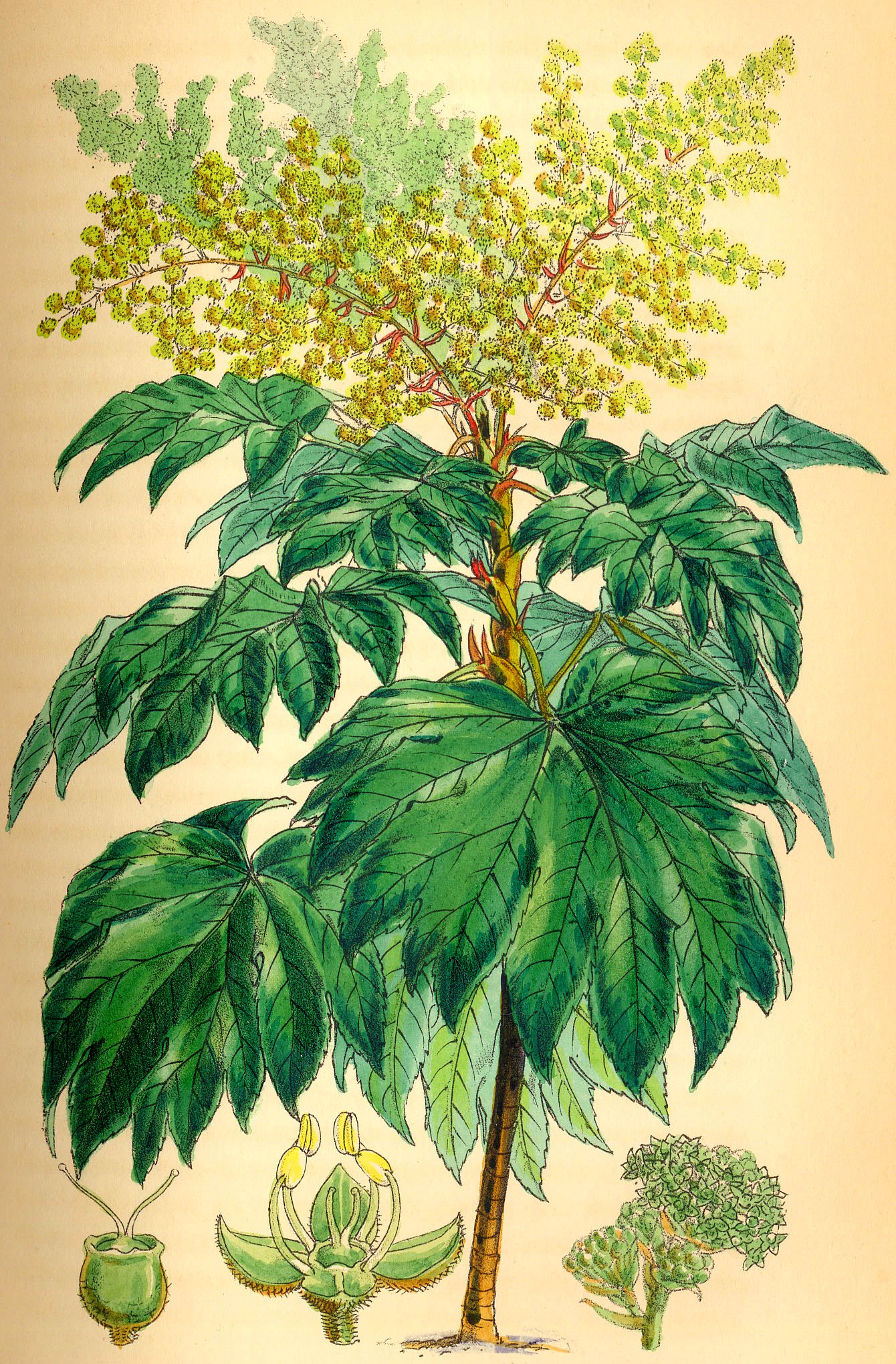
Tetrapanax papyrifer is a large, fast-growing shrub or small tree in the Araliaceae family, known as the Chinese rice-paper plant. It forms a thicket of upright stems crowned with big, deeply lobed leaves, and produces creamy, woolly flower sprays in autumn followed by black fruit.
Source: RHS
Native To Taiwan
This species comes from Taiwan, and its old synonyms, Aralia papyrifera and Fatsia papyrifera, hint at its relations within the same family. It has earned the RHS Award of Garden Merit for its garden performance.
Source: RHS
Sun, Shelter, Drainage
Give it full sun and well-drained soil, whether chalk, loam or sand, and a sheltered spot away from cold winds, ideally against a south- or west-facing wall. In colder gardens it can be grown in a cool greenhouse or a large container that is brought indoors over winter, with a deep mulch protecting the roots outdoors. How evergreen it stays depends on the cold it meets: frost-free conditions keep it evergreen, mild frost makes it deciduous, and harder cold can send it back to the ground to reshoot from the roots.
Source: RHS
Seed, Division, Suckers
Propagate by sowing seed in containers in a cold frame during autumn, or by division. Suckers can also be removed in spring or summer and used to start new plants.
Source: RHS
Bold Lobed Foliage
Left to its own devices it can reach around 5 metres, its stems topped by large, palmately lobed green leaves. New growth arrives dusted in fine coppery or pale brown hairs, and the leaves of the cultivar 'Rex' grow especially large, up to a metre across. In autumn, sprays of creamy pompom flowers appear, attractive to bees, ripening into black fruit.
Source: RHS
Largely Trouble-Free
This is generally a pest-free and disease-free plant, which is a welcome rarity among architectural foliage species.
Source: RHS
Pruning And Suckers
Maintenance is mostly a matter of tidying up: remove dead or damaged leaves as they appear. Because this plant suckers and can spread into clumps, cut back or remove suckers if you want to keep it contained.
Source: RHS
Care recipe
The species record — the baseline every cultivar inherits unless it says otherwise.
Care notes are early — not yet verified
- Light
- ai:claude-opus-4-8
- Water
- ai:claude-opus-4-8 (range 7-14d)
- Humidity
- ai:claude-opus-4-8
- Soil
- ai:claude-fable-5
- Care
- ai:claude-fable-5
Bright, indirect
≈ every 14 days
Medium
10–27 °C
Rich, well-draining loamy mix that holds some moisture
Root cuttings or removal of suckering offsets
Balanced feed monthly during active growth
Fast
Rarely flowers indoors
Not yet documented
This is where toxicity lives — every cultivar of this species inherits it and none can override it.
Reference images
Every image credited. Licenses link to their deeds.
PrimarySources: ai:claude-opus-4-8 · ai:claude-opus-4-8 (range 7-14d) · ai:claude-fable-5
Kept true by its growers
Every fact here carries its source. Grow Rice Paper Plant yourself? What you’ve observed — how it drinks, how it holds its color, a name that’s off — and a clear photo of your plant are exactly what keep this page honest. Contributions are reviewed before anything changes.
Sign in to add what you know →