Species · genus Syngonium · Araceae
American Evergreen
Syngonium podophyllum Schott
Also known as: Arrowhead Vine · African Evergreen · Nephthytis · Arrowhead Plant · Arrow-Head Vine
Cultivars of S. podophyllum
The named forms growers keep — each with its own page, each honest about how much we know.
No named cultivars catalogued under S. podophyllum yet. When growers document a stable, named form, it earns its own page here.
Guide
The species-level account. Cultivar pages build on this and say where they differ.
An Aroid Favorite
Syngonium podophyllum, the arrowhead vine, is an evergreen climbing houseplant prized for its arrow or heart-shaped leaves and easy trailing habit. It belongs to the aroid family and sits alongside pothos and philodendron as a familiar, forgiving houseplant with dozens of color forms to choose from.
Source: Epic Gardening
Rainforest Understory Roots
This plant comes from the rainforests of Central and South America, ranging from Mexico down to Bolivia, where it winds up tree trunks and hangs from the canopy in dappled light. Its native habit as forest undergrowth explains why it settles so readily into the filtered light of a home.
Source: Epic Gardening
Bright Light, Steady Humidity
Arrowhead vine wants bright, indirect light, tolerating shade but losing some of its variegated punch without decent brightness, and direct sun will wash out or scorch its colors. Water when the soil is roughly half dry, easing off through winter, and keep it in a well-draining mix with a pH between 6.1 and 6.9. It is fussier about humidity than its aroid cousins, preferring above 60 percent and ideally closer to 90, and does best in steady warmth between 65 and 85°F away from drafts. Feed monthly with an all-purpose houseplant fertilizer during active growth.
Source: Epic Gardening
Easy From Cuttings
New plants come readily from stem cuttings taken just below a node, rooted either in water or moist soil, or from division at repotting time. Cuttings can be grown on indefinitely in water alone, with a little liquid fertilizer added when the water is refreshed. The RHS notes propagation can also be done from softwood stem tip cuttings or leaf bud cuttings in summer with the help of bottom heat.
Source: Epic Gardening
Arrowhead Leaves, Many Colors
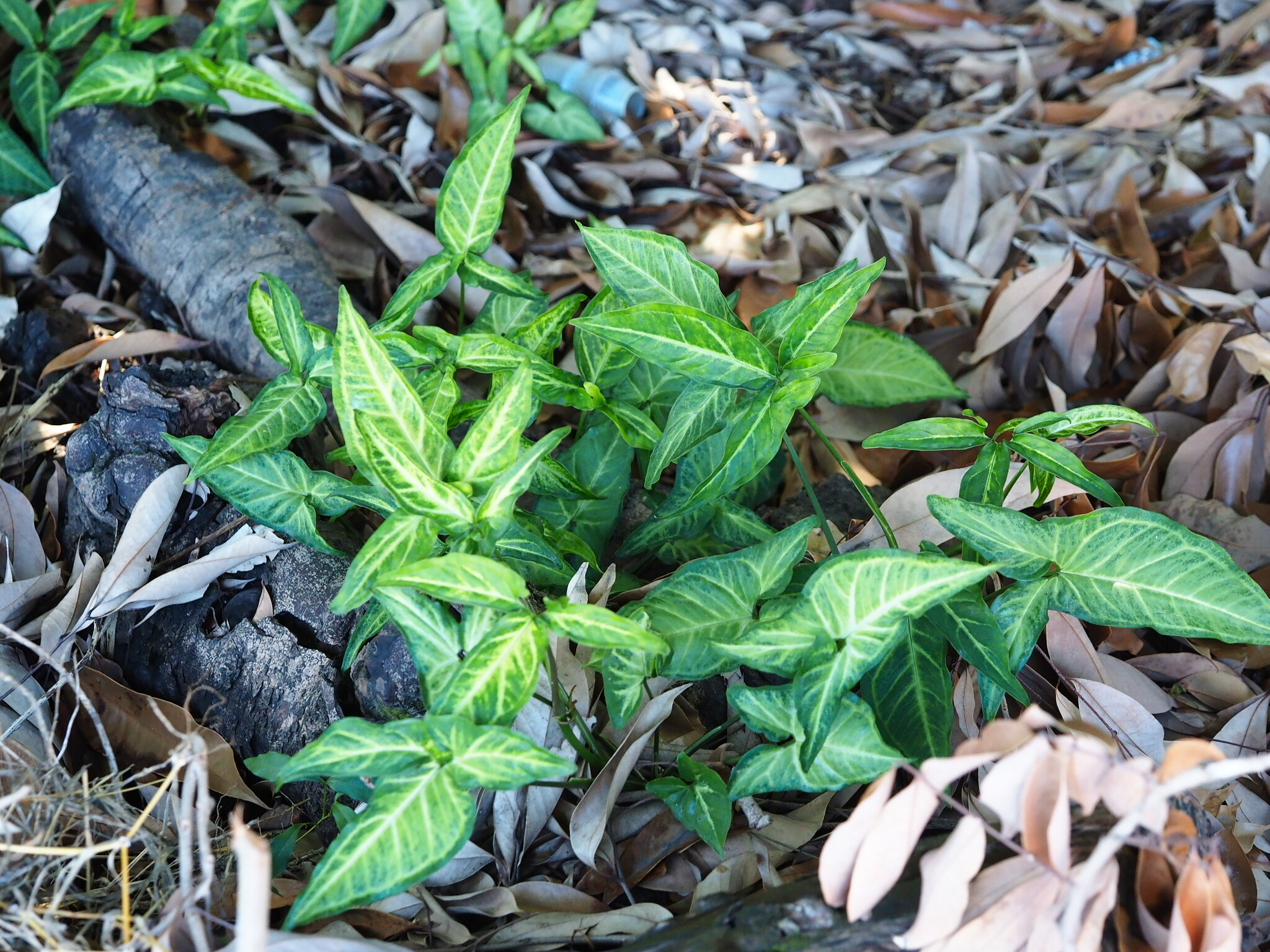
The plant takes its name from its spade-like leaves, which open lighter green or silvery and darken into their arrow shape as they mature. With roughly thirty species in the genus, varieties differ widely in vine length, leaf color, and variegation, and mature leaves in the wild can divide into five to eleven finger-like leaflets. Flowering indoors is rare; in the wild small light green to lime flowers cluster on a spike wrapped in a cup-like white spathe.
Source: Epic Gardening
Watch for Sap Suckers
Fungus gnats, mealybugs, aphids, scale, and spider mites are the pests most likely to trouble this plant. Fungus gnats usually point to overly wet soil, mealybugs show up as a powdery white residue and resist water-based treatments, aphids target young tender growth, and spider mites leave speckled leaves with fine webbing.
Source: Epic Gardening
Common Growing Hiccups
Most trouble traces back to water or humidity being out of balance: overwatering brings root rot, powdery mildew, and fungal leaf spots, while underwatering shows up as yellowing leaves. Browning or shriveling leaves point to low humidity, underwatering, or general stress, and can be eased with better humidity and a more water-retentive mix. Stalled growth is usually a light or humidity problem rather than anything more serious, and slows naturally in winter regardless. The plant contains calcium oxalate crystals, so it is mildly toxic if chewed or eaten by people or pets.
Source: Epic Gardening
Pruning and Repotting
This vine takes pruning well; in spring or summer, trim leggy stems and pinch tips to encourage bushiness, and remove any yellowing or browning leaves as they appear. Repot every few years into a slightly larger pot with fresh, moistened soil to refresh both roots and top growth. The RHS also notes that height can simply be reduced in spring when a plant has outgrown its space.
Source: Epic Gardening
Care recipe
The species record — the baseline every cultivar inherits unless it says otherwise.
Care notes are early — not yet verified
- Light
- ai:claude-opus-4-8
- Water
- ai:claude-opus-4-8 (range 5-10d)
- Humidity
- ai:claude-opus-4-8
- Soil
- ai:claude-fable-5
- Care
- ai:claude-fable-5
Bright, indirect
≈ every 10 days
Medium
16–29 °C
Light, well-draining aroid mix rich in organic matter
Stem cuttings with a node, rooted in water or moist mix
Balanced liquid feed monthly in the growing season
Fast
Rarely flowers indoors
Toxic to cats & dogs & humans
Araceae contain insoluble calcium oxalate crystals that irritate the mouth and digestive tract This is where toxicity lives: every cultivar of this species inherits it and none can override it.
Reference images
Every image credited. Licenses link to their deeds.
PrimarySources: ai:claude-opus-4-8 · ai:claude-opus-4-8 (range 5-10d) · ai:claude-fable-5 · ai:claude-opus-4-8 (family inference)
Kept true by its growers
Every fact here carries its source. Grow American Evergreen yourself? What you’ve observed — how it drinks, how it holds its color, a name that’s off — and a clear photo of your plant are exactly what keep this page honest. Contributions are reviewed before anything changes.
Sign in to add what you know →