Species · genus Strobilanthes · Acanthaceae
Red Ivy
Strobilanthes alternata (Burm.fil.) Moylan ex J.R.I.Wood
Also known as: Crimson Ivy · Redivy
Cultivars of S. alternata
The named forms growers keep — each with its own page, each honest about how much we know.
No named cultivars catalogued under S. alternata yet. When growers document a stable, named form, it earns its own page here.
Guide
The species-level account. Cultivar pages build on this and say where they differ.
The Purple Waffle Plant
This is Strobilanthes alternata, better known by growers as the purple waffle plant, red ivy, or metal leaf, a low, spreading member of the Acanthaceae grown for its puckered, waffled foliage. It behaves as a herbaceous perennial in its native jungle setting and as a compact houseplant or trailing pot subject everywhere else.
Source: Epic Gardening
A Malesian Cultigen
Kew records this species as a cultigen native to eastern Malesia, specifically the Maluku islands, and it has since spread as an introduced plant across a striking range of tropical and subtropical regions, from Florida and Hawaii to Vietnam, the Philippines, and numerous Pacific islands. It grows primarily in the wet tropical biome and carries a long history of environmental, social, and medicinal use.
Source: Kew
Bright Shade, Steady Moisture
Give this plant abundant bright, indirect light rather than direct sun, aiming for at least six hours a day; foliage that looks washed out is a sign of too much light. Keep the soil consistently moist, roughly the dampness of a wrung-out sponge, in a rich, humus-filled, well-draining mix, and support it with occasional misting or a pebble tray since it favors humid, warm jungle air between 65 and 80°F. Feed lightly in spring and summer with a diluted liquid or slow-release fertilizer, or simply top-dress with compost, and skip feeding through fall and winter.
Source: Epic Gardening
Rooting at the Nodes
Waffle plants root readily from stem cuttings taken just below a node, tucked into moist, humus-rich soil, and they will even self-propagate this way where stems touch the ground. Air layering works too: bury a node in potting soil, let it root, then sever it from the parent plant. Spring and summer, while the plant is actively growing, is the best window for either method.
Source: Epic Gardening
Puckered, Two-Toned Leaves
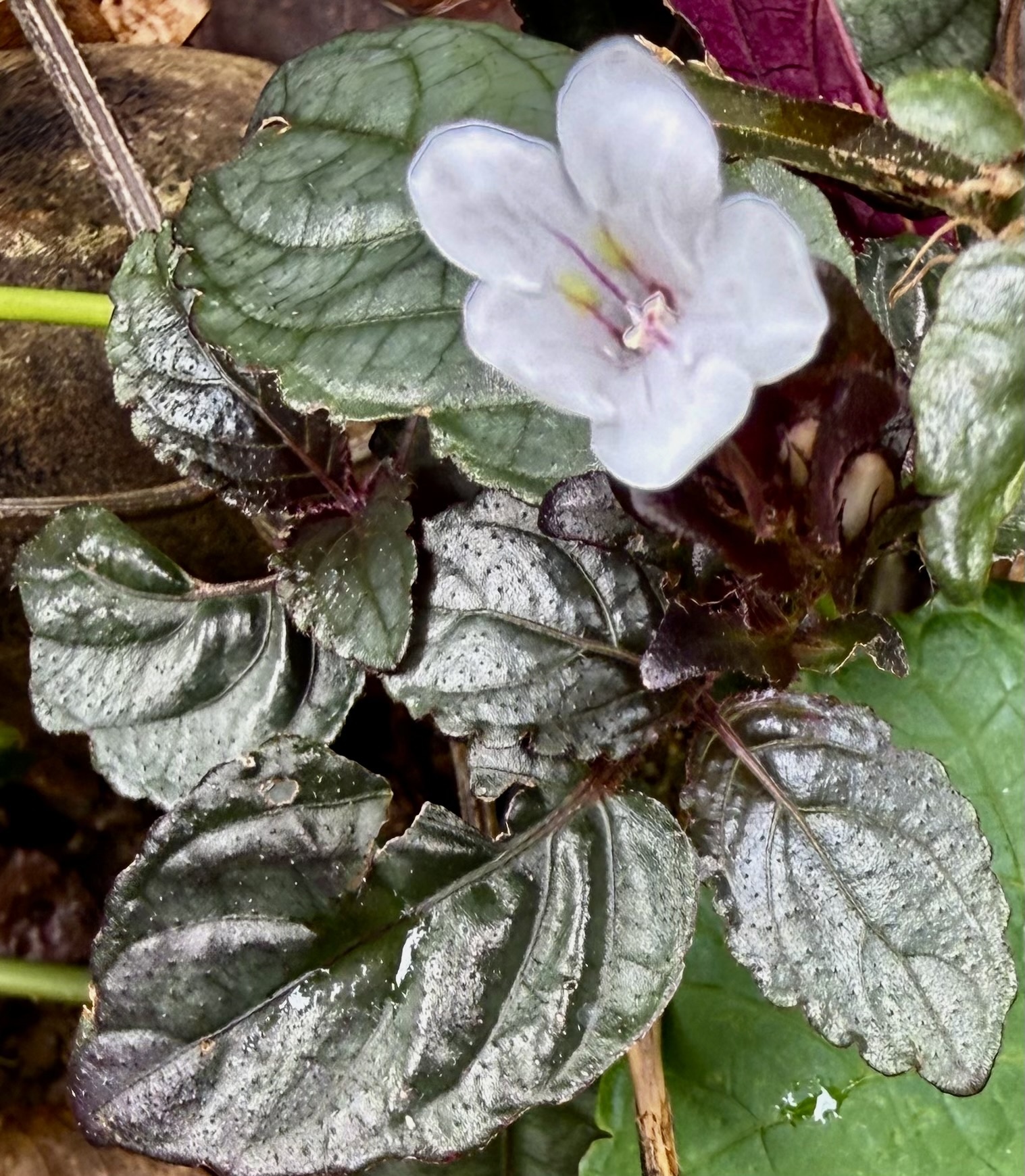
The waffle plant earns its name from leaves that ripple and pucker, a texture that increases the surface area of each leaf. Tops run green while the undersides show a vivid purple, and reddish-purple stems carry small, tubular white flowers on occasion, though blooming is infrequent. Cultivars such as Belgian Waffle and Snow White vary the pattern with cream edging or white and pink dappling.
Source: Epic Gardening
Occasional Whiteflies and Scale
A healthy waffle plant resists most pests, but whiteflies or scale insects can turn up on occasion. A firm spray of water may dislodge them, and horticultural oil or insecticidal soap handles more stubborn cases, with badly damaged leaves or stems best trimmed away.
Source: Epic Gardening
Overwatering Is the Main Risk
Most trouble traces back to overwatering: standing water in the pot or saucer invites pythium and other root-rot fungi, so drainage holes and an empty saucer matter. The plant also dislikes drying out, since it comes from jungle conditions and expects consistently moist soil. Overfeeding can push sudden leggy growth instead of bushiness, and wet leaves left damp overnight can invite powdery or downy mildew, so morning misting is preferable to evening.
Source: Epic Gardening
Pinch for Fuller Growth
The waffle plant rarely needs pruning for height, staying around six to eight inches tall, but its stems can trail and elongate, so trimming them back with sterile shears keeps the shape tidy and yields extra cutting material. Pinching stem tips just above a leaf node slows lengthwise growth and encourages a bushier habit.
Source: Epic Gardening
Care recipe
The species record — the baseline every cultivar inherits unless it says otherwise.
Care notes are early — not yet verified
- Light
- ai:claude-opus-4-8
- Water
- ai:claude-opus-4-8 (range 5-10d)
- Humidity
- ai:claude-opus-4-8
- Soil
- ai:claude-fable-5
- Care
- ai:claude-fable-5
Bright, indirect
≈ every 10 days
Medium
16–27 °C
Rich, moisture-retentive but well-draining mix
Softwood stem cuttings rooted easily in water or mix
Balanced liquid feed every two weeks in the growing season
Fast
Grown for iridescent purple foliage; small flowers are incidental
Not yet documented
This is where toxicity lives — every cultivar of this species inherits it and none can override it.
Reference images
Every image credited. Licenses link to their deeds.
PrimarySources: ai:claude-opus-4-8 · ai:claude-opus-4-8 (range 5-10d) · ai:claude-fable-5
Kept true by its growers
Every fact here carries its source. Grow Red Ivy yourself? What you’ve observed — how it drinks, how it holds its color, a name that’s off — and a clear photo of your plant are exactly what keep this page honest. Contributions are reviewed before anything changes.
Sign in to add what you know →