Species · genus Streptocarpus · Gesneriaceae
False African Violet
Streptocarpus saxorum Engl.
Cultivars of S. saxorum
The named forms growers keep — each with its own page, each honest about how much we know.
No named cultivars catalogued under S. saxorum yet. When growers document a stable, named form, it earns its own page here.
Guide
The species-level account. Cultivar pages build on this and say where they differ.
A trailing false violet
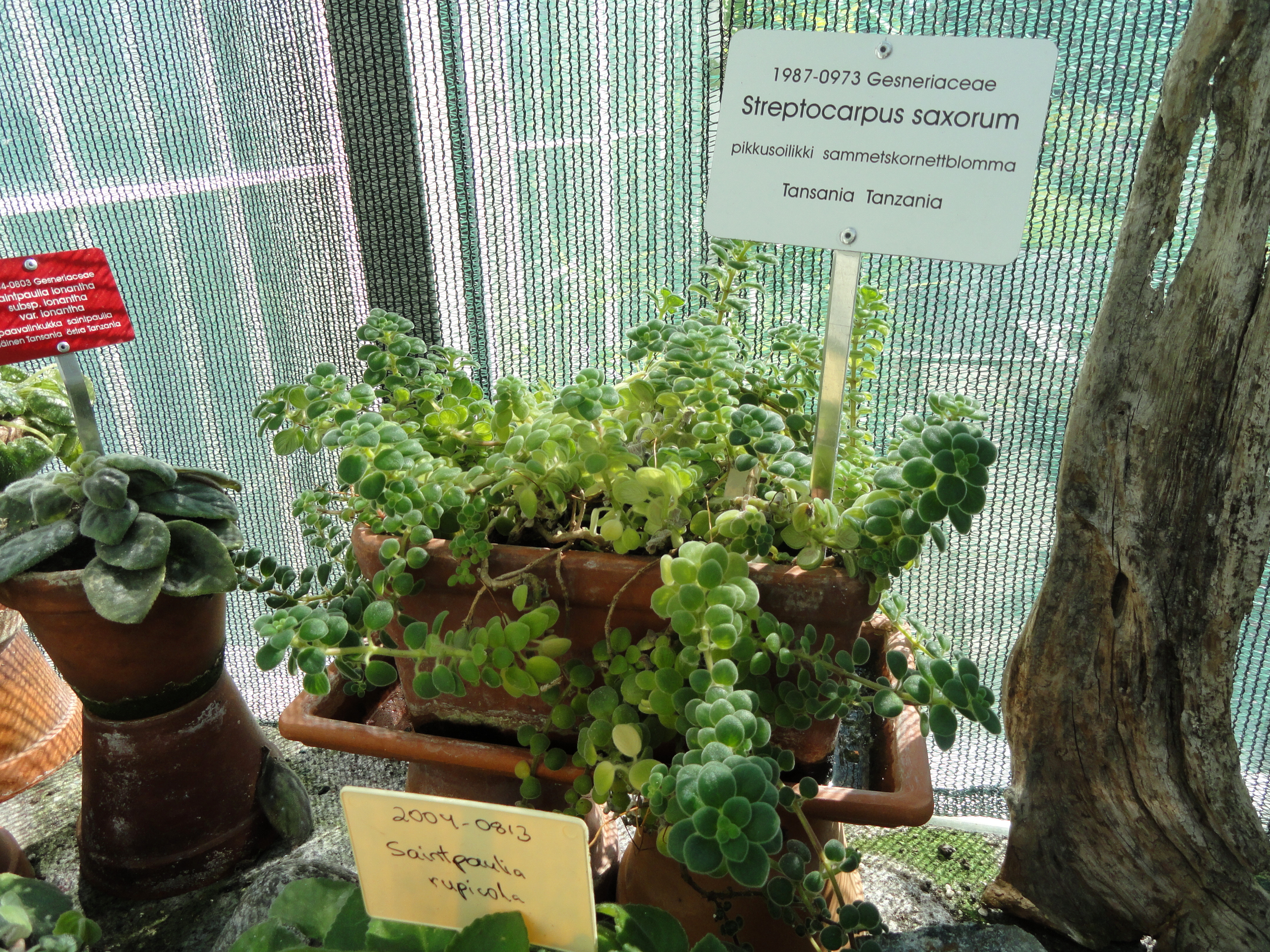
Streptocarpus saxorum, sometimes called the false African violet, is an evergreen perennial with trailing stems and small, fleshy, velvety, rounded leaves. Solitary pale mauve flowers with white throats open in the leaf axils, each about 3cm across.
Source: RHS
Rooted in East Africa
This species belongs to the Gesneriaceae family and hails naturally from Kenya and Tanzania, where its relatives in the genus Streptocarpus grow as annuals, perennials or subshrubs across similar habitats.
Source: RHS
Bright, sheltered, steadily watered
Grow it in free-draining compost on an east- or west-facing windowsill, or in a temperate to warm greenhouse with bright filtered light and shade from hot sun, in a sheltered spot with moist but well-drained soil. Through the growing season water freely but let the compost dry between waterings, feeding fortnightly with a high-potassium fertiliser, then water sparingly in winter as the compost dries. It tolerates chalk, clay or sandy soils across acid, neutral or alkaline pH, though it is only hardy to H1C and needs frost-free conditions.
Source: RHS
From seed or leaf
This species can be increased from seed or from leaf cuttings, the same methods used across the wider Streptocarpus genus.
Source: RHS
Trailing habit, modest flowers
It grows low and spreading, reaching only 20 to 50cm in height and spread, with a trailing habit suited to hanging pots. The rounded, velvety leaves and solitary pale mauve, white-throated flowers set it apart from the more upright, larger-leaved Streptocarpus hybrids grown for cut-flower type displays.
Source: RHS
Sap-suckers to watch
Glasshouse leafhoppers, mealybugs, thrips, vine weevil and tarsonemid mite are the pests most likely to trouble this plant.
Source: RHS
Grey mould and mildew
The main diseases to watch for are grey mould, or botrytis, and powdery mildew.
Source: RHS
Little pruning needed
This plant asks for no routine pruning, making it a low-fuss trailing houseplant once its light and watering rhythm is settled.
Source: RHS
Care recipe
The species record — the baseline every cultivar inherits unless it says otherwise.
Care notes are early — not yet verified
- Light
- ai:claude-opus-4-8
- Water
- ai:claude-opus-4-8 (range 7-12d)
- Humidity
- ai:claude-opus-4-8
- Soil
- ai:claude-fable-5
- Care
- ai:claude-fable-5
Bright, indirect
≈ every 12 days
Medium
13–25 °C
Light, free-draining mix with added perlite
Stem or leaf cuttings rooted in moist mix
Dilute balanced feed every two weeks in the growing season
Moderate
Pale lilac blooms through spring and summer in bright, indirect light
Not yet documented
This is where toxicity lives — every cultivar of this species inherits it and none can override it.
Reference images
Every image credited. Licenses link to their deeds.
PrimarySources: ai:claude-opus-4-8 · ai:claude-opus-4-8 (range 7-12d) · ai:claude-fable-5
Kept true by its growers
Every fact here carries its source. Grow False African Violet yourself? What you’ve observed — how it drinks, how it holds its color, a name that’s off — and a clear photo of your plant are exactly what keep this page honest. Contributions are reviewed before anything changes.
Sign in to add what you know →