Species · genus Streptocarpus · Gesneriaceae
African Violet
Streptocarpus ionanthus (H.Wendl.) Christenh.
Also known as: Usambara-violet
Cultivars of S. ionanthus
The named forms growers keep — each with its own page, each honest about how much we know.
No named cultivars catalogued under S. ionanthus yet. When growers document a stable, named form, it earns its own page here.
Guide
The species-level account. Cultivar pages build on this and say where they differ.
African Violet, Introduced
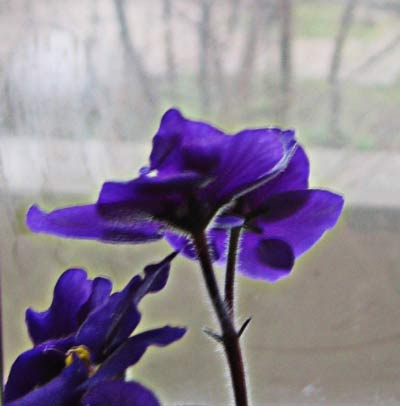
This is the African violet, known botanically as Streptocarpus ionanthus, a small evergreen rosette-forming houseplant. It stays compact, rarely reaching more than about 10cm tall, and carries clusters of violet-blue tubular flowers above its foliage through much of the year.
Source: RHS
Rooted in Tanzania
This species traces back to Kenya and Tanzania, where it grows as a lithophyte rooted among rocks in a seasonally dry tropical setting. It was first described under the name Saintpaulia ionantha before being reclassified into Streptocarpus, and it has since been introduced elsewhere, including Trinidad and Tobago.
Source: Kew
A Steady Indoor Rhythm
Grown as a houseplant, it does best in free-draining compost on an east or west-facing windowsill, or under bright filtered light in a greenhouse with shade from strong sun. Water sparingly in winter, letting the compost dry between waterings, and water more freely through the growing season while still allowing it to dry out somewhat; feed fortnightly with a high-potassium fertiliser.
Source: RHS
Leaf Cuttings in Summer
New plants are raised from leaf cuttings taken in summer.
Source: RHS
Rosettes of Fuzzy Leaves
The leaves are almost round, fleshy, and hairy, reaching up to 8cm long on long stalks, green above and often reddish-green beneath. From this low rosette rise loose clusters of two to eight violet-blue tubular flowers, each up to 2.5cm across, appearing more or less all year.
Source: RHS
Watch for Small Invaders
Keep an eye out for glasshouse leafhoppers, mealybugs, thrips, vine weevil, and tarsonemid mite, any of which may trouble this plant.
Source: RHS
Grey Mould and Mildew
The main troubles to watch for are grey mould, also called botrytis, and powdery mildew.
Source: RHS
Simple Tidying Needed
Upkeep is light: simply remove dead leaves as they appear.
Source: RHS
Care recipe
The species record — the baseline every cultivar inherits unless it says otherwise.
Care notes are early — not yet verified
- Light
- ai:claude-opus-4-8
- Water
- ai:claude-opus-4-8 (range 5-10d)
- Humidity
- ai:claude-opus-4-8
- Soil
- ai:claude-fable-5
- Care
- ai:claude-fable-5
Bright, indirect
≈ every 10 days
Medium
16–27 °C
Light, airy African violet mix
Leaf cuttings rooted in moist mix
Dilute high-potash feed every two weeks while in growth
Moderate
Reblooms readily in bright, indirect light with steady warmth
Non-toxic to cats & dogs
African violet (current name Streptocarpus ionanthus) — ASPCA non-toxic. This is where toxicity lives: every cultivar of this species inherits it and none can override it.
Reference images
Every image credited. Licenses link to their deeds.
Sources: ai:claude-opus-4-8 · ai:claude-opus-4-8 (range 5-10d) · ai:claude-fable-5 · ASPCA
Kept true by its growers
Every fact here carries its source. Grow African Violet yourself? What you’ve observed — how it drinks, how it holds its color, a name that’s off — and a clear photo of your plant are exactly what keep this page honest. Contributions are reviewed before anything changes.
Sign in to add what you know →