Species · genus Streptocarpus · Gesneriaceae
African-violet
Saintpaulia ionantha H.Wendl.
Also known as: Usambara-violet
Cultivars of S. ionantha
The named forms growers keep — each with its own page, each honest about how much we know.
No named cultivars catalogued under S. ionantha yet. When growers document a stable, named form, it earns its own page here.
Guide
The species-level account. Cultivar pages build on this and say where they differ.
A Familiar Flowering Companion
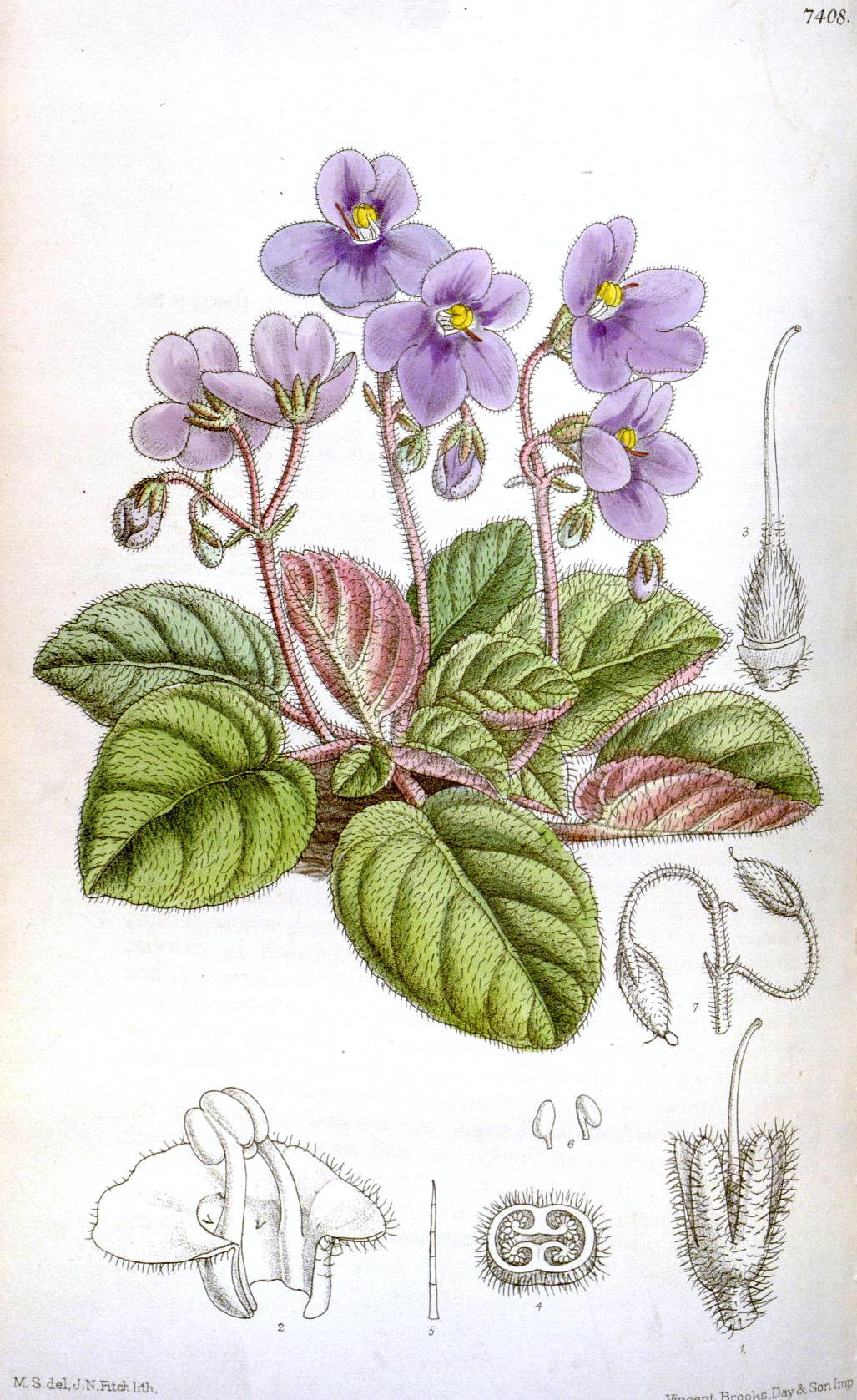
The African violet, Saintpaulia ionantha, is a low, compact houseplant grown for its near-constant show of small violet-like blooms held just above a rosette of thick, fuzzy leaves. It belongs to the Gesneriaceae family, alongside gloxinia and primrose, and is counted among the more satisfying flowering plants to keep indoors.
Source: Missouri Botanical Garden
Roots in East Africa
This species is native to Tanzania, in eastern Africa. Its genus name honors Baron Walter von Saint Paul-Illaire, the German who first collected the plant, and the epithet ionantha simply refers to its violet-colored flowers.
Source: Missouri Botanical Garden
Light, Warmth, and Careful Water
A bright but cool spot suits this plant best, with north, northwest, or northeast windows preferred over strong direct sun, and 14 to 16 hours of light needed daily to encourage flowering. Room temperatures between 60 and 80°F, with 70°F as an ideal, and humidity of 40 to 60 percent keep it comfortable, while the potting mix should stay evenly moist without ever standing in water. Watering is best done from below or with careful top-watering that avoids wetting the leaves, using room-temperature distilled, rain, or reverse-osmosis water rather than softened or chlorinated supplies, and feeding calls for a mild fertilizer at each watering, diluted to a quarter strength.
Source: UMN Extension
Grown Anew From a Leaf
African violets are propagated from leaf cuttings taken in summer.
Source: RHS
Rosettes, Fuzz, and Color
Plants form a round, mounded rosette of velvety, oval to heart-shaped leaves in shades of silvery, bright, or deep green, sometimes edged in cream. Flowers appear in single, semi-double, double, ruffled, star, or wasp forms, in white, pink, maroon, blue, lavender, violet, or deep purple, and sizes range from miniature specimens under 8 inches wide to large plants over 16 inches across.
Source: UMN Extension
Small Sap-Feeding Visitors
This plant may attract glasshouse leafhoppers, mealybugs, thrips, vine weevil, and tarsonemid mite. It can also be susceptible to grey mould and powdery mildew.
Source: RHS
Watering Missteps and Their Signs
Root rot from overwatering is one of the most common reasons these plants decline, showing up as a limp, wilted plant even when the soil feels moist, with mushy, brown, slimy roots in advanced cases. Water sitting on leaves leaves behind disfiguring pale spots, while too little light produces long, narrow leaves and no flowers, and too much light bleaches leaves pale. Pale leaves paired with poor growth often point to a lack of regular feeding, whereas tight centers and rusty-colored leaves suggest overfeeding, which can be corrected by flushing with plain water and cutting back on fertilizer frequency.
Source: UMN Extension
Repotting and Tidying Up
Re-potting into fresh mix once a year keeps roots healthy, and a monthly flush with plain water helps clear any fertilizer buildup. Routine upkeep is otherwise light: dust or debris on leaves can be brushed away with a dry artist's brush or soft cloth, and dead leaves or spent flowers are best removed with tweezers or a small pointed pruner.
Source: UMN Extension
Care recipe
The species record — the baseline every cultivar inherits unless it says otherwise.
Care notes are early — not yet verified
- Light
- ai:claude-opus-4-8
- Water
- ai:claude-opus-4-8 (range 5-10d)
- Humidity
- ai:claude-opus-4-8
- Soil
- ai:claude-fable-5
- Care
- ai:claude-fable-5
Bright, indirect
≈ every 10 days
Medium
18–27 °C
Light, well-draining African violet mix
Leaf cuttings rooted in mix or water
Dilute high-phosphorus feed every two weeks
Moderate
Blooms year-round with bright indirect light
Non-toxic to cats & dogs
African violet — ASPCA non-toxic (Saintpaulia spp.). This is where toxicity lives: every cultivar of this species inherits it and none can override it.
Reference images
Every image credited. Licenses link to their deeds.
Sources: ai:claude-opus-4-8 · ai:claude-opus-4-8 (range 5-10d) · ai:claude-fable-5 · ASPCA
Kept true by its growers
Every fact here carries its source. Grow African-violet yourself? What you’ve observed — how it drinks, how it holds its color, a name that’s off — and a clear photo of your plant are exactly what keep this page honest. Contributions are reviewed before anything changes.
Sign in to add what you know →