Species · genus Strelitzia · Strelitziaceae
Bird Of Paradise
Strelitzia reginae Banks
Also known as: Common Bird-of-paradise Flower · Craneflower
Cultivars of S. reginae
The named forms growers keep — each with its own page, each honest about how much we know.
No named cultivars catalogued under S. reginae yet. When growers document a stable, named form, it earns its own page here.
Guide
The species-level account. Cultivar pages build on this and say where they differ.
The bird of paradise
Strelitzia reginae, commonly called bird of paradise, is a tender South African evergreen grown for its large tropical leaves and its flamboyant flowers on tall stems. It makes a spectacular centrepiece for a conservatory or a large sunny room, though it wants space to spread.
Source: RHS
A queen's namesake
This plant hails from South Africa, where it grows as a bold, clump-forming perennial. Its genus name honours Charlotte Sophia of Mecklenburg-Strelitz, who became queen to George III in 1761, and the species name reginae simply means 'of the queen'.
Source: Missouri Botanical Garden
Light, warmth, and feeding
Give this plant bright light beside a sunny window or in a conservatory, though a little shade while in flower keeps the colours from bleaching, and never let temperatures drop below 10–12°C. Water freely and keep the compost constantly moist through spring and summer, misting or standing the pot on damp gravel for humidity, then ease off watering from late autumn. Feed fortnightly with a liquid houseplant fertiliser during the growing season, and refresh the top layer of compost each spring.
Source: RHS
Division or patient seed
The quickest route to new plants is dividing a mature clump in early spring, cutting away rooted offsets that have formed around the outside, each with its own leaves and roots, then potting them into free-draining compost. Growing from seed works too, but the seed coat is tough and needs nicking or scratching and soaking before sowing, and it can take five to ten years for a seed-raised plant to reach flowering size.
Source: RHS
Beak, sepals, and blue nectary
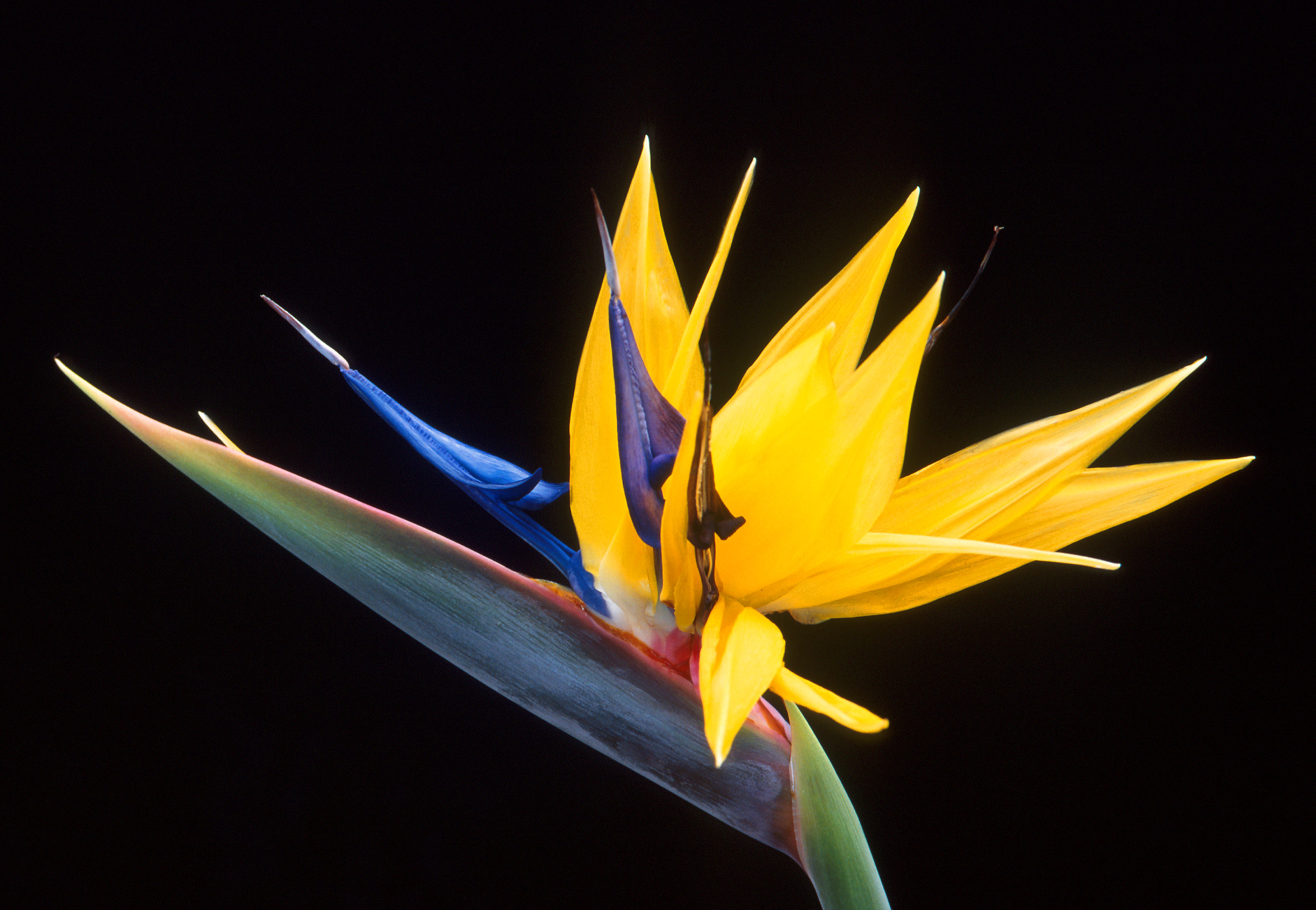
The plant forms clumps of stiff, grey-green, banana-like leaves rising from the base, with flowers held above the foliage on long stalks. Each bloom emerges from a hard, beak-like sheath called a spathe, set at right angles to the stem so it resembles a bird's head, and consists of three brilliant orange sepals with two blue petals fused into an arrow-shaped nectary that dusts pollen onto visiting birds' feet.
Source: Missouri Botanical Garden
Sap-suckers to watch
Keep an eye out for sap-sucking pests, particularly scale insects, red spider mites, and mealybugs.
Source: RHS
Signs of unhappy conditions
Slow growth, browning leaf tips and edges, leaf deformities, and a failure to flower usually point to unsuitable growing conditions, most often insufficient humidity, feeding, or watering. If the plant spends summer outdoors in a windy spot, its large leaves can quickly become shredded and tatty, so a sheltered position is worth seeking out.
Source: RHS
Repotting and tidying
This plant flowers better when kept slightly pot-bound, so only repot once roots have filled the container, ideally every couple of years in spring after flowering, moving up to a pot just slightly larger. Trim away any browning or tatty leaves at the base with sharp secateurs, and remove whole flower stalks once each bloom fades; otherwise no routine pruning is needed.
Source: RHS
Care recipe
The species record — the baseline every cultivar inherits unless it says otherwise.
Care notes are early — not yet verified
- Light
- ai:claude-opus-4-8
- Water
- ai:claude-opus-4-8 (range 7-14d)
- Humidity
- ai:claude-opus-4-8
- Soil
- ai:claude-fable-5
- Care
- ai:claude-fable-5
Direct sun
≈ every 14 days
Medium
13–27 °C
Rich, loamy, well-draining mix
Division of mature clumps
Balanced feed every two weeks in spring and summer
Moderate
Iconic orange crane flowers on mature plants given very bright light
Toxic to cats & dogs
Bird of paradise — toxic seeds/pods; mild nausea, drowsiness, vomiting. This is where toxicity lives: every cultivar of this species inherits it and none can override it.
Reference images
Every image credited. Licenses link to their deeds.
Sources: ai:claude-opus-4-8 · ai:claude-opus-4-8 (range 7-14d) · ai:claude-fable-5 · ASPCA
Kept true by its growers
Every fact here carries its source. Grow Bird Of Paradise yourself? What you’ve observed — how it drinks, how it holds its color, a name that’s off — and a clear photo of your plant are exactly what keep this page honest. Contributions are reviewed before anything changes.
Sign in to add what you know →