Species · genus Strelitzia · Strelitziaceae
Bird-Of-Paradise Tree
Strelitzia nicolai Regel & Körn.
Also known as: Natal Wild Banana · White Bird-of-paradise · Coastal Strelitzia · Giant Bird-of-paradise Flower · Giant Bird-of-paradise Tree
Cultivars of S. nicolai
The named forms growers keep — each with its own page, each honest about how much we know.
No named cultivars catalogued under S. nicolai yet. When growers document a stable, named form, it earns its own page here.
Guide
The species-level account. Cultivar pages build on this and say where they differ.
The Bird of Paradise
Strelitzia is a bold, tender perennial grown for its large paddle-shaped leaves and, in the right conditions, its striking beak-like flowers. Strelitzia reginae is the most familiar houseplant form, while Strelitzia nicolai, the white bird of paradise, grows into a far larger, tree-like specimen prized mainly for its dramatic banana-like foliage.
Source: RHS
A South African Native
Strelitzia reginae is a tender plant native to South Africa, where it grows into a substantial clumping perennial. Strelitzia nicolai comes from the same region, naturally found in South Natal and the northeastern Cape.
Source: RHS
Light, Water, Feed
Give this plant bright light, ideally a spot with some direct morning sun, and rotate the pot occasionally so growth stays even rather than leaning. Water when the top half of the soil has dried out, watering slowly and evenly and never letting the pot stand in water; in a 10-inch pot this means roughly three cups on watering day. Feed only through spring and summer, monthly with a balanced fertiliser, and hold off entirely once growth slows in autumn and winter. It tolerates average indoor humidity but appreciates it above 40 percent, so a humidifier, grouped plants, or a pebble tray help in dry conditions, and it prefers temperatures above 60°F, away from cold drafts and heater vents.
Source: Costa Farms
Dividing the Clump
The most reliable way to make new plants is division of rooted suckers in spring, cutting away an offset with its own leaves and roots as the clump matures. Seed is also possible, sown March to April, but the seed coat is thick and needs soaking beforehand to encourage germination.
Source: RHS
Scale and Structure
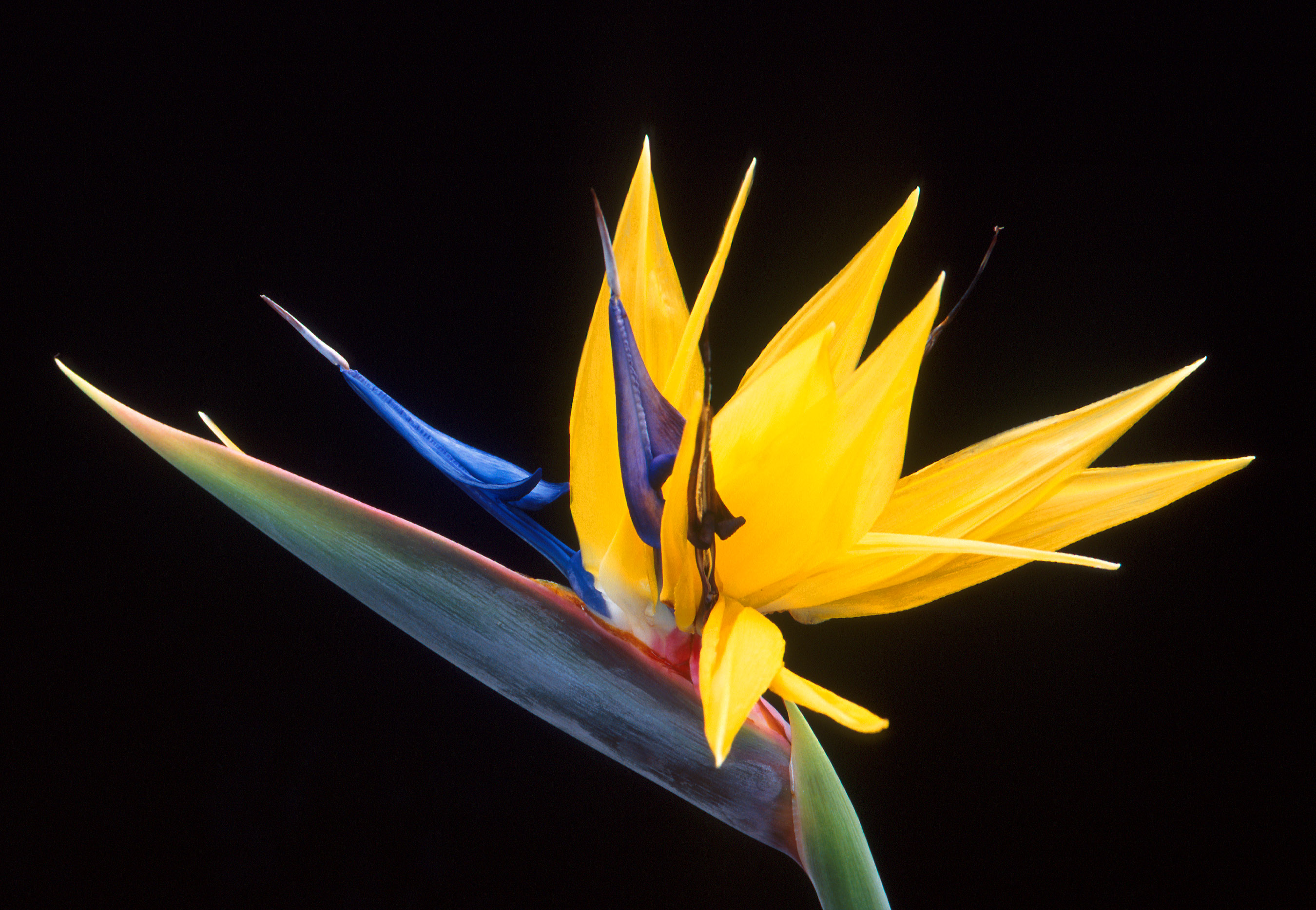
This is a plant built for drama: Strelitzia reginae reaches at least 1.5m tall and over 1m wide, with paddle-shaped leaves on stiff stalks and orange-and-blue flowers that stand clear of the foliage and last up to a month apiece. Strelitzia nicolai is considerably larger still, with grey-green leaf blades up to 1.5m long carried on 2m leaf stalks, and blue-and-white flowers opening in succession from blackish, beak-like spathes. Left to its own devices indoors, nicolai rarely flowers, but its upright, clump-forming habit and sculptural leaves are the real draw. Splitting in the leaves is a natural trait, not damage, letting light and wind pass through as it would in the wild.
Source: Costa Farms
Sap-Sucking Visitors
Strelitzia can be susceptible to scale insects, glasshouse red spider mite, and mealybugs, all of which feed by sucking sap from the plant. The species is otherwise generally disease-free, so pest checks are the main thing to stay on top of.
Source: RHS
Reading the Leaves
Leaves that curl inward usually signal underwatering or air that's too dry, while crispy brown tips point to low humidity or an inconsistent watering rhythm. If either shows up, it's worth checking the watering routine and humidity levels before assuming anything more serious is wrong.
Source: Costa Farms
Repotting and Tidying
Strelitzia nicolai grows slowly indoors but typically needs repotting every one to two years, moved up just one pot size into a well-draining mix with coir or peat, bark, and perlite. Signs it's time include roots crowding out of the drainage holes, water running straight through the pot, or growth slowing despite steady care.
Source: Costa Farms
Care recipe
The species record — the baseline every cultivar inherits unless it says otherwise.
Care notes are early — not yet verified
- Light
- ai:claude-opus-4-8
- Water
- ai:claude-opus-4-8 (range 7-14d)
- Humidity
- ai:claude-opus-4-8
- Soil
- ai:claude-fable-5
- Care
- ai:claude-fable-5
Bright, indirect
≈ every 14 days
Medium
15–29 °C
Rich, loamy, well-draining mix
Division or rhizome sections
Balanced feed monthly in the growing season
Fast
Rarely flowers indoors; grown for its bold banana-like foliage
Toxic to cats & dogs
Bird of paradise — toxic seeds/pods; mild nausea, drowsiness, vomiting. This is where toxicity lives: every cultivar of this species inherits it and none can override it.
Reference images
Every image credited. Licenses link to their deeds.
Sources: ai:claude-opus-4-8 · ai:claude-opus-4-8 (range 7-14d) · ai:claude-fable-5 · ASPCA
Kept true by its growers
Every fact here carries its source. Grow Bird-Of-Paradise Tree yourself? What you’ve observed — how it drinks, how it holds its color, a name that’s off — and a clear photo of your plant are exactly what keep this page honest. Contributions are reviewed before anything changes.
Sign in to add what you know →