Species · genus Stephanotis · Apocynaceae
Jukti
Stephanotis volubilis (L.fil.) S.Reuss, Liede & Meve
Cultivars of S. volubilis
The named forms growers keep — each with its own page, each honest about how much we know.
No named cultivars catalogued under S. volubilis yet. When growers document a stable, named form, it earns its own page here.
Guide
The species-level account. Cultivar pages build on this and say where they differ.
An Elegant Fragrant Climber
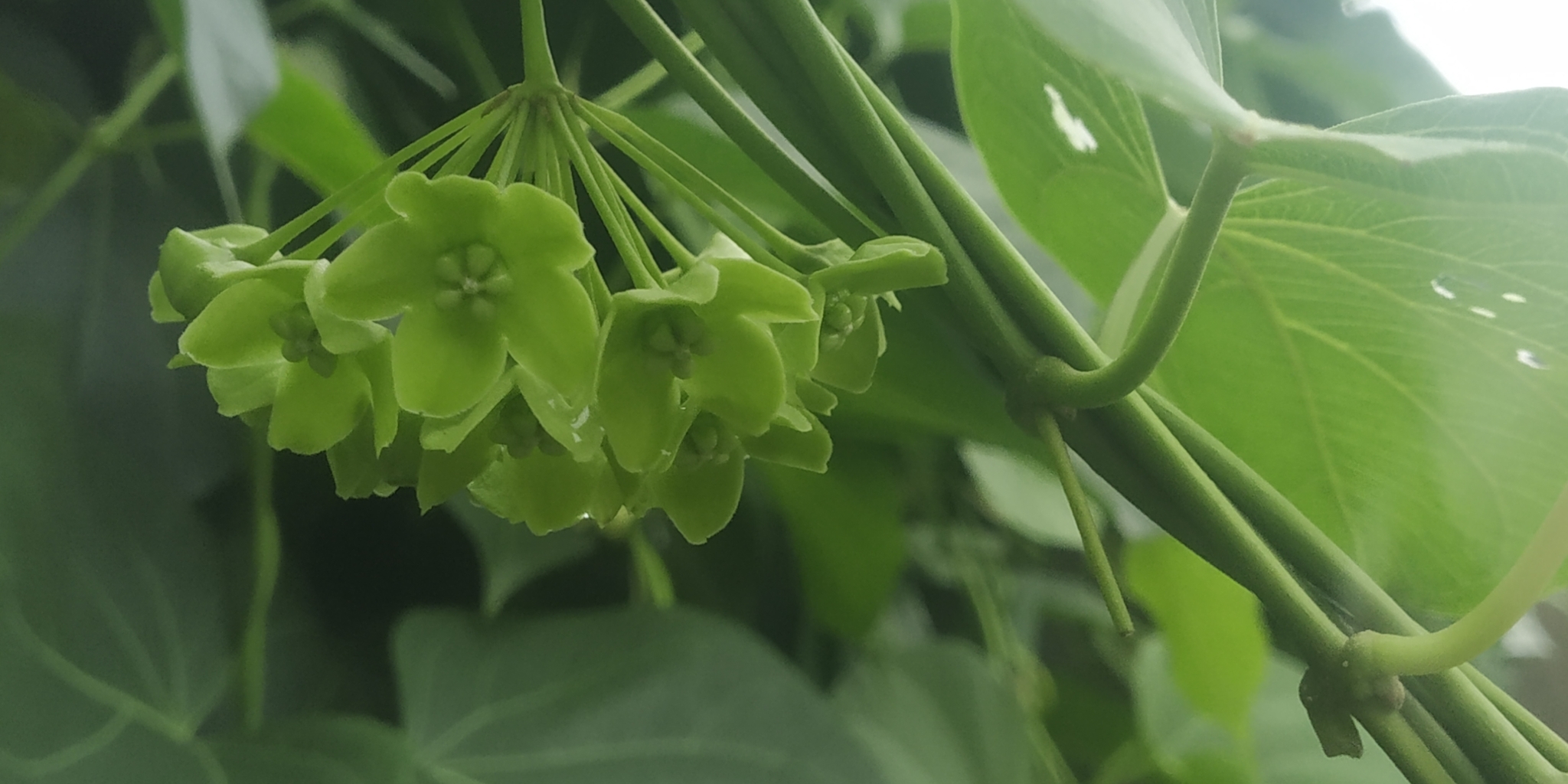
Stephanotis, sold under the botanical name Marsdenia floribunda, is a tropical vine grown for its clusters of sweetly scented white flowers and its glossy, dark green foliage that holds interest year round. It is a versatile houseplant that can be trained up a post or wire, allowed to trail from a hanging basket, or let ramble along a mantle.
Source: Costa Farms
Rooted in Tropical Asia
The wider Stephanotis relative recognized by Kew's Plants of the World Online is native to a broad sweep from northeast Pakistan through southern China and into western Malesia, taking in countries such as India, Myanmar, Thailand, Vietnam, and the Philippines. It is a climber that grows chiefly within the wet tropical biome, which explains its taste for warmth and humidity as a houseplant.
Source: Kew
Light, Water, Feed
Give stephanotis as bright a spot as you can manage, since more light indoors brings on better flowering, and a vine kept too dim simply will not bloom. Water once the top inch or two of the potting mix has dried to the touch, which in practice may mean anywhere from about once a week to once every ten or fourteen days depending on light, temperature, and humidity. Fertilizer is only needed once or twice a year, in spring and summer, though feeding more often will push faster growth and stronger flowering.
Source: Costa Farms
Cuttings and Layering
Among this vine's jasmine relatives, new plants are most readily made from cuttings or by layering. Outdoor types are usually propagated from hardwood cuttings taken in winter, while tender, indoor-grown kinds do best from softwood or semi-ripe cuttings taken at a node in spring or summer.
Source: RHS
Vine, Flower, Foliage
This is a climbing vine capable of reaching twenty feet or more where it can grow outdoors year-round, in frost-free gardens as an evergreen perennial. Its clusters of white, sweetly fragrant flowers appear through spring and summer, set off by shiny dark green leaves that stay attractive through every season.
Source: Costa Farms
Sap-Feeding Troublemakers
Jasmine relatives grown indoors, stephanotis's close kin, tend to attract sap-feeding pests such as mealybugs and red spider mites rather than anything more exotic. Outdoors, aphids may turn up on tender new growth, though they rarely need active control. Checking plants regularly makes any outbreak far easier to catch and treat early.
Source: RHS
Pruning and Cutting Back
Prune stephanotis whenever it begins to outgrow its space; it belongs to the milkweed family, so cut stems will drip a milky white sap, and it helps to work with an old rag or towel so the sap doesn't land on floors or furniture. Related climbing jasmines are best pruned annually just after flowering, cutting flowered stems back to a strong side-shoot and thinning out crowded, damaged, or weak growth to keep the vine healthy and blooming lower down where its scent can be enjoyed.
Source: Costa Farms
Care recipe
The species record — the baseline every cultivar inherits unless it says otherwise.
Care notes are early — not yet verified
- Light
- ai:claude-opus-4-8
- Water
- ai:claude-opus-4-8 (range 7-12d)
- Humidity
- ai:claude-opus-4-8
- Soil
- ai:claude-fable-5
- Care
- ai:claude-fable-5
Bright, indirect
≈ every 12 days
Medium
13–27 °C
Rich, well-draining peat-based mix
Semi-ripe stem cuttings rooted with warmth
Balanced liquid feed every two weeks in the growing season
Moderate
Waxy, fragrant white flowers in summer under bright light
Toxic to cats & dogs & humans
Apocynaceae commonly contain cardiac glycosides and irritant milky latex. This is where toxicity lives: every cultivar of this species inherits it and none can override it.
Reference images
Every image credited. Licenses link to their deeds.
PrimarySources: ai:claude-opus-4-8 · ai:claude-opus-4-8 (range 7-12d) · ai:claude-fable-5 · ai:claude-opus-4-8 (family inference)
Kept true by its growers
Every fact here carries its source. Grow Jukti yourself? What you’ve observed — how it drinks, how it holds its color, a name that’s off — and a clear photo of your plant are exactly what keep this page honest. Contributions are reviewed before anything changes.
Sign in to add what you know →