Species · genus Stapelia · Apocynaceae
Carrion Flower
Stapelia grandiflora Curtis, 1802
Also known as: Starfish Flower · Starfish Cactus · Giant Toad Plant · Carrion Plant
Cultivars of S. grandiflora
The named forms growers keep — each with its own page, each honest about how much we know.
No named cultivars catalogued under S. grandiflora yet. When growers document a stable, named form, it earns its own page here.
Guide
The species-level account. Cultivar pages build on this and say where they differ.
The Giant Stapelia
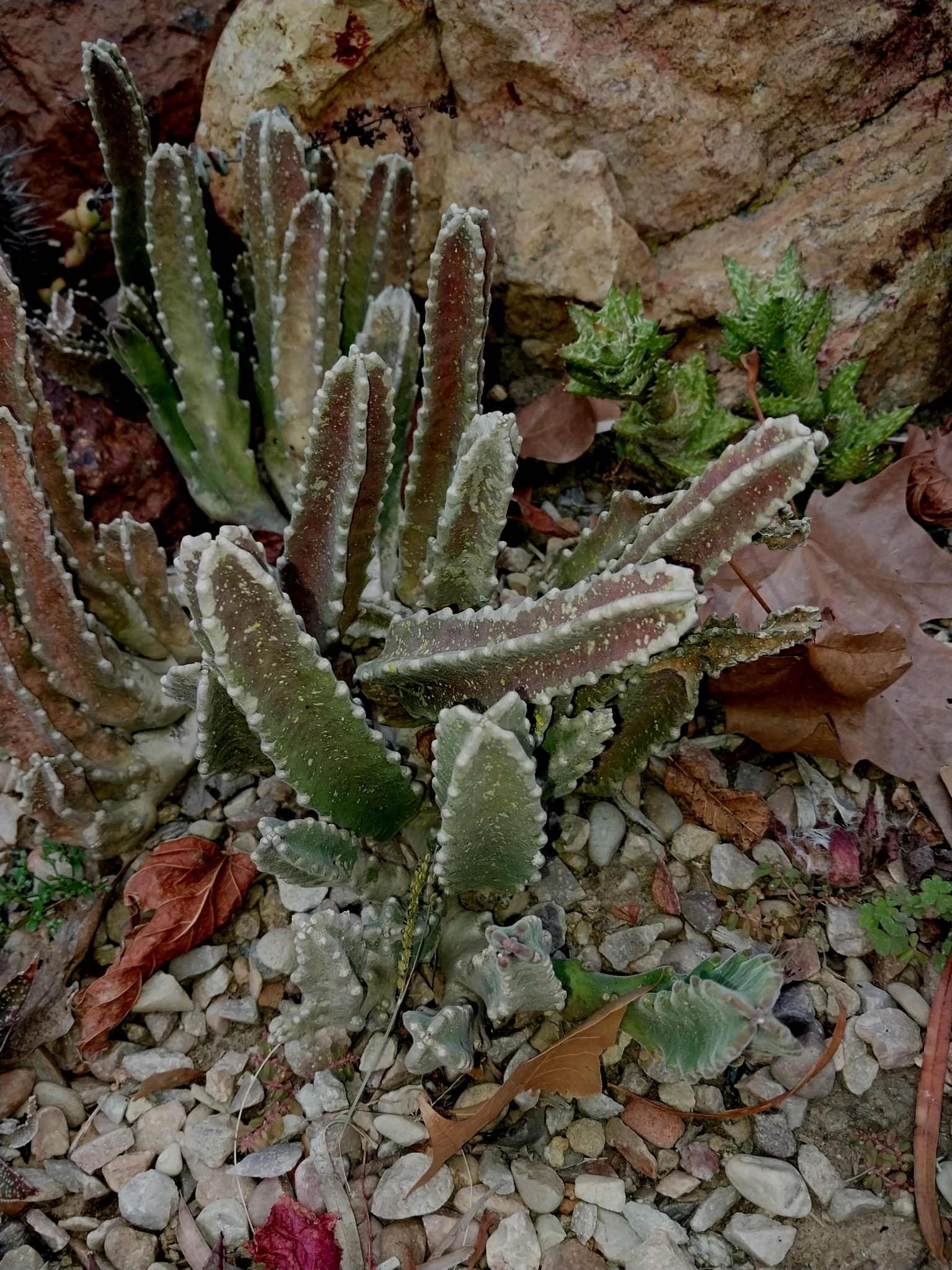
Stapelia gigantea, known as giant stapelia, is a succulent evergreen perennial in the Apocynaceae family. It forms clumps of erect, four-angled fleshy stems topped by spectacular starry flowers, and it carries the RHS Award of Garden Merit.
Source: RHS
A Southern African Native
This species ranges naturally from South Africa up to Tanzania. It belongs to the genus Stapelia, whose members are succulent perennials with erect, angled, toothed stems and showy star-shaped flowers, usually carrying an unpleasant scent, appearing in summer.
Source: RHS
Sun, Grit, and Shelter
Grow this plant under glass in equal parts peat-free loam-based compost and grit, topped with a grit dressing, or outdoors in gritty, sharply drained soil in full sun where frost-free. It wants full light but appreciates shade from the hottest sun, and it suits a south- or east-facing sheltered spot in well-drained loam or sand. It is only reliably hardy outdoors in the mildest conditions, rated H1B, so most growers keep it under cover.
Source: RHS
By Seed or Sections
Stapelia gigantea can be propagated either from seed or by separating rooted sections of the clump.
Source: RHS
Foul-Scented, Spectacular Blooms
The plant stays low, reaching only 20cm in height, with clump-forming, four-angled stems. Its flowers are the real spectacle: buff-yellow, starry, lined with dark red, and reaching up to 35cm across, though they are foul-scented rather than fragrant in the pleasant sense.
Source: RHS
Watch for Mealybugs
This species may be susceptible to mealybugs, so it is worth checking stems and joints for their telltale waxy clusters.
Source: RHS
Black Root Rot Risk
The main disease concern noted for this plant is black root rot, a reminder that sharp drainage matters more than generous watering.
Source: RHS
Little Pruning Needed
No pruning is required for this plant. It is well suited to patio and container growing, reaching maturity over roughly five to ten years.
Source: RHS
Care recipe
The species record — the baseline every cultivar inherits unless it says otherwise.
Care notes are early — not yet verified
- Light
- ai:claude-opus-4-8
- Water
- ai:claude-opus-4-8 (range 14-28d)
- Humidity
- ai:claude-opus-4-8
- Soil
- ai:claude-fable-5
- Care
- ai:claude-fable-5
Bright, indirect
≈ every 28 days
Low — average room
10–27 °C
Gritty, fast-draining cactus and succulent mix
Stem cuttings left to callus, then rooted in dry mix
Dilute low-nitrogen feed once a month in spring and summer
Slow
Large starfish flowers indoors with a bright spot and a dry winter rest
Toxic to cats & dogs & humans
Apocynaceae frequently contain toxic cardiac glycosides and irritant latex-like compounds This is where toxicity lives: every cultivar of this species inherits it and none can override it.
Reference images
Every image credited. Licenses link to their deeds.
PrimarySources: ai:claude-opus-4-8 · ai:claude-opus-4-8 (range 14-28d) · ai:claude-fable-5 · ai:claude-opus-4-8 (family inference)
Kept true by its growers
Every fact here carries its source. Grow Carrion Flower yourself? What you’ve observed — how it drinks, how it holds its color, a name that’s off — and a clear photo of your plant are exactly what keep this page honest. Contributions are reviewed before anything changes.
Sign in to add what you know →