Species · genus Spathiphyllum · Araceae
Peace Lily
Spathiphyllum wallisii Regel
Cultivars of S. wallisii
The named forms growers keep — each with its own page, each honest about how much we know.
No named cultivars catalogued under S. wallisii yet. When growers document a stable, named form, it earns its own page here.
Guide
The species-level account. Cultivar pages build on this and say where they differ.
The Peace Lily
The peace lily, Spathiphyllum wallisii, is a popular houseplant valued for its glossy tropical foliage and its white flower-like spathes that rise above the leaves. It is easy to grow and settles well into indirect light indoors, which is part of why it has become such a familiar presence in homes.
Source: RHS
A Colombian Native
This species belongs to the arum family, Araceae, and its natural range lies in Colombia and Central America. In the wild it grows as an evergreen, rhizomatous perennial, a habit it carries through into its life as a houseplant.
Source: RHS
Warmth, Light, and Water
Grow the peace lily in partial shade or bright, indirect light, as deep shade can reduce flowering, and shelter it from direct summer sun, which can scorch the leaves. It likes consistent warmth and moderate humidity, so a bathroom suits it well, and it prefers rainwater to tap water. During active growth, water and mist freely and feed monthly with a balanced liquid fertiliser, but let the compost avoid staying damp for long periods since that invites root rot.
Source: RHS
Dividing the Clump
Peace lilies are propagated by division, carried out in winter or immediately after flowering, though some named forms are divided in spring instead.
Source: RHS
Spathes and Foliage
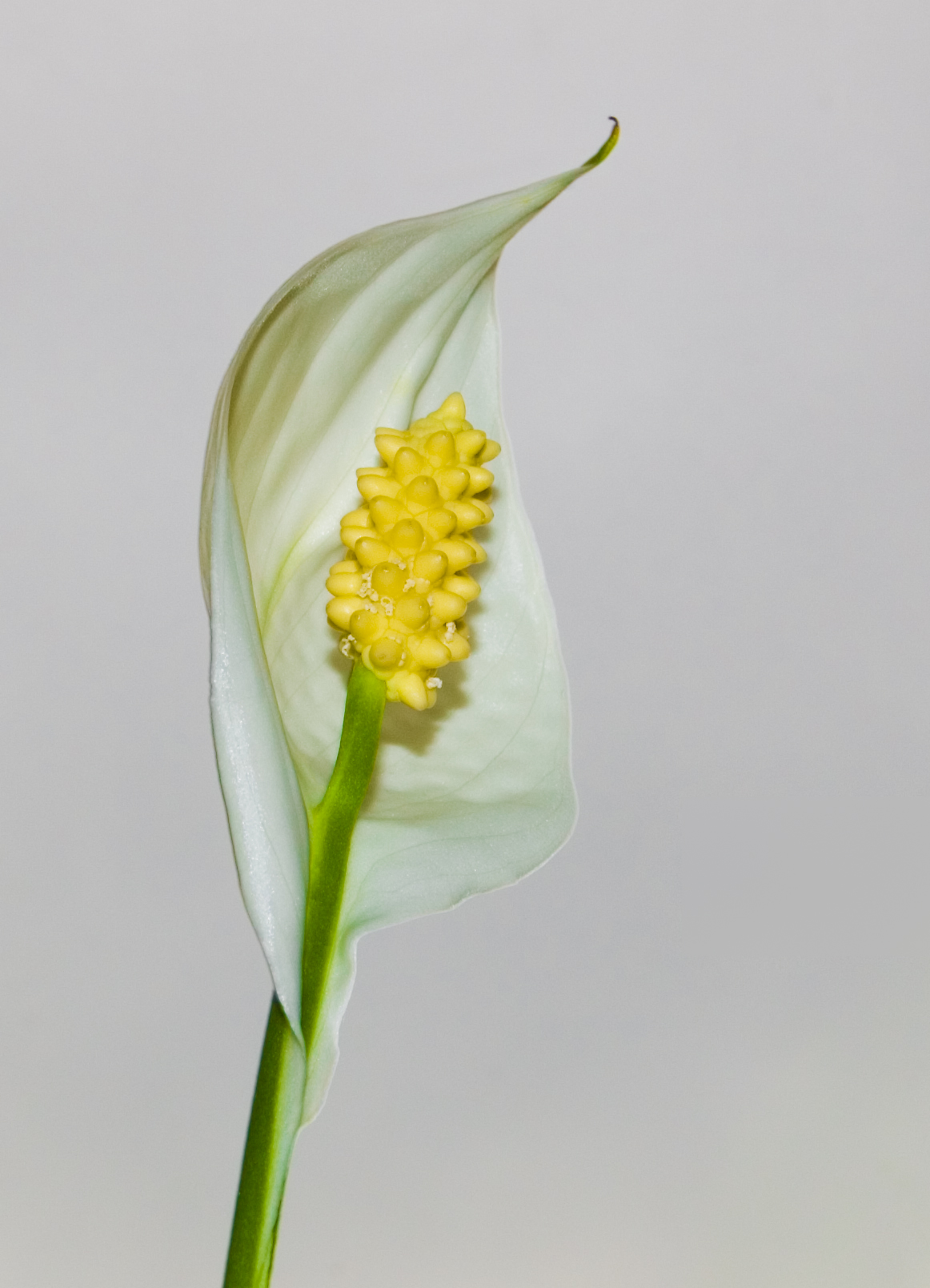
Peace lilies form a clump of erect, lance-shaped, glossy dark green leaves, typically reaching 30 to 60cm tall. What looks like a flower is in fact an ovate white spathe up to 15cm long wrapped around a slender cream spadix, and this display can last for several months, with the spathe gradually turning greener as it ages.
Source: RHS
Reading the Signs
Very dry air tends to show up as browning leaves, so regular misting or a tray of damp gravel helps, along with keeping the plant away from hot radiators and cold draughts. A dramatic droop is usually just thirst, and the plant recovers soon after a good drink. Overwatering, by contrast, is the more serious risk, since compost that stays wet for long stretches can rot the roots.
Source: RHS
Repotting and Handling
No pruning is needed, but pot on once the roots have filled the container, generally every two to three years for compact forms. Wipe the leaves occasionally with a damp cloth to clear dust and support photosynthesis. Because the sap can irritate skin and the whole plant is harmful if eaten, wear gloves when handling it and keep it away from children and pets.
Source: RHS
Care recipe
The species record — the baseline every cultivar inherits unless it says otherwise.
Care notes are early — not yet verified
- Light
- ai:claude-opus-4-8
- Water
- ai:claude-opus-4-8 (range 5-10d)
- Humidity
- ai:claude-opus-4-8
- Soil
- ai:claude-fable-5
- Care
- ai:claude-fable-5
Bright, indirect
≈ every 10 days
High
16–27 °C
Rich, well-draining peaty mix that holds moisture
Division of the clump at repotting
Balanced liquid feed monthly in spring and summer
Moderate
White spathes on and off through the year in good light
Toxic to cats & dogs & humans
Araceae contain insoluble calcium oxalate crystals, which irritate the mouth and digestive tract if chewed. This is where toxicity lives: every cultivar of this species inherits it and none can override it.
Reference images
Every image credited. Licenses link to their deeds.
Sources: ai:claude-opus-4-8 · ai:claude-opus-4-8 (range 5-10d) · ai:claude-fable-5 · ai:claude-opus-4-8 (family inference)
Kept true by its growers
Every fact here carries its source. Grow Peace Lily yourself? What you’ve observed — how it drinks, how it holds its color, a name that’s off — and a clear photo of your plant are exactly what keep this page honest. Contributions are reviewed before anything changes.
Sign in to add what you know →