Species · genus Sinningia · Gesneriaceae
Brazilian Gloxinia
Sinningia speciosa (G.Lodd. ex Ker Gawl.) Hiern
Also known as: Florist's Gloxinia · Violet Slipper Gloxinia · Brazilian Or Florists Gloxinia · Gloxinia
Cultivars of S. speciosa
The named forms growers keep — each with its own page, each honest about how much we know.
No named cultivars catalogued under S. speciosa yet. When growers document a stable, named form, it earns its own page here.
Guide
The species-level account. Cultivar pages build on this and say where they differ.
A Fleeting Velvet Bloomer
Gloxinia is the common name gardeners use for Sinningia speciosa, a tropical tuberous plant grown for its large trumpet-shaped flowers sitting above soft, velvety leaves. Most plants sold today are hybrids bred to flower heavily for a couple of months, after which the display fades and the plant settles into rest rather than blooming indefinitely.
Source: Epic Gardening
Brazilian Roots, Reclassified Name
The plant is native to the tropical regions of Brazil, where it belongs to the Gesneriaceae family alongside African violets. Its genus name honors Wilhelm Sinning, a nineteenth-century head gardener at the University of Bonn, and the species name speciosa simply means showy. Though it was once classified under the genus Gloxinia, it was reassigned to Sinningia as hybrids grew popular, and both names are still used interchangeably by growers.
Source: Missouri Botanical Garden
Bright Shade, Steady Moisture
Gloxinia wants bright light without direct sun, since harsh rays will dry and shorten the life of its leaves, and indoor growers do well keeping temperatures between 60 and 75°F. The soil should stay evenly moist in a well-draining, slightly acidic mix, watered from below with lukewarm water so the leaves stay dry; both drought and waterlogging cause trouble. Humidity should come from misting near the roots or a humidifier rather than the leaves, and feeding calls for a diluted, low-nitrogen fertilizer during active growth, tapering off as the plant heads into dormancy.
Source: Epic Gardening
Tubers, Seeds, and Cuttings
New plants can be started from seed, stem cuttings, leaf cuttings, or tubers, with tuber-grown plants reaching flower in about four months and seed-grown ones taking around six. Seedlings raised from seed tend to have shorter internodes, giving a more compact, tidy look. Missouri Botanical Garden notes a simpler route too: from spring to early summer, a leaf can be removed from an established plant and its stem rooted in a glass of water.
Source: Missouri Botanical Garden
Big Leaves, Trumpet Flowers
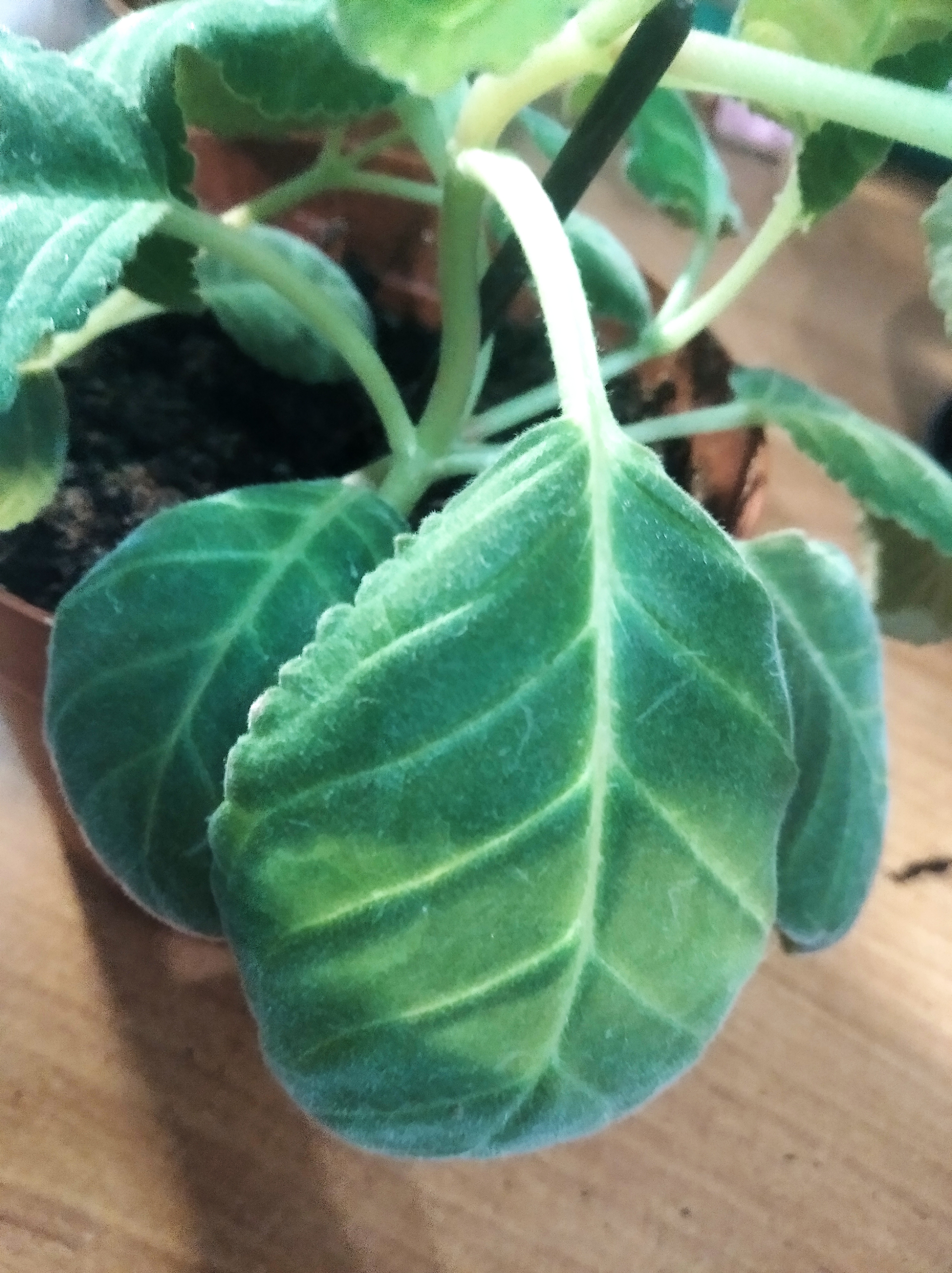
The plant carries large, soft, dark green leaves with a fuzzy texture and toothed, oblong edges, arranged in a low rosette not unlike an African violet. Above them rise trumpet-shaped flowers that can reach close to two inches long, in shades of pink, white, blue, purple, and red, sometimes marked with spots or fringes. The hybrids commonly sold stay compact, usually only six to ten inches tall and wide, which makes them easy to move around a room.
Source: Epic Gardening
Watch for Sap Suckers
Gloxinia is vulnerable to mealybugs, aphids, whiteflies, and scale. Because insecticides and sprays can damage the delicate blooms, the better approach is to isolate and remove any infected plants from others rather than treat them in place.
Source: Epic Gardening
Reading the Leaves and Buds
Many gloxinia troubles trace back to water and humidity: yellow leaves point to overwatering or too little nitrogen, curled leaves suggest low humidity, and rolled leaves signal a plant kept too dry. Crown rot and gray mold are risks whenever water sits on the leaves or crown, so overhead watering should be avoided. Beyond that, black or dying buds can mean too few daylight hours or missing micronutrients, and spotting on foliage often comes from cold drafts, harsh light, or cold irrigation water.
Source: Epic Gardening
Dormancy and Repotting Rhythm
After the spring flowering finishes, cut the plant back to its first two leaves to coax a second bloom; once that second round is done, cut the foliage down to soil level and let the tuber rest in a dim spot around 60–65°F. Watering should be reduced until foliage dies back, with just enough misting to keep the tuber from shrinking. New growth appears in winter, at which point the tuber can be repotted and returned to bright, indirect light with regular watering resumed.
Source: Missouri Botanical Garden
Care recipe
The species record — the baseline every cultivar inherits unless it says otherwise.
Care notes are early — not yet verified
- Light
- ai:claude-opus-4-8
- Water
- ai:claude-opus-4-8 (range 5-10d)
- Humidity
- ai:claude-opus-4-8
- Soil
- ai:claude-fable-5
- Care
- ai:claude-fable-5
Bright, indirect
≈ every 10 days
Medium
16–24 °C
Light, peaty, well-draining mix rich in organic matter
Leaf cuttings or division of the tuber
Balanced liquid feed every two weeks while in active growth
Moderate
Large velvety trumpet blooms in summer, then a dormant rest
Not yet documented
This is where toxicity lives — every cultivar of this species inherits it and none can override it.
Reference images
Every image credited. Licenses link to their deeds.
PrimarySources: ai:claude-opus-4-8 · ai:claude-opus-4-8 (range 5-10d) · ai:claude-fable-5
Kept true by its growers
Every fact here carries its source. Grow Brazilian Gloxinia yourself? What you’ve observed — how it drinks, how it holds its color, a name that’s off — and a clear photo of your plant are exactly what keep this page honest. Contributions are reviewed before anything changes.
Sign in to add what you know →