Species · genus Senecio · Asteraceae
Old-man-in-the-spring
Senecio vulgaris L.
Also known as: Groundsel · Common Groundsel · Common Fireweed
Cultivars of S. vulgaris
The named forms growers keep — each with its own page, each honest about how much we know.
No named cultivars catalogued under S. vulgaris yet. When growers document a stable, named form, it earns its own page here.
Guide
The species-level account. Cultivar pages build on this and say where they differ.
A common weedy annual
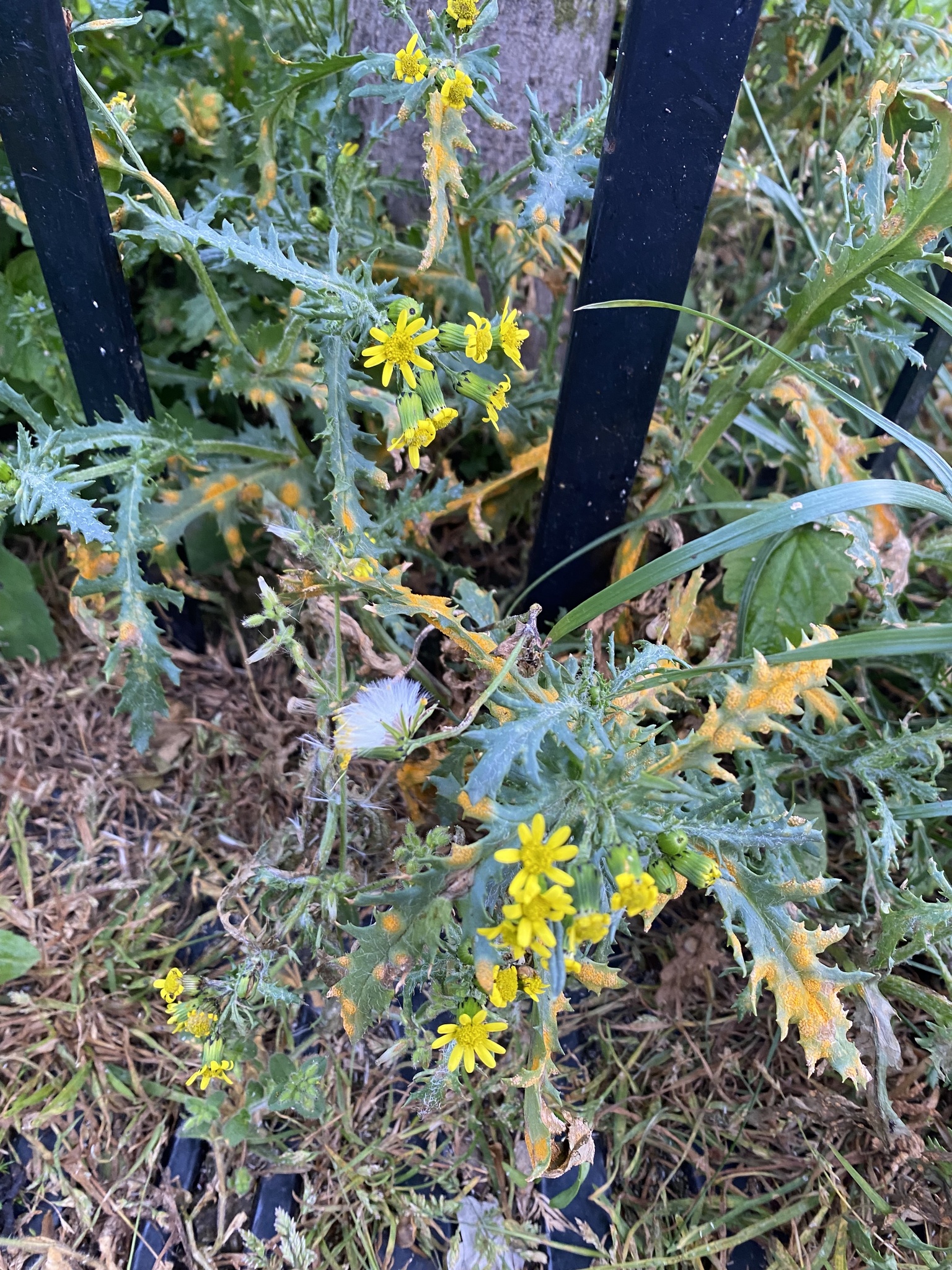
Groundsel is a fast-growing upright annual, reaching up to 60cm, that most gardeners meet uninvited rather than plant on purpose. It carries yellow flowers mostly hidden by green bracts, giving them the look of a dandelion that never quite opened, followed by fluffy white seed heads.
Source: RHS
Old World native, world traveller
This species is native across a vast native range spanning Macaronesia and Europe through to China and the Arabian Peninsula. It has since been introduced far beyond that range, turning up on nearly every continent, and has a long history of use as food, medicine, and even poison.
Source: Kew
Undemanding to a fault
It grows most vigorously in moist, fertile soil in full sun, though it adapts readily to clay, loam or sand and to either well-drained or moist but well-drained conditions. It does less well in shade, but otherwise asks for little, which is a large part of why it spreads so readily.
Source: RHS
Prolific self-seeding
Groundsel propagates by seed alone, produced prolifically throughout the year and dispersed on the wind. Its life cycle can run from seed to seed in under six weeks, which explains how quickly a single plant can seed a whole bed.
Source: RHS
Deeply lobed, hollow-stemmed growth
Groundsel grows upright in a columnar habit, its long, deeply lobed leaves arising directly from hollow stems. The flowerheads are small and largely concealed by their bracts, and they mature into prolific wind-borne seed, allowing the plant to complete a full cycle from seed to seed in under six weeks under good conditions.
Source: RHS
Mealybug and mite susceptibility
Groundsel may be susceptible to mealybugs, scale insects, and glasshouse red spider mite. It can also be affected by a rust and by honey fungus.
Source: RHS
Pull before it flowers
Because it spreads so rapidly and is generally treated as a weed, the recommended approach is simply to remove it before it flowers, cutting off seed production at the source.
Source: RHS
Care recipe
The species record — the baseline every cultivar inherits unless it says otherwise.
Care notes are early — not yet verified
- Light
- ai:claude-opus-4-8
- Water
- ai:claude-opus-4-8 (range 3-7d)
- Humidity
- ai:claude-opus-4-8
- Soil
- ai:claude-fable-5
- Care
- ai:claude-fable-5
Bright, indirect
≈ every 7 days
Medium
5–24 °C
Ordinary well-draining potting mix
Self-seeds freely from seed
Rarely needed; light feed if grown on
Fast
Near year-round small yellow flowers that quickly set seed
Toxic to cats & dogs
Senecio (ragwort / groundsel) — pyrrolizidine alkaloids; vomiting, lethargy. This is where toxicity lives: every cultivar of this species inherits it and none can override it.
Reference images
Every image credited. Licenses link to their deeds.
PrimarySources: ai:claude-opus-4-8 · ai:claude-opus-4-8 (range 3-7d) · ai:claude-fable-5 · ASPCA
Kept true by its growers
Every fact here carries its source. Grow Old-man-in-the-spring yourself? What you’ve observed — how it drinks, how it holds its color, a name that’s off — and a clear photo of your plant are exactly what keep this page honest. Contributions are reviewed before anything changes.
Sign in to add what you know →