Species · genus Senecio · Asteraceae
Cape Ivy
Senecio angulatus L.fil.
Also known as: Climbing Groundsel · Creeping Cape Ivy · Creeping Groundsel · Creeping Ragwort
Cultivars of S. angulatus
The named forms growers keep — each with its own page, each honest about how much we know.
No named cultivars catalogued under S. angulatus yet. When growers document a stable, named form, it earns its own page here.
Guide
The species-level account. Cultivar pages build on this and say where they differ.
A climbing Cape senecio
Senecio angulatus is a climbing shrub in the daisy family, Asteraceae. It belongs to a genus that ranges widely across annuals, perennials, climbers and succulent shrubs, most bearing daisy-like flowers.
Source: RHS
Out of the Cape
This species is native to the Cape Provinces of South Africa, where it grows as a climbing shrub in the subtropical biome. It has since been introduced well beyond that home range, turning up from Madeira and the Canary Islands to Tasmania and South Australia.
Source: Kew
A scrambling habit
True to its native form, this is a climbing shrub rather than an upright one, built to scramble through subtropical growth. The genus it belongs to is a varied one, taking in simple or pinnately divided leaves alongside the characteristic daisy-like flowerheads.
Source: RHS
Care recipe
The species record — the baseline every cultivar inherits unless it says otherwise.
Care notes are early — not yet verified
- Light
- ai:claude-opus-4-8
- Water
- ai:claude-opus-4-8 (range 10-18d)
- Humidity
- ai:claude-opus-4-8
- Soil
- ai:claude-fable-5
- Care
- ai:claude-fable-5
Bright, indirect
≈ every 18 days
Low — average room
7–27 °C
Free-draining succulent mix with added grit
Stem cuttings root easily in gritty mix
Light feed monthly through spring and summer
Fast
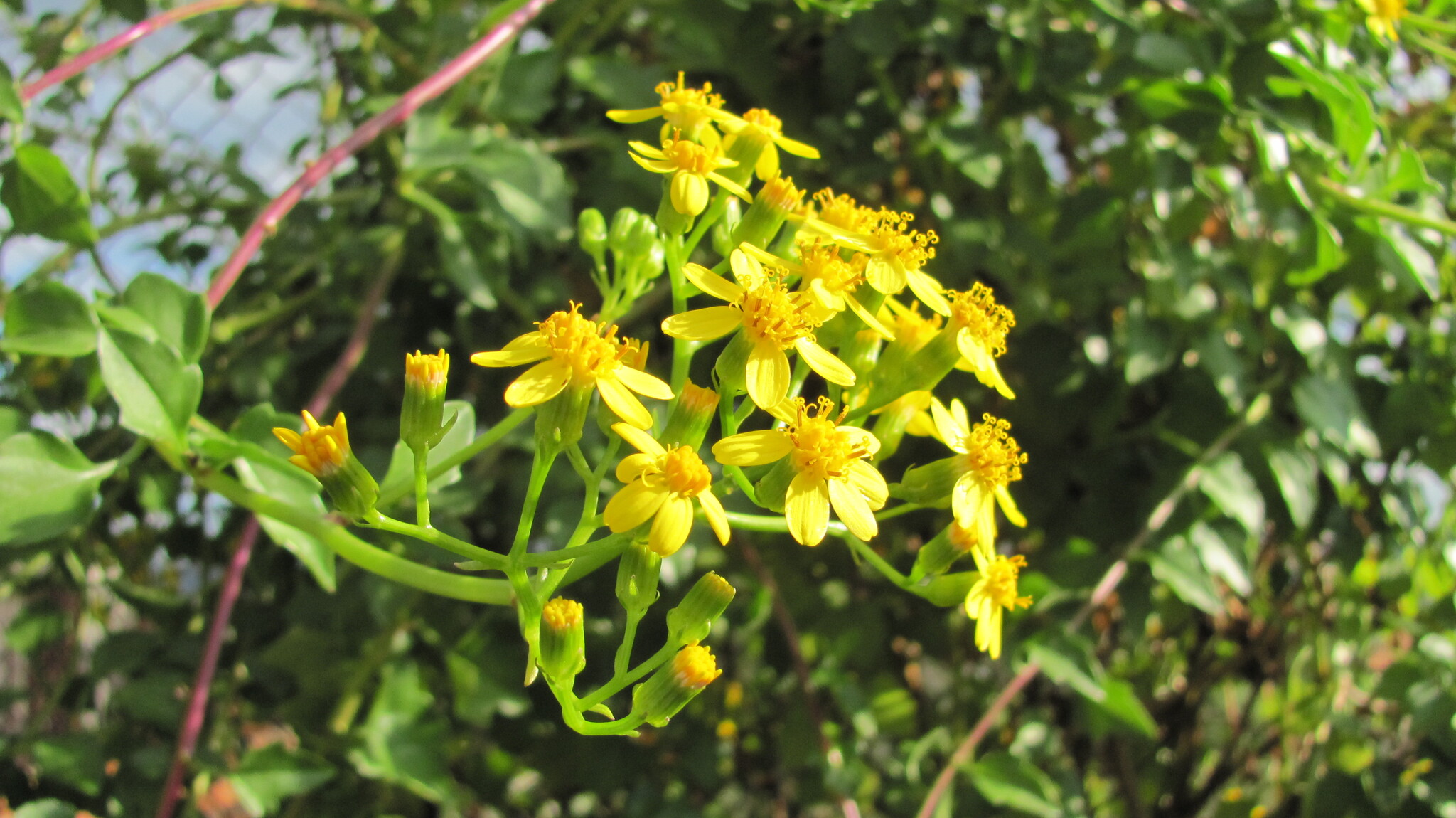
Clusters of small yellow flowers in late autumn to winter
Toxic to cats & dogs
Senecio (ragwort / groundsel) — pyrrolizidine alkaloids; vomiting, lethargy. This is where toxicity lives: every cultivar of this species inherits it and none can override it.
Reference images
Every image credited. Licenses link to their deeds.
Sources: ai:claude-opus-4-8 · ai:claude-opus-4-8 (range 10-18d) · ai:claude-fable-5 · ASPCA
Kept true by its growers
Every fact here carries its source. Grow Cape Ivy yourself? What you’ve observed — how it drinks, how it holds its color, a name that’s off — and a clear photo of your plant are exactly what keep this page honest. Contributions are reviewed before anything changes.
Sign in to add what you know →