Species · genus Sempervivum · Crassulaceae
Hens-and-chickens House-leek
Sempervivum globiferum L.
Also known as: Rolling Hen-and-chicks
Cultivars of S. globiferum
The named forms growers keep — each with its own page, each honest about how much we know.
No named cultivars catalogued under S. globiferum yet. When growers document a stable, named form, it earns its own page here.
Guide
The species-level account. Cultivar pages build on this and say where they differ.
A Hardy Houseleek
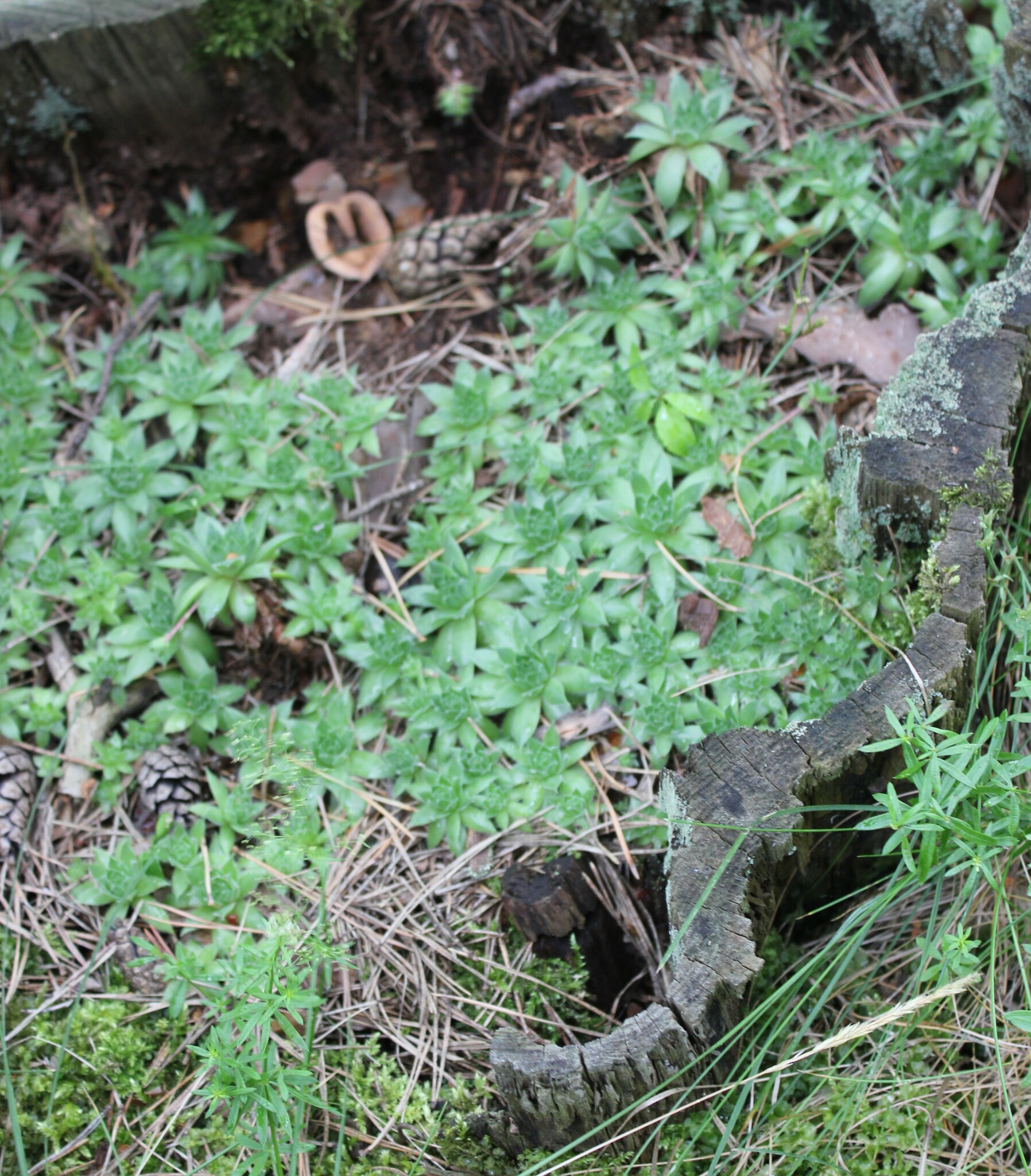
Sempervivum globiferum is an evergreen succulent in the Crassulaceae family, forming mats of fleshy, water-storing rosettes. It belongs to the wider Sempervivum group known commonly as houseleeks, prized for their year-round foliage and undemanding nature.
Source: RHS
Mountains of Europe
This species was first described by Linnaeus in 1753 and is native to a broad swathe of Europe, from Germany east to European Russia, taking in Austria, France, Italy, the Baltic states, and the Balkans, among other regions. It has also become introduced further north into Sweden and West Siberia. Like its relatives, it hails from mountainous ground, and the old common name houseleek recalls a tradition of growing these plants on house roofs.
Source: Kew
Sun, Grit, Patience
Grow houseleeks in an open, sunny position in soil or compost that drains sharply, as they are unfussy about pH but resent heavy, waterlogged ground. Watering in dry spells during spring and summer is appreciated but not essential, and plants left outdoors need no watering at all in winter. Any slow-release feed mixed into the compost at planting will see plants through several months, after which a monthly liquid feed in the growing season is enough, though those in open ground rarely need feeding at all.
Source: RHS
Offsets Root Readily
The simplest route to more plants true to the parent is by offsets, the small rosettes produced on stolons. In spring, pot these into a free-draining, gritty compost, teasing rooted plantlets apart gently, or snipping the stolon close to an unrooted rosette and pressing it lightly onto the compost surface. Kept moist and out of direct sun, they typically establish within four to six weeks. Species can also be raised from seed sown between spring and autumn in a sheltered, frost-free spot, though named cultivars will not come true this way.
Source: RHS
Hen And Chickens
Rosettes rarely exceed 15cm in height but spread outward by stolons, mini rosettes that root as they travel, a habit that has earned the group the nickname hen and chickens. Foliage colour is far from fixed, often shifting from green to red with the seasons and temperature, and some rosettes show contrasting leaf tips. After two to three growing seasons a central rosette will send up a flower stalk to about 15-20cm, then die back once flowering finishes, leaving the offsets to carry on.
Source: RHS
Weevils And Leaf Miner
Containerised plants can attract soil-dwelling vine weevil, and the group is also susceptible to sempervivum leaf miner, a pest that has only recently arrived in the UK.
Source: RHS
Generally Untroubled
Sempervivum are on the whole trouble-free. If a plant looks off-colour, a gentle tug or a check outside the pot will reveal whether the roots are sound, since excessive moisture and poor drainage are the usual cause of rot. Rust disease appears occasionally, and birds can sometimes uproot freshly planted specimens, which taut thread strung nearby will discourage.
Source: RHS
Divide Every Few Years
Every two to three years in spring, separate and repot container collections to clear dead material and fill in gaps left by rosettes that have flowered and died, or simply lift an offset and settle it into the space with a little fresh compost. Displays in open ground can be lifted and split in spring once they begin to look tired or thin. If you would rather plants not self-seed, trim off spent flower stalks before seed sets, and keep neighbouring plants cut back so they do not overshade the rosettes.
Source: RHS
Care recipe
The species record — the baseline every cultivar inherits unless it says otherwise.
Care notes are early — not yet verified
- Light
- ai:claude-opus-4-8
- Water
- ai:claude-opus-4-8 (range 10-21d)
- Humidity
- ai:claude-opus-4-8
- Soil
- ai:claude-fable-5
- Care
- ai:claude-fable-5
Direct sun
≈ every 21 days
Low — average room
5–24 °C
Gritty, sharp-draining cactus and succulent mix
Roll-off bulbil offsets root readily on their own
Weak dilute feed once or twice in spring and summer only
Slow
Rosettes are monocarpic, flowering once then giving way to offsets
Not yet documented
This is where toxicity lives — every cultivar of this species inherits it and none can override it.
Reference images
Every image credited. Licenses link to their deeds.
PrimarySources: ai:claude-opus-4-8 · ai:claude-opus-4-8 (range 10-21d) · ai:claude-fable-5
Kept true by its growers
Every fact here carries its source. Grow Hens-and-chickens House-leek yourself? What you’ve observed — how it drinks, how it holds its color, a name that’s off — and a clear photo of your plant are exactly what keep this page honest. Contributions are reviewed before anything changes.
Sign in to add what you know →