Species · genus Sempervivum · Crassulaceae
Limestone Houseleek
Sempervivum calcareum Jord.
Cultivars of S. calcareum
The named forms growers keep — each with its own page, each honest about how much we know.
No named cultivars catalogued under S. calcareum yet. When growers document a stable, named form, it earns its own page here.
Guide
The species-level account. Cultivar pages build on this and say where they differ.
A Chalky-Land Houseleek
Sempervivum calcareum, known as the chalky land houseleek, is a mat-forming evergreen succulent of the Crassulaceae family. It grows as rosettes of fleshy, grey-green leaves and spreads steadily by producing offsets around itself.
Source: RHS
A Native of the Alps
This houseleek's natural range lies in the south-western Alps. The common name 'houseleek' recalls the old practice of growing these tough rosette succulents on house roofs across Europe.
Source: RHS
Sun, Grit, and Patience
This plant wants full sun and a well-drained soil of chalk, loam, or sand, and it tolerates acid, neutral, or alkaline conditions equally well. It is drought resistant and needs little watering, appreciating some moisture in dry spring or summer spells but managing without. Feeding is rarely necessary beyond what a slow-release addition to the potting mix provides, and it takes roughly two to five years to reach maturity.
Source: RHS
Rooting the Offsets
The straightforward way to propagate this houseleek is by rooting its offsets in spring, the same young rosettes it produces naturally around the parent plant.
Source: RHS
Grey Rosettes, Red Tips
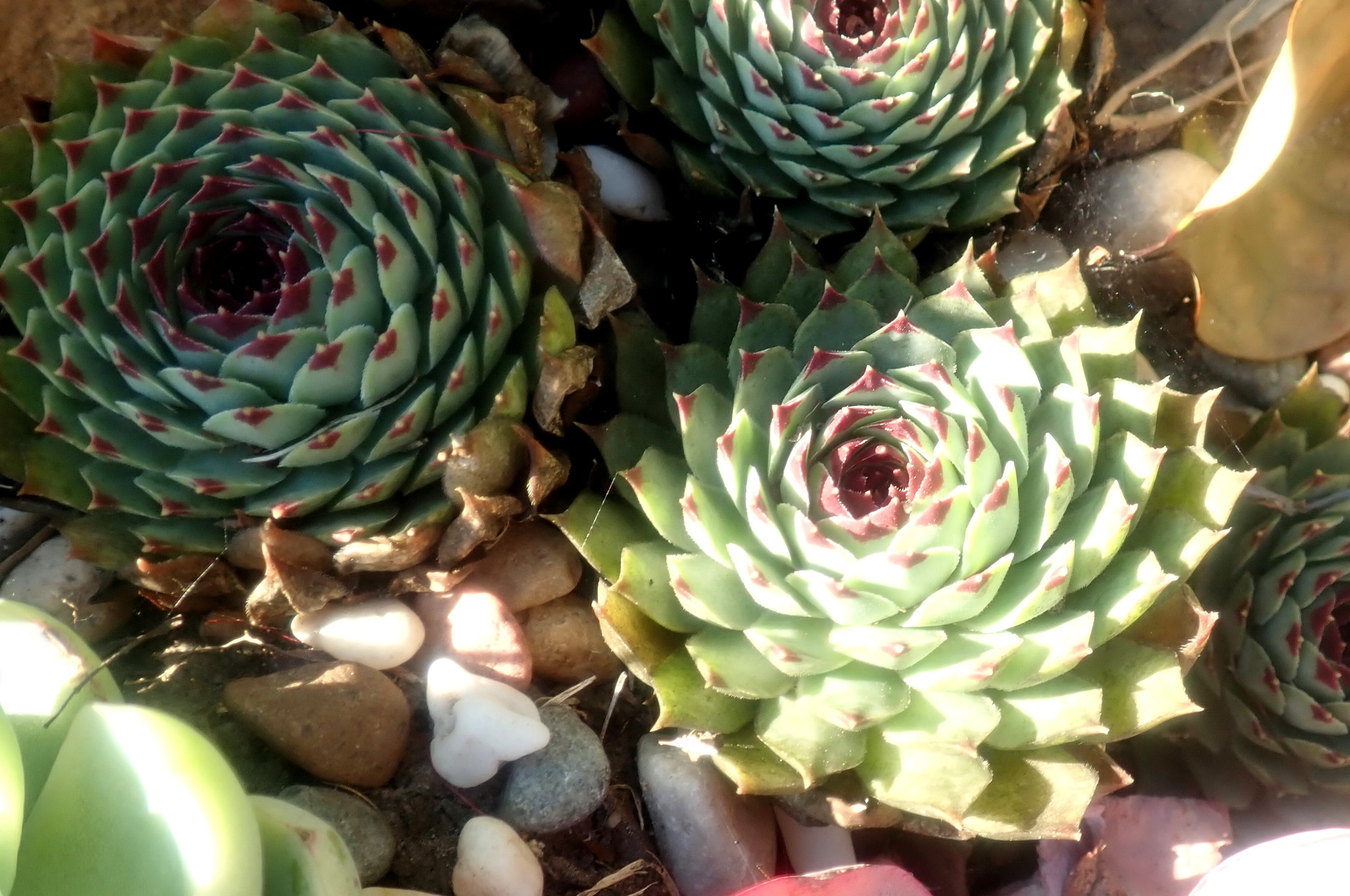
The oblong, fleshy leaves are grey-green with pointed tips stained dark red, packed into low rosettes that knit together into a mat. In summer, mature rosettes send up upright, leafy stalks bearing dense clusters of small, star-shaped pale pink flowers. After flowering, that central rosette dies back, but by then it has usually surrounded itself with enough offsets to fill its place.
Source: RHS
Leaf Miners and Weevils
Sempervivum leaf miner is a pest worth watching for, alongside slugs, snails, and the larvae of vine weevil, which work on the roots unseen below the surface.
Source: RHS
Wet Feet, Rust
Excess winter wet is this plant's main enemy, so it benefits from protection when conditions turn soggy. It can also be susceptible to a rust disease, and a general check of the root system is worthwhile if a plant starts to look off, since overly moist compost is often the underlying cause of decline.
Source: RHS
Light Touch Upkeep
No routine pruning is needed, though spent rosettes that have flowered and died can be carefully removed to tidy the mat. Repotting rosettes in spring, or filling gaps with fresh offsets, keeps a container display looking full over the years.
Source: RHS
Care recipe
The species record — the baseline every cultivar inherits unless it says otherwise.
Care notes are early — not yet verified
- Light
- ai:claude-opus-4-8
- Water
- ai:claude-opus-4-8 (range 10-21d)
- Humidity
- ai:claude-opus-4-8
- Soil
- ai:claude-fable-5
- Care
- ai:claude-fable-5
Direct sun
≈ every 21 days
Low — average room
5–24 °C
Gritty, sharp-draining cactus and succulent mix
Detach and replant the offset rosettes
Weak dilute feed once or twice in spring and summer only
Slow
Mature rosettes flower once then die, leaving offsets behind
Not yet documented
This is where toxicity lives — every cultivar of this species inherits it and none can override it.
Reference images
Every image credited. Licenses link to their deeds.
PrimarySources: ai:claude-opus-4-8 · ai:claude-opus-4-8 (range 10-21d) · ai:claude-fable-5
Kept true by its growers
Every fact here carries its source. Grow Limestone Houseleek yourself? What you’ve observed — how it drinks, how it holds its color, a name that’s off — and a clear photo of your plant are exactly what keep this page honest. Contributions are reviewed before anything changes.
Sign in to add what you know →