Species · genus Selenicereus · Cactaceae
Fishbone Cactus
Selenicereus anthonyanus (Alexander) D.R.Hunt
Also known as: Rick Rack Cactus
Cultivars of S. anthonyanus
The named forms growers keep — each with its own page, each honest about how much we know.
No named cultivars catalogued under S. anthonyanus yet. When growers document a stable, named form, it earns its own page here.
Guide
The species-level account. Cultivar pages build on this and say where they differ.
A Zig-Zag Jungle Cactus
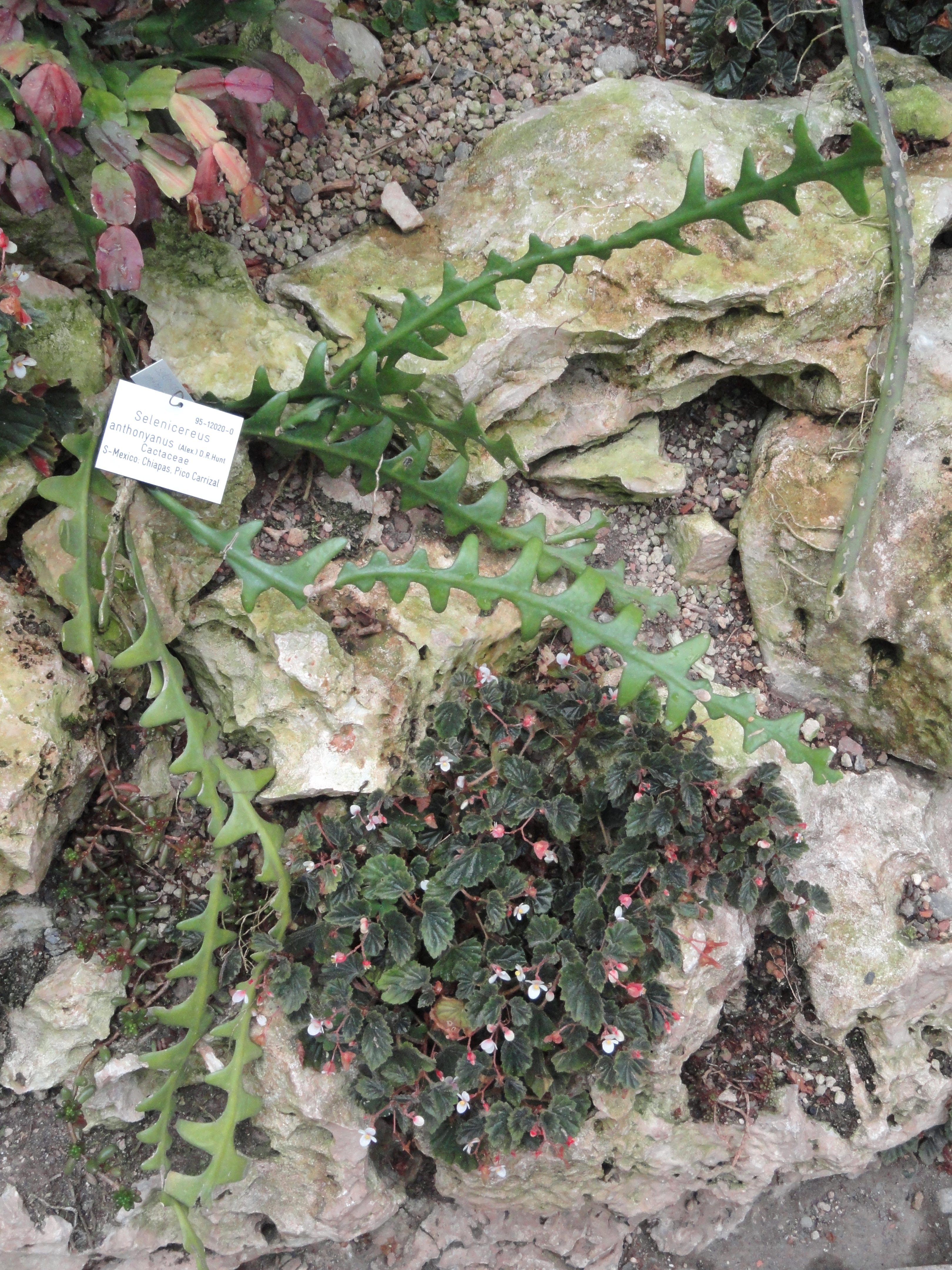
Selenicereus anthonyanus is a fast-growing, tender epiphytic cactus, its slim stems branching in a jagged zig-zag pattern. It carries fragrant, showy pink flowers with white and yellow centres that open at night through spring and summer.
Source: RHS
From Southern Mexico
This species is native to southern Mexico, found across the Gulf, Southeast, and Southwest regions of the country. It grows as a succulent epiphyte, primarily within seasonally dry tropical habitat, rather than rooted in open ground.
Source: Kew
Woodland Rhythm, Not Desert
Give it partial shade at an east- or west-facing but sheltered window, rather than the full sun a desert cactus would want. Grow it in humus-rich, well-drained loam and water regularly through spring and summer, letting the topsoil dry between sessions, then cut back sharply in winter. A cactus feed during the growing months and a steady 16–24°C, never below 4°C, keeps it settled.
Source: RHS
Cuttings Root Readily
Propagation is most reliably done by cuttings taken in spring, though seed is also an option.
Source: RHS
Scale and Mealybugs
Watch for scale insects and mealybugs, the two pests most likely to trouble this plant. Beyond that, it is generally free of disease.
Source: RHS
Repot Every Other Year
This cactus asks for little pruning, but benefits from repotting every other year to refresh its soil and give the roots room.
Source: RHS
Care recipe
The species record — the baseline every cultivar inherits unless it says otherwise.
Care notes are early — not yet verified
- Light
- ai:claude-opus-4-8
- Water
- ai:claude-opus-4-8 (range 7-14d)
- Humidity
- ai:claude-opus-4-8
- Soil
- ai:claude-fable-5
- Care
- ai:claude-fable-5
Bright, indirect
≈ every 14 days
Medium
13–29 °C
Chunky, well-draining epiphytic cactus mix
Stem cuttings left to callus, then rooted in a chunky mix
Balanced cactus feed monthly through the growing season
Fast
Large, fragrant night-blooming flowers in summer on mature plants
Not yet documented
This is where toxicity lives — every cultivar of this species inherits it and none can override it.
Reference images
Every image credited. Licenses link to their deeds.
PrimarySources: ai:claude-opus-4-8 · ai:claude-opus-4-8 (range 7-14d) · ai:claude-fable-5
Kept true by its growers
Every fact here carries its source. Grow Fishbone Cactus yourself? What you’ve observed — how it drinks, how it holds its color, a name that’s off — and a clear photo of your plant are exactly what keep this page honest. Contributions are reviewed before anything changes.
Sign in to add what you know →