Species · genus Selaginella · Selaginellaceae
Blue Spike-moss
Selaginella uncinata (Desv. ex Poir.) Spring
Also known as: Blue Spikemoss · Peacock Spike-moss · Rainbow-fern · Rainbow-moss · Peacock Fern
Cultivars of S. uncinata
The named forms growers keep — each with its own page, each honest about how much we know.
No named cultivars catalogued under S. uncinata yet. When growers document a stable, named form, it earns its own page here.
Guide
The species-level account. Cultivar pages build on this and say where they differ.
A Mat of Peacock Moss
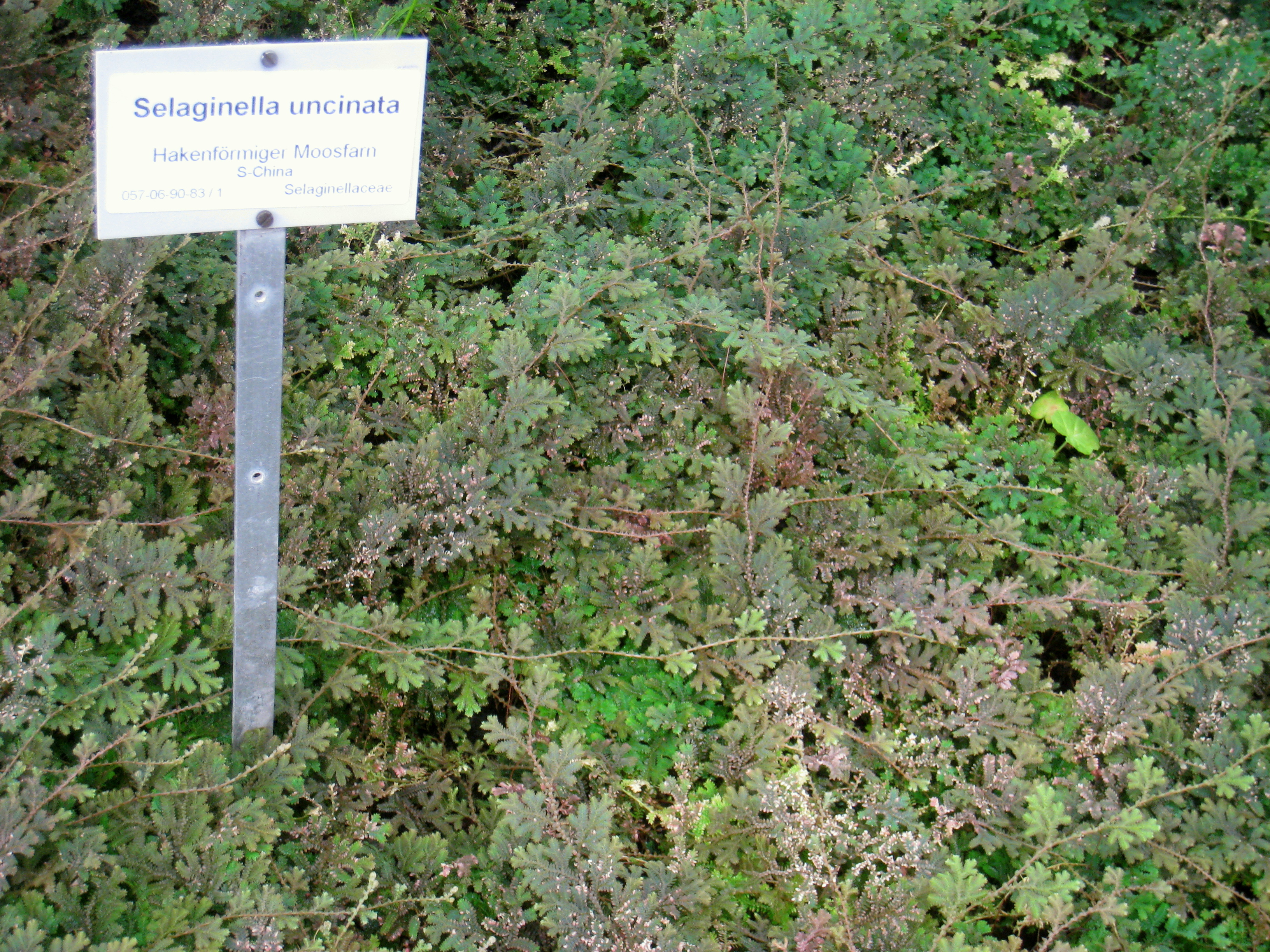
Selaginella uncinata, known as peacock moss, rainbow moss, blue spike moss, or rainbow fern, is a low, spreading perennial that carries finely divided, moss-like foliage rather than true fronds or leaves in the usual sense. It forms a dense mat close to the ground, rooting as it travels along its stems.
Source: RHS
Shade, Moisture, Humidity
This is a plant that prefers partial shade and does not want much direct sun, especially in hot conditions, so a sheer curtain between it and a bright window is worth considering. It likes consistently moist soil and should not be allowed to dry out beyond the top inch or so, paired with humid air, which makes bathrooms, kitchens, or terrariums natural homes for it. Under glass it can take a peat-free, loam-based mix with added leaf mould, watered freely and fed monthly from April to September, though as a rule this genus does not ask for much fertiliser and can be harmed by too much.
Source: RHS
By Division or Spores
Peacock moss is propagated by division of its spreading mats or by spores, in keeping with its nature as a rooting, stem-spreading perennial.
Source: RHS
Metallic, Shifting Colour
The plant's small scale-like leaves have a metallic blue-green cast, and in good light that colour shifts toward shades of copper, orange, and bronze, which is where its rainbow and peacock names come from. It stays low, reaching only up to about 10cm high while spreading 0.1 to 0.5 metres, and its stems root as they trail, thickening the mat over time.
Source: Costa Farms
Slugs and Snails
The main pests to watch for are slugs and snails, while the plant is otherwise generally free of disease.
Source: RHS
Little Pruning Needed
No routine pruning is required; it is enough to trim away any dead or faded growth as it appears. Outdoors it needs winter protection, and in colder areas it is best grown in containers and brought indoors to overwinter.
Source: RHS
Care recipe
The species record — the baseline every cultivar inherits unless it says otherwise.
Care notes are early — not yet verified
- Light
- ai:claude-opus-4-8
- Water
- ai:claude-opus-4-8 (range 2-5d)
- Humidity
- ai:claude-opus-4-8
- Soil
- ai:claude-fable-5
- Care
- ai:claude-fable-5
Medium light
≈ every 5 days
High
15–24 °C
Humus-rich, moisture-retentive mix kept consistently damp
Division or rooted stem tips in damp mix
Dilute balanced feed monthly during active growth
Moderate
Non-flowering — a spikemoss reproducing by spores
Not yet documented
This is where toxicity lives — every cultivar of this species inherits it and none can override it.
Reference images
Every image credited. Licenses link to their deeds.
PrimarySources: ai:claude-opus-4-8 · ai:claude-opus-4-8 (range 2-5d) · ai:claude-fable-5
Kept true by its growers
Every fact here carries its source. Grow Blue Spike-moss yourself? What you’ve observed — how it drinks, how it holds its color, a name that’s off — and a clear photo of your plant are exactly what keep this page honest. Contributions are reviewed before anything changes.
Sign in to add what you know →