Species · genus Sedum · Crassulaceae
Chinese Sedum
Sedum tetractinum Fröd.
Also known as: Coral Reef Sedum
Cultivars of S. tetractinum
The named forms growers keep — each with its own page, each honest about how much we know.
No named cultivars catalogued under S. tetractinum yet. When growers document a stable, named form, it earns its own page here.
Guide
The species-level account. Cultivar pages build on this and say where they differ.
A Mat-Forming Sedum
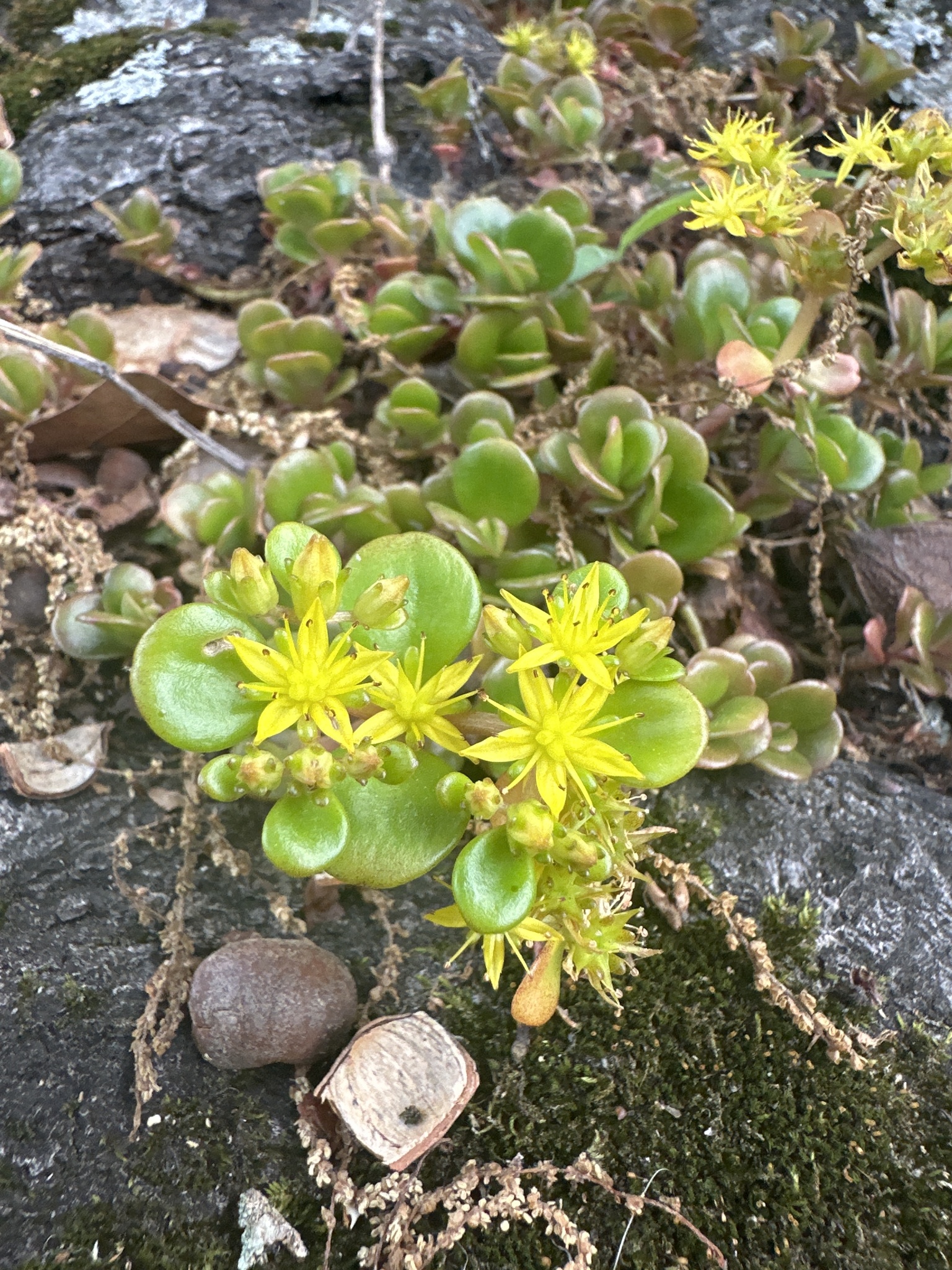
Sedum tetractinum is an evergreen, mat-forming perennial in the Crassulaceae family, reaching only about 10cm tall. Its fleshy, rounded, shiny green leaves flush pink at the tips in cold weather, and small starry yellow flowers appear in summer.
Source: RHS
Native Range
This species comes from south-eastern China, where it belongs to the wider Sedum genus of succulent-leaved annuals and perennials known for their clustered, star-shaped summer or autumn flowers.
Source: RHS
Sun, Soil, Shelter
Give this sedum full sun and a sheltered spot, in moderately fertile, well-drained soil that runs alkaline to neutral, whether chalk, loam, or sand. It is drought resistant and rated hardy through most of the UK, tolerating winter cold well once established outdoors.
Source: RHS
Softwood Cuttings
New plants are raised from softwood cuttings.
Source: RHS
Foliage And Form
The plant forms a low, spreading mat, with rounded, fleshy, glossy green leaves that take on a pink flush at the tips when temperatures drop. In summer it sends up small, star-shaped yellow flowers above the foliage.
Source: RHS
Slugs And Sap-Suckers
Watch for slugs, snails, and vine weevil grubs, along with scale insects and mealybugs, which can trouble this sedum.
Source: RHS
Root And Crown Rot
Bacterial crown and root rots are the main disease risk to watch for, generally arising where drainage or moisture conditions are not kept in check.
Source: RHS
Tidy After Flowering
Trim the mat back after flowering to keep its shape neat and compact.
Source: RHS
Care recipe
The species record — the baseline every cultivar inherits unless it says otherwise.
Care notes are early — not yet verified
- Light
- ai:claude-opus-4-8
- Water
- ai:claude-opus-4-8 (range 10-21d)
- Humidity
- ai:claude-opus-4-8
- Soil
- ai:claude-fable-5
- Care
- ai:claude-fable-5
Direct sun
≈ every 21 days
Low — average room
7–27 °C
Gritty, fast-draining succulent mix
Trailing stems root at nodes; leaf and stem cuttings root easily
Dilute succulent feed once or twice while growing
Fast
Yellow flowers in spring to early summer under bright light
Not yet documented
This is where toxicity lives — every cultivar of this species inherits it and none can override it.
Reference images
Every image credited. Licenses link to their deeds.
PrimarySources: ai:claude-opus-4-8 · ai:claude-opus-4-8 (range 10-21d) · ai:claude-fable-5
Kept true by its growers
Every fact here carries its source. Grow Chinese Sedum yourself? What you’ve observed — how it drinks, how it holds its color, a name that’s off — and a clear photo of your plant are exactly what keep this page honest. Contributions are reviewed before anything changes.
Sign in to add what you know →