Species · genus Sedum · Crassulaceae
Wild Stonecrop
Sedum ternatum Michx.
Also known as: Whorled Stonecrop · Woodland Stonecrop
Cultivars of S. ternatum
The named forms growers keep — each with its own page, each honest about how much we know.
No named cultivars catalogued under S. ternatum yet. When growers document a stable, named form, it earns its own page here.
Guide
The species-level account. Cultivar pages build on this and say where they differ.
A Creeping Native Sedum
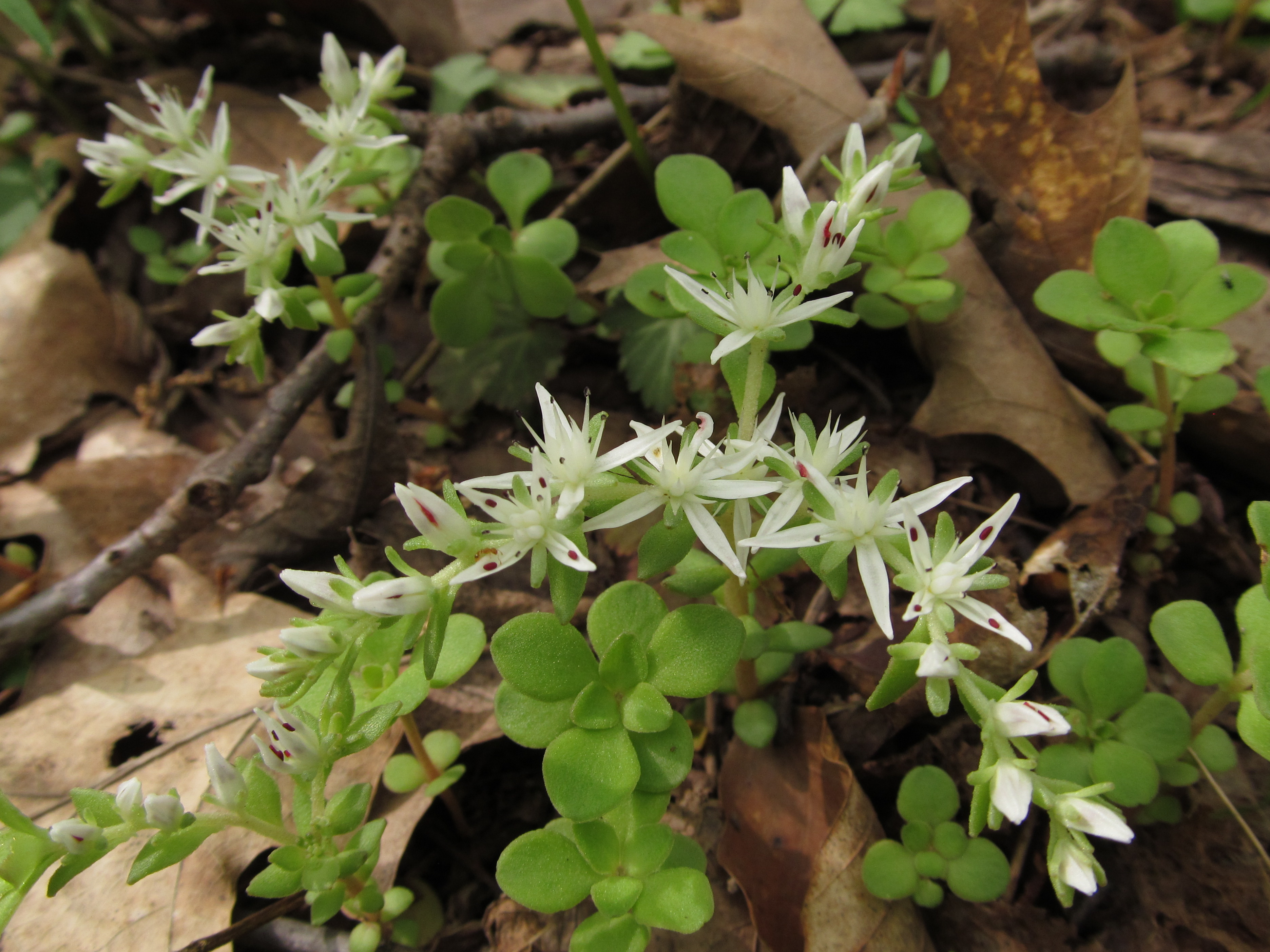
Sedum ternatum, sometimes called Iceland moss, is a compact evergreen succulent that forms a low, creeping mat. It carries flat, fleshy leaves arranged in whorls of three, with small starry white flowers rising above the foliage in summer.
Source: RHS
Native To North America
This species comes from Canada and the USA, growing as a hardy, mat-forming succulent rather than a tender houseplant. In cultivation it is rated H6, meaning it tolerates the cold of most UK and northern European winters.
Source: RHS
Sun, Shelter, Sharp Drainage
Give this sedum a sheltered spot in full sun, ideally facing south or west. It wants moderately fertile, well-drained soil that leans alkaline to neutral, whether chalk, loam, or sand, and it copes well with drought once established.
Source: RHS
Softwood Cuttings In Summer
Propagation is done from softwood cuttings taken from non-flowering shoots in early summer.
Source: RHS
Whorled Leaves, Starry Flowers
The plant stays low, reaching only around 15cm high, with branching stems and broadly oval to rounded fleshy leaves set in threes around each stem. In strong light the foliage can take on a red flush. Come summer, upright flowering shoots to about 20cm push above the mat, topped with clusters of small white star-shaped blooms.
Source: RHS
Slugs, Snails, And More
Watch for slugs, snails, and vine weevil grubs, along with scale insects and mealybugs, which can trouble this sedum.
Source: RHS
Rot In Damp Conditions
The main risk is fungal and bacterial crown and root rot, which tends to set in when conditions are damp and drainage is poor. Keeping the soil well-drained is the best safeguard.
Source: RHS
Low-Fuss, No Pruning
This is a low-maintenance plant that needs no pruning. It suits patio containers, rock gardens, and banks or slopes where its creeping habit can spread freely.
Source: RHS
Care recipe
The species record — the baseline every cultivar inherits unless it says otherwise.
Care notes are early — not yet verified
- Light
- ai:claude-opus-4-8
- Water
- ai:claude-opus-4-8 (range 7-14d)
- Humidity
- ai:claude-opus-4-8
- Soil
- ai:claude-fable-5
- Care
- ai:claude-fable-5
Bright, indirect
≈ every 14 days
Medium
4–24 °C
Humus-rich but well-draining gritty mix
Division or stem cuttings; creeping stems root as they spread
Light feed once or twice in the growing season
Moderate
White star flowers in spring, unusual for a Sedum
Not yet documented
This is where toxicity lives — every cultivar of this species inherits it and none can override it.
Reference images
Every image credited. Licenses link to their deeds.
PrimarySources: ai:claude-opus-4-8 · ai:claude-opus-4-8 (range 7-14d) · ai:claude-fable-5
Kept true by its growers
Every fact here carries its source. Grow Wild Stonecrop yourself? What you’ve observed — how it drinks, how it holds its color, a name that’s off — and a clear photo of your plant are exactly what keep this page honest. Contributions are reviewed before anything changes.
Sign in to add what you know →