Species · genus Sedum · Crassulaceae
Stringy Stonecrop
Sedum sarmentosum Bunge
Also known as: Runner-producing Stonecrop · Gold Moss · Graveyard Moss · Orpin Sarmenteux · Star Sedum
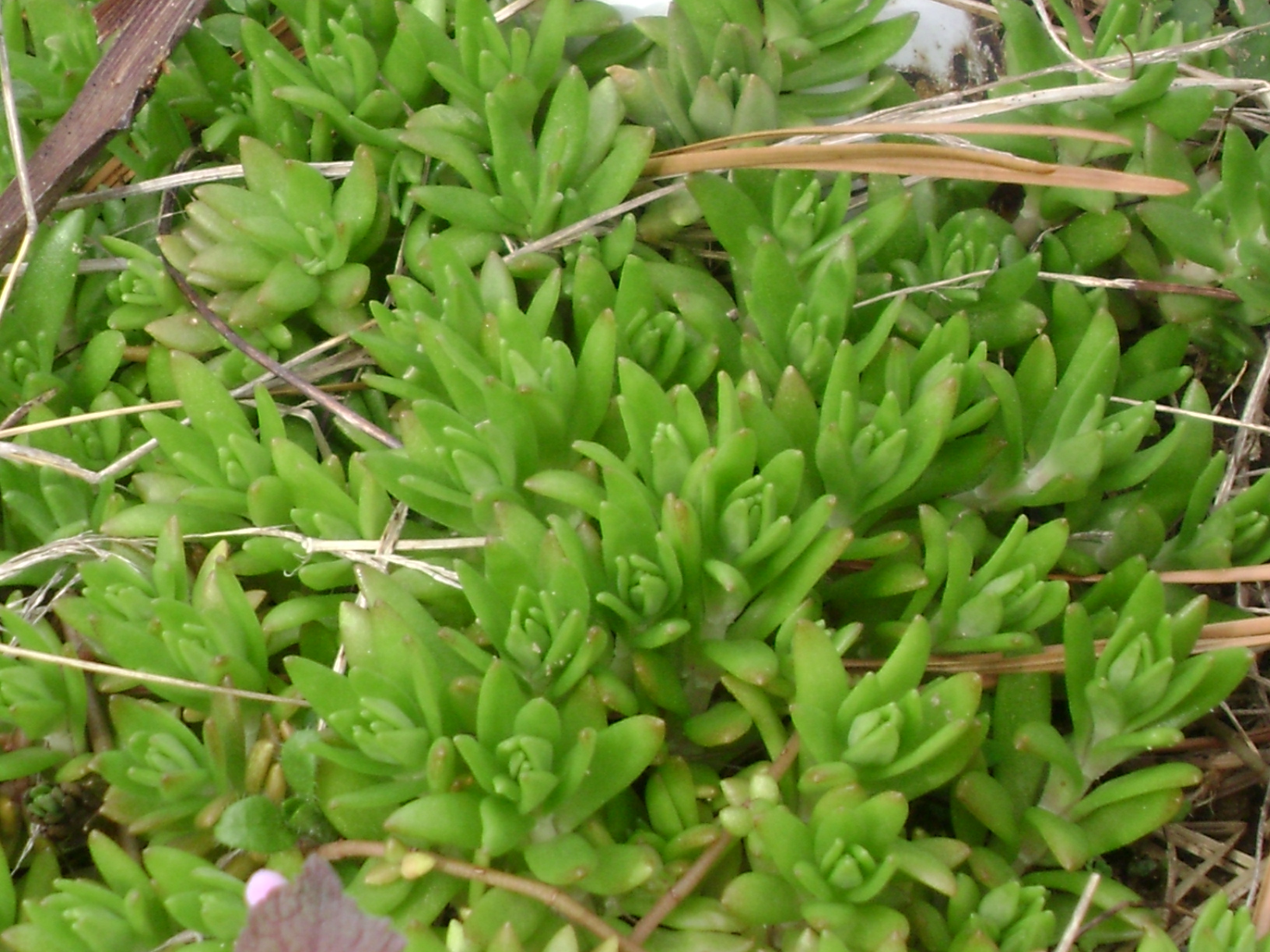
Cultivars of S. sarmentosum
The named forms growers keep — each with its own page, each honest about how much we know.
No named cultivars catalogued under S. sarmentosum yet. When growers document a stable, named form, it earns its own page here.
Guide
The species-level account. Cultivar pages build on this and say where they differ.
A Stonecrop Genus
Sedum is a genus of succulent perennials (and some annuals) in the stonecrop family, prized more for its low, spreading habit than for showy blooms. Thick, water-storing leaves in whorls and clusters of small star-shaped flowers mark the group, and it takes in a wide range of species from mat-forming ground covers to trailing houseplants.
Source: Epic Gardening
Rocky Origins, Kitchen Uses
Sedums are found across North America, Asia, and Europe, generally settling into rocky outcrops and clefts, which is how the family earned the name stonecrop. Their ornamental use came later; historically, several species had medicinal and culinary roles, such as S. sarmentosum used in Asian folk medicine and eaten as a vegetable dish called namul, or S. reflexum favored by the naturalist Alexander von Humboldt for soups. One variety, Sedum sarmentosum var. silvestre, is native specifically to south-central China, in Yunnan, growing as a succulent perennial in a temperate climate.
Source: Epic Gardening
Sun, Drainage, Neglect
Sedums want full sun, at least six to eight hours of direct light daily, and soil that drains fast and stays on the dry side, since their fleshy leaves already hold the water they need. Rich, fertile ground tends to push them into leggy growth, so a poorer, sandy or rocky soil actually suits them better. Watering needs are low throughout, and they tolerate a wide range of climates from cool to warm, asking little in the way of feeding or fuss.
Source: Epic Gardening
Easiest Cuttings Around
Cuttings are the simplest and quickest way to increase sedum, whether from a stem with a few leaves left on or from a single plucked leaf pressed into moist potting mix. Roots form at the nodes where leaves were removed, appearing in a matter of weeks, and stem cuttings can also be rooted in water if you want to watch the process. Seed is possible too, surface-sown and kept lightly moist under a humidity dome, but it is slower, taking close to a month to germinate.
Source: Epic Gardening
Whorled Leaves, Star Flowers
The stonecrop family, which Sedum belongs to, is defined by simple, thick succulent leaves arranged in a whorl-like pattern, an adaptation for surviving in rocky, dry ground. Across the genus, species range from mat-forming and creeping to shrubby and upright, with small star-shaped flower clusters appearing in summer or autumn.
Source: RHS
Mostly Trouble-Free
Sedums are largely left alone by pests and disease when grown in the right conditions, though aphids do show up occasionally, most often on cuttings brought indoors from the garden. A firm spray of water is usually enough to knock them off, and it is worth inspecting any outdoor stem before bringing it inside to propagate.
Source: Epic Gardening
Rot From Too Much Wet
The main trouble for sedum is root or crown rot, caused by fungal or bacterial pathogens that favor cool, wet conditions. Keeping the plant in dry or well-draining soil is the main defense, along with clearing away dead or decaying plant tissue, since a stressed plant is more prone to both disease and pest problems.
Source: Epic Gardening
Pinch Back, Tidy Up
If a sedum turns leggy or grows out of bounds, pinching it back keeps it tidy. Some species die back in fall, and once that happens the old growth is best removed to keep the garden neat and to cut down on disease from lingering plant debris.
Source: Epic Gardening
Care recipe
The species record — the baseline every cultivar inherits unless it says otherwise.
Care notes are early — not yet verified
- Light
- ai:claude-opus-4-8
- Water
- ai:claude-opus-4-8 (range 10-18d)
- Humidity
- ai:claude-opus-4-8
- Soil
- ai:claude-fable-5
- Care
- ai:claude-fable-5
Direct sun
≈ every 18 days
Low — average room
5–27 °C
Free-draining gritty succulent mix
Trailing stems root at the nodes; cuttings root easily
Minimal — a dilute feed once in the growing season
Fast
Yellow star flowers in late spring to summer
Not yet documented
This is where toxicity lives — every cultivar of this species inherits it and none can override it.
Reference images
Every image credited. Licenses link to their deeds.
PrimarySources: ai:claude-opus-4-8 · ai:claude-opus-4-8 (range 10-18d) · ai:claude-fable-5
Kept true by its growers
Every fact here carries its source. Grow Stringy Stonecrop yourself? What you’ve observed — how it drinks, how it holds its color, a name that’s off — and a clear photo of your plant are exactly what keep this page honest. Contributions are reviewed before anything changes.
Sign in to add what you know →