Species · genus Sedum · Crassulaceae
Greater Mexican-Stonecrop
Sedum praealtum A.DC.
Also known as: Green Cockscomb · Shrubby Stonecrop
Cultivars of S. praealtum
The named forms growers keep — each with its own page, each honest about how much we know.
No named cultivars catalogued under S. praealtum yet. When growers document a stable, named form, it earns its own page here.
Guide
The species-level account. Cultivar pages build on this and say where they differ.
A Sturdy Mexican Stonecrop
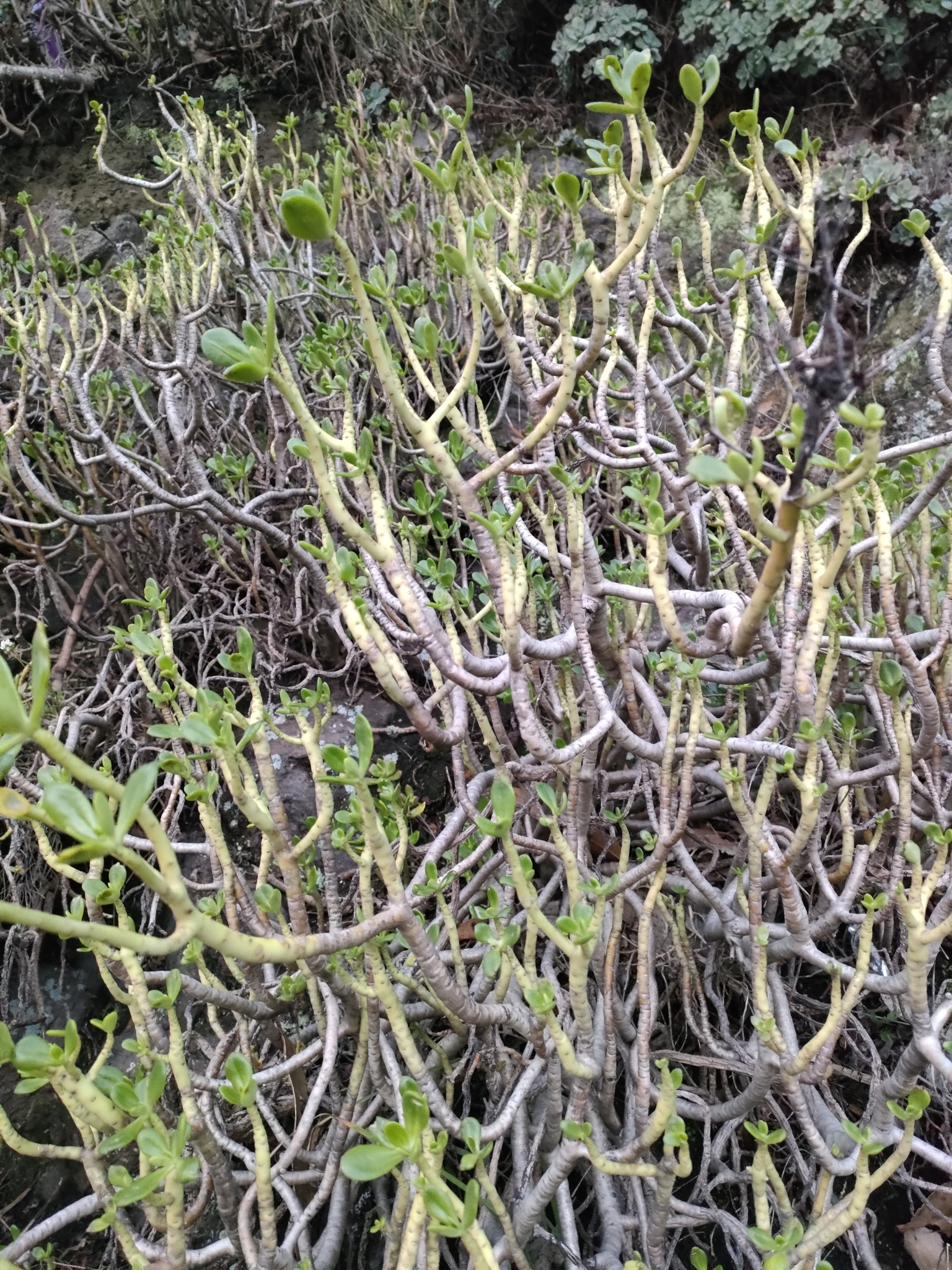
Sedum praealtum, known as greater Mexican stonecrop, is a succulent subshrub reaching around 60cm, with grey-brown woody-looking stems and fleshy, club-shaped pale green leaves gathered into rosettes. In spring these stems carry small yellow star-shaped flowers. It belongs to the Crassulaceae family and is grown both as a garden plant in mild climates and as a houseplant.
Source: RHS
Native to Mexico
This species is native to central and eastern Mexico, where it grows chiefly in subtropical conditions, and it has since been introduced well beyond that range, turning up from the Canary Islands and Madeira to California, New Zealand, and Tasmania. In parts of its homeland it has also been put to use as a medicinal plant.
Source: Kew
Sun, Drainage, Restraint
Give this sedum full sun, ideally a south- or west-facing spot, and a sheltered position, since it is only reliably hardy in mild coastal areas. Grown under glass, a peat-free loam-based compost with added perlite and bright, filtered light suits it well; water freely through the growing season with a monthly half-strength liquid feed, then cut back sharply on water in winter. Potted plants can spend summer outdoors on a patio before coming back under cover.
Source: RHS
Cuttings Root Easily
Propagation is straightforward from softwood cuttings taken in early summer, and even a single detached leaf will root readily on its own.
Source: RHS
Slugs, Snails, and More
Watch for slugs, snails, and vine weevil grubs feeding on this plant, along with scale insects and mealybugs settling on stems and leaves.
Source: RHS
Watch the Roots
The main trouble to guard against is fungal and bacterial crown and root rot, which points back to soil that stays too wet, particularly in winter when watering should be kept sparing.
Source: RHS
Little Upkeep Needed
This is a low-fuss plant in terms of shaping: no pruning is required, and it reaches its mature size over roughly two to five years.
Source: RHS
Care recipe
The species record — the baseline every cultivar inherits unless it says otherwise.
Care notes are early — not yet verified
- Light
- ai:claude-opus-4-8
- Water
- ai:claude-opus-4-8 (range 10-21d)
- Humidity
- ai:claude-opus-4-8
- Soil
- ai:claude-fable-5
- Care
- ai:claude-fable-5
Direct sun
≈ every 21 days
Low — average room
7–27 °C
Gritty, fast-draining cactus/succulent mix
Stem or leaf cuttings, left to callus then rooted in gritty mix
Dilute succulent feed once or twice in the growing season
Fast
Bright yellow star flowers in spring when given strong light
Not yet documented
This is where toxicity lives — every cultivar of this species inherits it and none can override it.
Reference images
Every image credited. Licenses link to their deeds.
PrimarySources: ai:claude-opus-4-8 · ai:claude-opus-4-8 (range 10-21d) · ai:claude-fable-5
Kept true by its growers
Every fact here carries its source. Grow Greater Mexican-Stonecrop yourself? What you’ve observed — how it drinks, how it holds its color, a name that’s off — and a clear photo of your plant are exactly what keep this page honest. Contributions are reviewed before anything changes.
Sign in to add what you know →