Species · genus Sedum · Crassulaceae
Sedum potosinum
Sedum potosinum Rose
Cultivars of S. potosinum
The named forms growers keep — each with its own page, each honest about how much we know.
No named cultivars catalogued under S. potosinum yet. When growers document a stable, named form, it earns its own page here.
Guide
The species-level account. Cultivar pages build on this and say where they differ.
A Mexican stonecrop
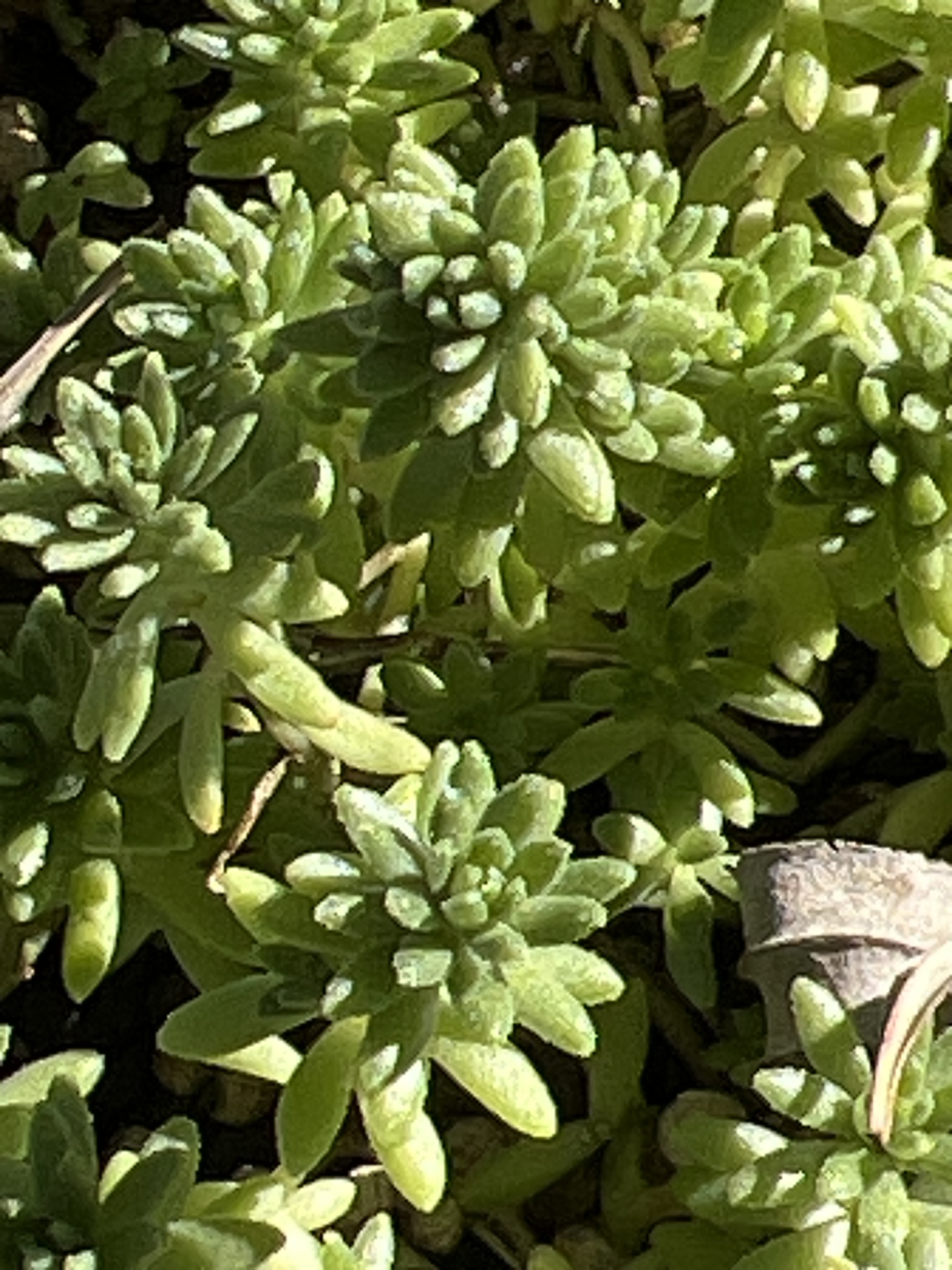
Sedum diffusum 'Potosinum', also known simply as Sedum potosinum, is a succulent subshrub in the stonecrop family. It belongs to a large genus of fleshy-leaved perennials and subshrubs that carry small, star-shaped flowers in summer or autumn.
Source: RHS
Native to Mexican drylands
This plant's native range lies in northeastern Mexico, in the states of Zacatecas and San Luis Potosí, and it was first published as Sedum potosinum by Rose in 1911. It grows primarily in desert and dry shrubland habitats, the kind of exposed, rocky ground that suits a water-storing succulent.
Source: Kew
Sun, dry feet, patience
Like other stonecrops, this plant wants full sun, at least six to eight hours of direct light a day, and soil that drains fast and stays on the dry side. Its thick, succulent leaves store water, which is what lets it cope with lean, arid conditions, but rich soil or constantly damp roots will push it toward loose, leggy growth. Fertiliser and heavy feeding are best kept minimal for this reason.
Source: Epic Gardening
Easiest by cuttings
Sedums root readily from stem or leaf cuttings, which is the quickest and most reliable method. For a stem cutting, take a healthy, non-flowering piece with several leaves, strip the lowest two, and either set it in water or press it into loose, barely moist potting mix until roots form at the bare nodes. Leaf cuttings work too: press a plucked leaf's base into moist mix and roots should appear within three to four weeks, with a small offshoot following at the base. Seed is possible but is the slowest route, taking close to a month just to germinate.
Source: Epic Gardening
Aphids, occasionally mealybugs
Sedums are not pest-prone plants, but aphids are the most commonly seen visitor, and a strong jet of water is usually enough to knock them off. Mealybugs can also turn up from time to time. Cuttings brought indoors from outside are worth checking closely first, since pests often settle into the warm, dry conditions of a house.
Source: Epic Gardening
Rot from wet feet
Most trouble with sedums traces back to root or crown rot, which fungal and bacterial pathogens favour in cool, wet conditions. The fix is prevention: dry or well-draining ground, and full sun to help soil shed excess moisture. A stressed plant, whether from poor drainage or another setback, is also the one most likely to pick up pests.
Source: Epic Gardening
Pinch back, tidy debris
If growth turns leggy or gets away from itself, pinching the plant back keeps it tidy. Where a sedum dies back for the season, removing the old growth afterward keeps the planting neat and cuts down on disease that can linger in decaying plant material.
Source: Epic Gardening
Care recipe
The species record — the baseline every cultivar inherits unless it says otherwise.
Care notes are early — not yet verified
- Light
- ai:claude-opus-4-8
- Water
- ai:claude-opus-4-8 (range 10-21d)
- Humidity
- ai:claude-opus-4-8
- Soil
- ai:claude-fable-5
- Care
- ai:claude-fable-5
Direct sun
≈ every 21 days
Low — average room
10–27 °C
Gritty, fast-draining cactus and succulent mix
Leaf or stem cuttings rooted on dry mix
Light dilute succulent feed once or twice in the growing season
Slow
White star-shaped flowers, occasional indoors
Not yet documented
This is where toxicity lives — every cultivar of this species inherits it and none can override it.
Reference images
Every image credited. Licenses link to their deeds.
PrimarySources: ai:claude-opus-4-8 · ai:claude-opus-4-8 (range 10-21d) · ai:claude-fable-5
Kept true by its growers
Every fact here carries its source. Grow Sedum potosinum yourself? What you’ve observed — how it drinks, how it holds its color, a name that’s off — and a clear photo of your plant are exactly what keep this page honest. Contributions are reviewed before anything changes.
Sign in to add what you know →