Species · genus Sedum · Crassulaceae
Jellybeans
Sedum pachyphyllum Rose
Cultivars of S. pachyphyllum
The named forms growers keep — each with its own page, each honest about how much we know.
No named cultivars catalogued under S. pachyphyllum yet. When growers document a stable, named form, it earns its own page here.
Guide
The species-level account. Cultivar pages build on this and say where they differ.
A Bean-Leaved Stonecrop
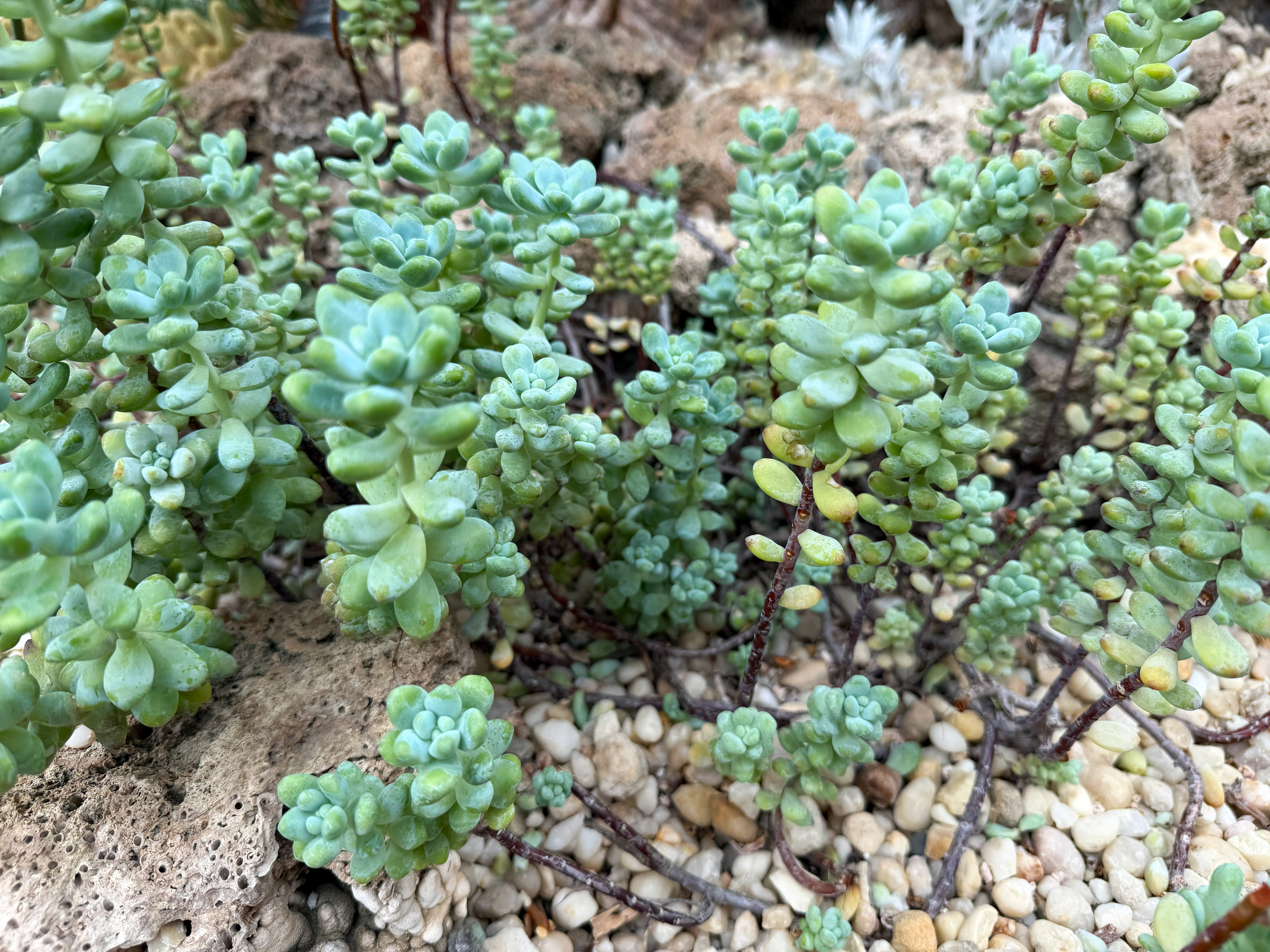
The jelly bean plant, Sedum rubrotinctum, takes its common names — jelly beans, pork and beans, banana cactus, Christmas cheer — from its plump, bean-like leaves. It is a low, sprawling succulent in the stonecrop family, one that asks for very little and rewards with colour and easy character.
Source: Epic Gardening
A Mexican Hybrid
This plant is native to Mexico and arose as a hybrid between Sedum pachyphyllum and Sedum stahlii. It suits USDA zones 9 to 11 outdoors, and where winters drop below 20°F (-7°C) it does better in a container that can be brought under cover.
Source: Epic Gardening
Sun, Soak, and Dry
Give this sedum full sun to partial shade — the more light it gets, the deeper its red tones become — though intense heat and full sun for long stretches can scorch it, so some afternoon shade in summer helps. Water on a soak-and-dry rhythm, letting the soil dry out completely between waterings, in a sandy, fast-draining succulent mix that isn't fussy about pH. It tolerates heat well but dislikes cold below 20°F (-7°C), is largely indifferent to humidity, and can take a monthly half-strength succulent fertilizer through spring and summer, with none needed once it goes dormant in autumn and winter.
Source: Epic Gardening
Propagates Almost by Itself
Jelly bean plants propagate so readily that fallen leaves often root right where they land, and stems can send out roots while still attached. To do it deliberately, twist a healthy leaf free intact or take a stem cutting an inch or two long, let the cut ends callus for a few days out of direct sun, then rest them on or in well-draining soil and mist until roots take hold before resuming normal watering.
Source: Epic Gardening
Jelly Beans and Yellow Stars
The RHS describes it as a low-growing, evergreen succulent reaching about 20cm, with cylindrical, banana-shaped leaves up to 2cm long spiralling around sprawling stems. The foliage is glossy green with red tips that can deepen to bronze in summer, and small yellow, star-shaped flowers appear in summer. Left to its own devices, the plant forms a spreading mat rather than an upright habit.
Source: RHS
Generally Left Alone
This is a plant pests mostly pass over, though the RHS notes it can be susceptible to vine weevil grubs, scale insects, and mealybugs. Keeping the plant healthy and the soil on the dry side is the best deterrent.
Source: RHS
Rot, Wrinkle, or Stretch
Dropped leaves are often just normal handling, but mushy or discolored ones point to overwatering and call for drier soil. Wrinkled, shriveled leaves signal underwatering and usually recover with a good soak, while stems that stretch thin and pale are reaching for more light and should be moved brighter and pruned back. The RHS also flags fungal and bacterial crown and root rot as a risk, most often from excess moisture, treated by cutting away affected tissue and repotting into dry soil.
Source: Epic Gardening
Little Upkeep Needed
The RHS notes this sedum needs no pruning, though Epic Gardening suggests a trim with clean shears if stems get unruly, letting the cut callus over before watering again. Repot only once it outgrows its container, since it tolerates being rootbound but grows best with some extra room; refreshing the potting mix after a few years can help if growth stalls. It sheds leaves easily when brushed or moved, and gloves are worth wearing since the plant can irritate skin.
Source: Epic Gardening
Care recipe
The species record — the baseline every cultivar inherits unless it says otherwise.
Care notes are early — not yet verified
- Light
- ai:claude-opus-4-8
- Water
- ai:claude-opus-4-8 (range 14-28d)
- Humidity
- ai:claude-opus-4-8
- Soil
- ai:claude-fable-5
- Care
- ai:claude-fable-5
Direct sun
≈ every 28 days
Low — average room
10–27 °C
Gritty, fast-draining cactus and succulent mix
Leaf or stem cuttings rooted on dry mix
Light dilute succulent feed once or twice in the growing season
Slow
White flowers, uncommon indoors
Not yet documented
This is where toxicity lives — every cultivar of this species inherits it and none can override it.
Reference images
Every image credited. Licenses link to their deeds.
PrimarySources: ai:claude-opus-4-8 · ai:claude-opus-4-8 (range 14-28d) · ai:claude-fable-5
Kept true by its growers
Every fact here carries its source. Grow Jellybeans yourself? What you’ve observed — how it drinks, how it holds its color, a name that’s off — and a clear photo of your plant are exactly what keep this page honest. Contributions are reviewed before anything changes.
Sign in to add what you know →