Species · genus Sedum · Crassulaceae
Rocky Moss-rose Stonecrop
Sedum japonicum Siebold ex Miq.
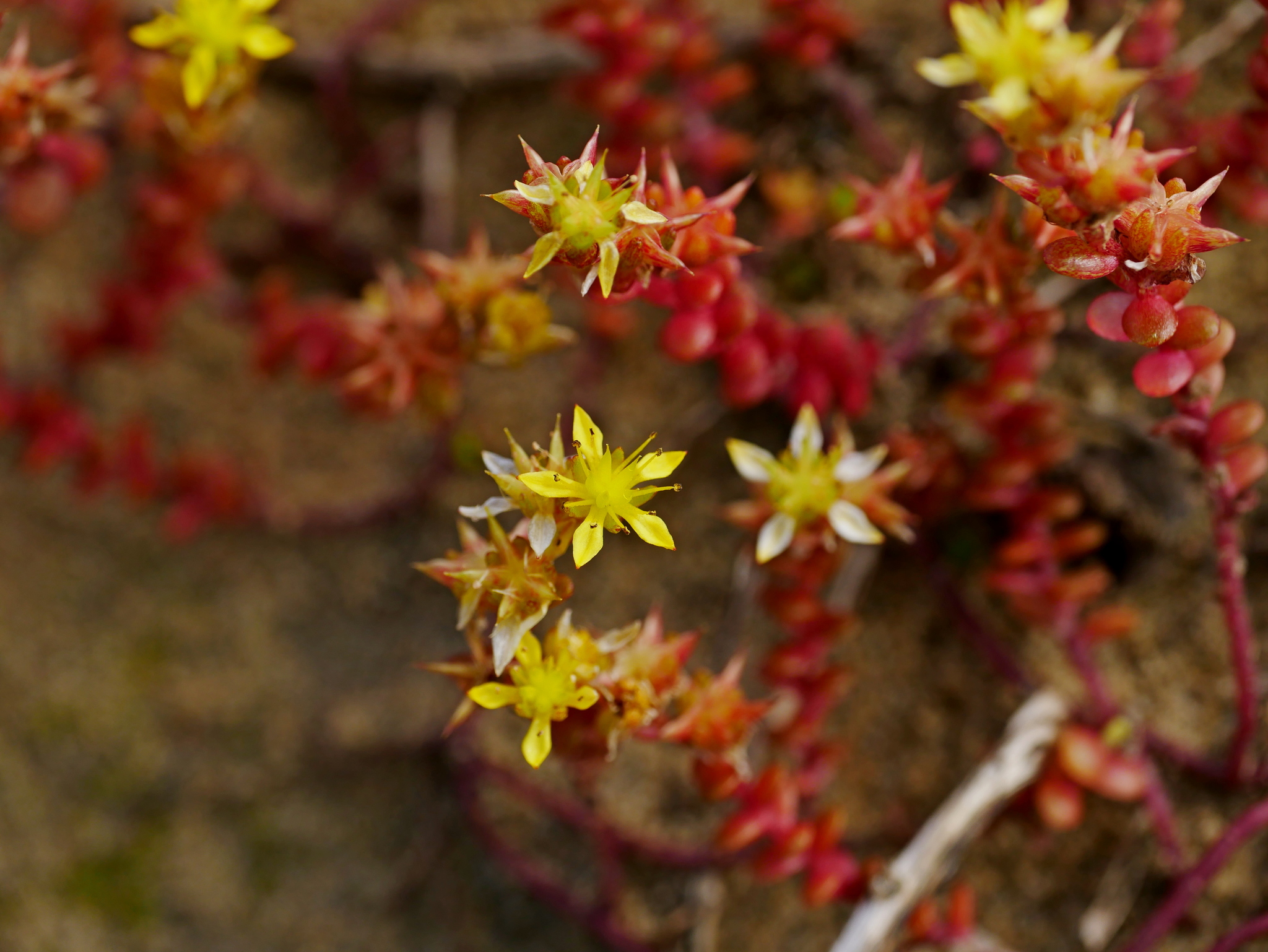
Cultivars of S. japonicum
The named forms growers keep — each with its own page, each honest about how much we know.
No named cultivars catalogued under S. japonicum yet. When growers document a stable, named form, it earns its own page here.
Guide
The species-level account. Cultivar pages build on this and say where they differ.
A Japanese Stonecrop
Sedum japonicum, known as Japanese stonecrop, is a succulent member of the Crassulaceae, the stonecrop family whose members are prized for thick, water-storing leaves and star-shaped summer flowers. It belongs to a genus of annuals and evergreen or herbaceous perennials that share this succulent habit.
Source: RHS
Native Range and Kin
This subspecies is native to southeast China, Japan, Korea, and Taiwan, growing as a succulent subshrub within the temperate biome of eastern Asia. Over time botanists have gathered several old names under it, including Sedum yedoense and Sedum chrysastrum, a reminder of how often stonecrops get renamed as classification catches up with them.
Source: Kew
Sun, Grit, and Restraint
Like other sedums, this plant wants fast-draining, on the lean side soil and at least six to eight hours of direct sun a day, tolerating part sun only where drainage is assured. Rich soil tends to make sedums leggy, so a poorer, gritty mix serves it better than a fertile one. Water sparingly, since these succulent leaves are built to store their own reserves, and let the soil dry between waterings rather than keeping it damp.
Source: Epic Gardening
Easy From Cuttings
Sedums root readily from stem or leaf cuttings, which is the quickest and most reliable method, though seed is also possible if slower. For a stem cutting, choose a healthy, non-flowering stem, strip the lower leaves, and set it in moist potting mix or water until roots form at the bare nodes. A single leaf pressed into moist mix will also root in three to four weeks, eventually producing a small offshoot at its base.
Source: Epic Gardening
Aphids, Occasionally
Aphids are the main pest to watch for on sedums, though they are usually not a serious problem outdoors. A forceful spray of water will generally knock them off, and it is worth checking any stem before bringing a cutting indoors, since pests can multiply quickly in a house's warm, dry air.
Source: Epic Gardening
Rot From Wet Feet
Sedums rarely trouble a grower, but cool, wet conditions invite fungal or bacterial root and crown rot, so well-draining soil and enough sun to keep it on the dry side are the real safeguards. A stressed plant, whether from soggy roots or old plant debris left lying around, is also more prone to disease and pests taking hold.
Source: Epic Gardening
Pinch and Tidy
If growth turns leggy or rampant, pinching the plant back keeps it tidy. Some sedums die back in autumn, and it helps to clear away the old growth once that happens, which keeps the planting neat and lowers the chance of disease taking hold in decaying debris.
Source: Epic Gardening
Care recipe
The species record — the baseline every cultivar inherits unless it says otherwise.
Care notes are early — not yet verified
- Light
- ai:claude-opus-4-8
- Water
- ai:claude-opus-4-8 (range 10-21d)
- Humidity
- ai:claude-opus-4-8
- Soil
- ai:claude-fable-5
- Care
- ai:claude-fable-5
Direct sun
≈ every 21 days
Low — average room
5–27 °C
Gritty, fast-draining cactus and succulent mix
Stem cuttings or division of the spreading mat
Light dilute succulent feed once or twice in the growing season
Fast
Small yellow flowers in spring
Not yet documented
This is where toxicity lives — every cultivar of this species inherits it and none can override it.
Reference images
Every image credited. Licenses link to their deeds.
Sources: ai:claude-opus-4-8 · ai:claude-opus-4-8 (range 10-21d) · ai:claude-fable-5
Kept true by its growers
Every fact here carries its source. Grow Rocky Moss-rose Stonecrop yourself? What you’ve observed — how it drinks, how it holds its color, a name that’s off — and a clear photo of your plant are exactly what keep this page honest. Contributions are reviewed before anything changes.
Sign in to add what you know →